
Bulog Says Indonesia’s Rice Reserves Far Outstrip Those of Other Southeast Asian Countries
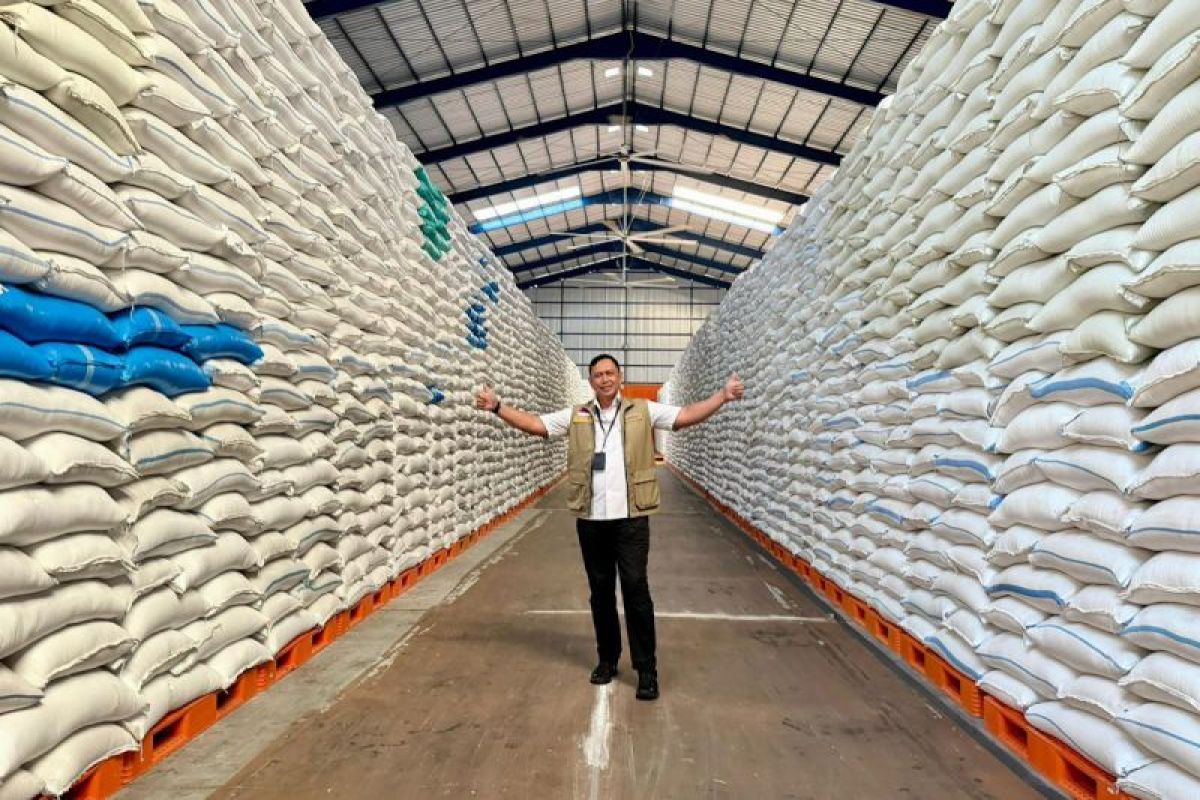
Jakarta (ANTARA) — Perum Bulog says Indonesia’s government rice reserves are far larger than those of several Southeast Asian countries, with stocks of around 4.5 million tonnes serving as a basis for strengthening food security and maintaining national supply stability.
Perum Bulog President Director Ahmad Rizal Ramdhani said the large volume of rice managed by the government was a strategic asset for ensuring food availability, particularly in the face of higher demand towards the end of the year.
“Indonesia is further consolidating its position as one of the countries with strong government rice reserves in Southeast Asia,” Rizal said in Jakarta on Tuesday.
Through Perum Bulog, the government currently holds about 4.5 million tonnes in its Government Rice Reserves (CBP), far exceeding the buffer stocks reported by several neighbouring countries.
The large stock reflects Indonesia’s growing capacity to safeguard food availability, anticipate supply and price volatility, and strengthen national food security amid a range of global challenges.
A compilation of food data from Southeast Asian countries shows Indonesia’s government rice reserves are significantly higher than those of its neighbours.
Bulog records show that Malaysia had a national rice buffer stock of 200,000 tonnes in August 2026, while rice reserves held at the Philippines’ National Food Authority (NFA) facilities were estimated at around 286,500 tonnes as of 1 September 2026.
At 4.5 million tonnes, the reserves managed by Bulog are nominally about 22.5 times Malaysia’s buffer stock and 15.7 times the estimated stock held by the Philippine NFA.
The comparison illustrates the scale of Indonesia’s government reserves, although the countries differ in the scope and periods covered by their data.
Vietnam, meanwhile, reported that it procured 500,000 tonnes for its national food reserves over the course of 2025, the highest procurement total in the country’s history.
That figure represents procurement during a year, rather than a current stock level directly comparable with Indonesia’s CBP. Thailand and Myanmar, meanwhile, do not have sufficiently verified government reserve-stock data for an equivalent comparison.
Even so, Indonesia’s large reserves give it a prominent position in the region and demonstrate the country’s preparedness for climate uncertainty, shifts in global trade and potential disruptions to food supply chains.
Indonesia’s rice reserves have been bolstered by the government’s efforts to strengthen domestic production and increase the procurement of paddy and rice from farmers through Perum Bulog.
As of 27 October 2026, domestic procurement had reached 4,238,543 tonnes in rice equivalent, or 105.96 per cent of the government’s target of 4 million tonnes.
The result is Bulog’s highest procurement total on record. It also demonstrates the strengthened role of the state in buying farmers’ harvests, building robust food reserves and balancing supply from producers to consumers.
“People need not worry about rice availability ahead of Christmas and New Year. The rice stocks managed by Bulog are currently more than adequate, at around 4.5 million tonnes,” Rizal stressed.
Rizal added that the strength of the national rice reserves must be matched by effective management and distribution so that the public can benefit from them.
Large reserves do more than demonstrate the state’s ability to store food: they are also an important tool for stabilising prices, widening access to food and protecting the public when markets come under pressure.
“The government’s direction is very clear: abundant stocks must bring tangible benefits to the public. Bulog must therefore do more than ensure rice is available in warehouses; it must also accelerate distribution through SPHP and food assistance,” he said.
To ensure the reserves have a direct impact on the public, Bulog is continuing to optimise rice distribution through the Food Supply and Price Stabilisation (SPHP) programme and rice food assistance.
The government has prepared an additional allocation of 1 million tonnes of SPHP rice to strengthen market supply and keep prices affordable.
Meanwhile, rice assistance for October–December 2026 is again being provided to around 33.2 million food assistance recipients (PBP), each of whom will receive 10 kilograms of rice per month.
With Bulog’s warehousing and distribution network spread across Indonesia, the large national rice reserves are being put to use to strengthen food stability from Sabang to Merauke.
Source: jawawa.id (https://jawawa.id/newsitem/bulog-says-indonesias-rice-reserves-far-outstrip-those-of-other-southeast-asian-countries-1793098562)
Originally published by Antara (Indonesian) (https://www.antaranews.com/berita/5814923/bulog-sebut-cadangan-beras-ri-unggul-jauh-di-asia-tenggara), translated from Indonesian