
Bulog Prioritises Expansion of Warehouses in Three Provinces
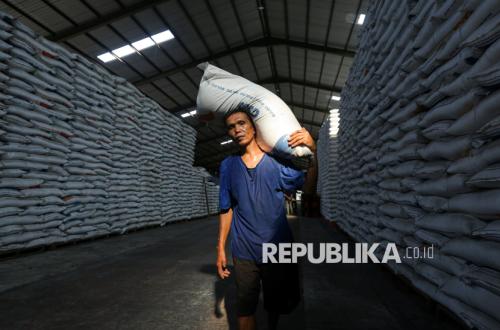
REPUBLIKA.CO.ID, KARAWANG — Bulog is prioritising the expansion of warehouse capacity in three main provinces to accommodate the surge in rice production. East Java, Central Java, and West Java are the primary focus for storage expansion.
Perum Bulog’s President Director, Ahmad Rizal Ramdhani, stated that the capacity addition is being carried out to meet the continuously increasing needs. This step is being taken through a warehouse leasing scheme while awaiting permanent construction.
“It’s in process. For large warehouses like those in East Java, Central Java, and West Java, it has already started to catch up with an additional capacity of around 1 million tonnes,” said Rizal.
According to him, the need for warehouses is increasing in line with the rapidly growing rice production. The available storage capacity is deemed insufficient.
Bulog previously reserved a capacity of around 2 million tonnes. However, the increase in production is driving an additional need of about 1 million tonnes through warehouse leasing.
“If this warehouse leasing continues to increase. We previously reserved 2 million tonnes. Because production is increasing rapidly, we are adding another around 1 million tonnes for warehouse leasing,” said Rizal.
The government records that the national rice stock has exceeded 5 million tonnes. This surge is triggered by increased production, including from the pump irrigation programme during the dry season.
On the other hand, the government is preparing the construction of 100 new warehouses with modern storage technology. This technology is being developed to extend the shelf life of rice.
“These warehouses will follow technological developments. The Head of BRIN stated that rice can last up to two years with the technology applied in the warehouses,” said Coordinating Minister for Food Affairs, Zulkifli Hasan.
Rizal said that the implementation of the technology will be carried out gradually according to budget readiness and infrastructure. Bulog will adjust the implementation at each location.
“The implementation is gradual. The hope is that all new warehouses can use that technology, but we adjust it to the cost needs and technical readiness in the field,” said Rizal.
The warehouse construction will be distributed across 26 regional offices and 92 districts or cities. Locations are prioritised for 3T areas and food production centres.
In addition to warehouses, this project also includes post-harvest facilities such as dryers, rice milling units, and packaging. This infrastructure is intended to support the rice supply chain.
The total additional capacity from the 100 warehouses is estimated to reach 900,000 tonnes. This project is ready to enter the construction phase involving state-owned construction enterprises.