
Bulog Prepares Premium SPHP Rice to Curb Price Increases
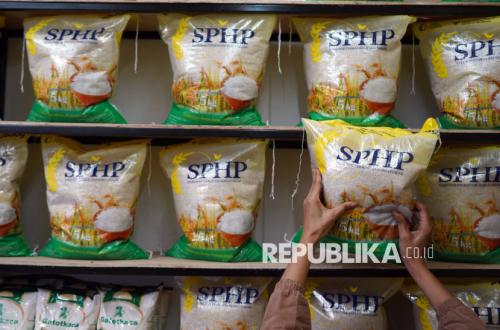
REPUBLIKA.CO.ID, JAKARTA – Perum Bulog is preparing premium rice under the Food Supply and Price Stabilisation Programme (SPHP) as a market operation instrument to curb rising premium rice prices while safeguarding national price stability and food availability.
Bulog President Director Ahmad Rizal Ramdhani said the proposal had been submitted to Agriculture Minister Andi Amran Sulaiman and Coordinating Minister for Food Zulkifli Hasan as input for the government’s next policy.
“We have suggested to the Agriculture Minister and the Coordinating Food Minister that they determine the next policy. As for the rise in premium rice prices, we are also preparing premium SPHP rice named Beras Kita,” Rizal said when asked about premium rice prices reaching Rp 16,000 per kilogram, after a minisoccer friendly match in Jakarta on Saturday.
According to Rizal, Bulog proposed premium SPHP rice under the Beras Kita brand to complement the existing SPHP programme, which has so far only provided medium-grade rice.
“So it is not only medium SPHP rice, but we are also trying to introduce premium SPHP rice named Beras Kita,” he said.
He explained that market operations using medium rice have been deemed ineffective at holding down prices when it is premium rice that is rising. A more precisely targeted instrument is therefore needed.
Bulog is drawing up a concept for distributing premium SPHP rice to help lower premium rice prices, which have recently risen in a number of regions.
Ahmad Rizal said the selling price of premium SPHP rice is still awaiting discussion and a decision at a limited government coordination meeting with the relevant ministries and agencies.
According to him, the government will consider the highest retail price (HET) for premium rice of Rp 14,900 per kilogram as one of the benchmarks in setting the programme’s pricing policy.
Beyond price, the government will also calculate the production costs of premium rice so that the resulting policy maintains a balance between the interests of consumers and businesses.
Bulog has also not yet determined the allocation for premium SPHP rice, as the distribution volume will be adjusted to public needs and demand developments on the ground.
Rizal stressed that setting a quota from the outset risks mismatching actual needs. The government has therefore chosen to adjust distribution volumes based on evolving market conditions.
He said the Agriculture Minister’s instruction on providing 2 million tonnes of commercial rice remains part of the discussion in formulating the distribution scheme for premium SPHP rice.
According to him, the composition between medium and premium SPHP rice will be determined based on an evaluation of public needs so that distribution can be more effective.
He noted that rising national rice production has driven a shift in public preferences, especially in urban areas, where more people are now choosing premium-grade rice.
Bulog is optimistic that the presence of premium SPHP rice can strengthen the effectiveness of market operations while maintaining price stability and meeting public demand for quality rice at affordable prices.