
Bulog Plans to Sell 2 Million Tonnes of 'Beras Kita' Premium, Critics Warn of Misplaced Subsidies
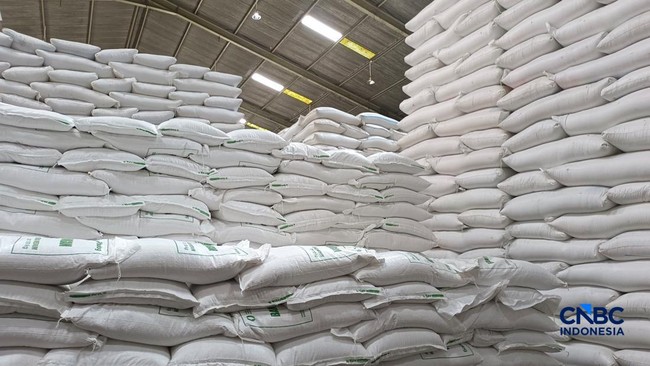
Jakarta - The plan by Perum Bulog to sell ‘Beras Kita’ in premium and medium variants to help stabilise rice prices at the consumer level has drawn criticism. Agricultural observer from the Center of Reform on Economics (CORE) Eliza Mardian assessed that the policy of introducing premium SPHP rice risks missing its target as it aims at a consumer segment with higher purchasing power.
Eliza explained that from the outset, the Food Supply and Price Stabilisation (SPHP) programme was designed to protect the purchasing power of low-income communities by providing affordable rice. Therefore, she considers government intervention in the premium rice segment to be less relevant.
‘In principle, SPHP rice is designed to protect the purchasing power of lower-middle and poor groups by providing affordable rice, so that market prices do not spike too high and erode vulnerable household incomes,’ Eliza told CNBC Indonesia on Tuesday (21/7/2026).
According to her, premium rice consumers generally come from the upper-middle class who have better purchasing power compared to low-income communities. ‘Premium rice is a more elastic market segment, consumed by the upper-middle class who have higher purchasing power and can switch to other qualities if prices rise. Providing subsidies or price intervention in the premium segment is distributively off-target. The upper-middle class can afford premium rice; they have quite high purchasing power,’ she stated.
Eliza cautioned that if premium SPHP rice is sold at a price that is too low, the benefits of the policy will be enjoyed more by economically better-off groups. This situation is considered contrary to the main objective of the SPHP programme. ‘The main goal of SPHP is to protect the purchasing power of the most vulnerable groups. If the premium SPHP variant is sold at a price that is too low, the benefits will actually be enjoyed more by consumers who are economically more capable. This becomes regressive. Additionally, there is a risk of the perception that the government is ’subsidising’ a better quality that should be the market’s domain,’ she said.
Consequently, she suggested the government focus its budget on strengthening the distribution of medium SPHP rice, which is deemed more accurately targeted at low-income and lower-middle-class communities. ‘The government’s capacity is limited, especially in terms of budget. It should be prioritised to strengthen medium SPHP rice alone, which more directly touches the lower and lower-middle groups, as well as supporting programmes like agricultural input subsidies or more targeted direct assistance,’ Eliza explained.
Previously, Bulog planned to launch a new product called Beras Kita, which will be marketed in premium and medium variants. Perum Bulog President Director Ahmad Rizal Ramdhani said the plan had been reported to the Minister of Agriculture, who also serves as Head of the National Food Agency (Bapanas), Amran Sulaiman. ‘So this morning we also reported to the Minister of Agriculture regarding Bulog’s new product plan, namely Beras Kita Premium and Beras Kita Medium,’ Rizal said when met at the Ministry of Agriculture office in Jakarta on Thursday (9/7/2026).
Bulog is targeting Beras Kita production to reach around 2 million tonnes. This volume is expected to be realised this year or by the middle of next year at the latest, following approval in a limited coordination meeting with the Coordinating Ministry for Food. When asked whether the official SPHP name would be replaced by Beras Kita, Rizal said the SPHP identity would remain but only be displayed in a small size on the packaging, while the main brand name highlighted would be Beras Kita. Regarding the selling price, Rizal said Bulog is still waiting for further discussions at the government level. The pricing concept will be discussed first at the Coordinating Ministry for Food before being decided through a limited coordination meeting. ‘For the price, we will adjust later. This concept will be discussed first at the Coordinating Ministry for Food, then we will wait for approval from the limited coordination meeting results. However, in principle, the Minister of Agriculture has approved the 2 million tonnes,’ he stated.