
Bulog Outlines Challenges in Keeping Premium Rice Prices Below the HET
KENDAL — Perum Bulog has outlined the challenges of keeping premium rice prices from exceeding the highest retail price (HET) amid rising paddy prices. The situation is putting increasing pressure on production costs, particularly as raw-material prices continue to rise in line with market conditions.
M Aziz Latif, operations manager of Bulog’s Kendal Rice Milling Centre (SPP), said the price of good-quality paddy is now above the government purchase price (HPP). The increase presents a challenge for Bulog’s processing business, which must produce premium rice for a maximum selling price of Rp14,900 per kilogram.
“Paddy prices are currently highly volatile, and that is a challenge for us as we try to produce premium rice at or below the HET,” Aziz said during an interview at the Kendal SPP in Central Java on Friday, 30 October 2026.
He said rising paddy prices were narrowing the room available to cover production costs. Bulog must buy raw materials at prices that reflect market conditions, while the retail price of premium rice cannot exceed the government limit.
According to Aziz, the situation requires milling facility managers to improve efficiency. Under a commercial procurement scheme, Bulog can buy raw materials at prices above the HPP, provided its production-cost calculations still allow it to sell the rice within the HET.
“When the raw-material price rises, our room to manoeuvre in production becomes narrower. We have to become more efficient,” Aziz said.
One efficiency measure is to adjust the mill’s operating hours. The Kendal SPP runs production from 08.00 to 17.00 to avoid using electricity during peak-load periods, when tariffs are higher.
The strategy is intended to keep processing costs under control. Operating a single shift, the Kendal SPP can produce about 30 tonnes of rice a day, or around 600 tonnes a month.
“That means we start at 08.00 and finish at 17.00, so we do not incur peak-load tariffs,” Aziz said.
Bulog is also seeking alternative sources of raw materials as paddy prices rise. The Kendal SPP works with about eight to 10 small mills in Kendal and Demak, which supply rice for further processing into premium rice.
The partnership operates through purchase orders (POs), rather than fixed contracts. This allows Bulog to source raw materials flexibly while helping small mills market their output.
“We do not use a toll-milling scheme; instead, we place POs with nearby small mills,” Aziz said.
Aziz said demand for premium rice from modern retail chains is currently strong. The Kendal SPP distributes rice as soon as it is produced, rather than building up finished-goods stocks, because market demand continues to increase.
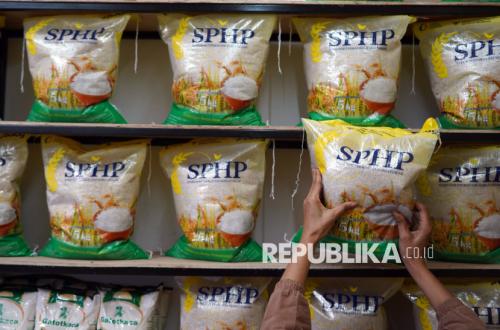
Bulog sells several premium rice brands, including Punokawan, Sentra Ramos and Sedap Super, through Indomaret, Alfamart, Super Indo, Indogrosir and other modern retailers. The products are sold for Rp74,500 per five-kilogram pack, in line with the HET cited by the source.
The Kendal SPP is now prioritising premium rice production to maintain supplies to modern retailers. The move is part of Bulog’s efforts to meet consumer needs amid rising paddy prices and limited scope to adjust rice selling prices.