
Bulog optimises two instruments to keep rice prices stable
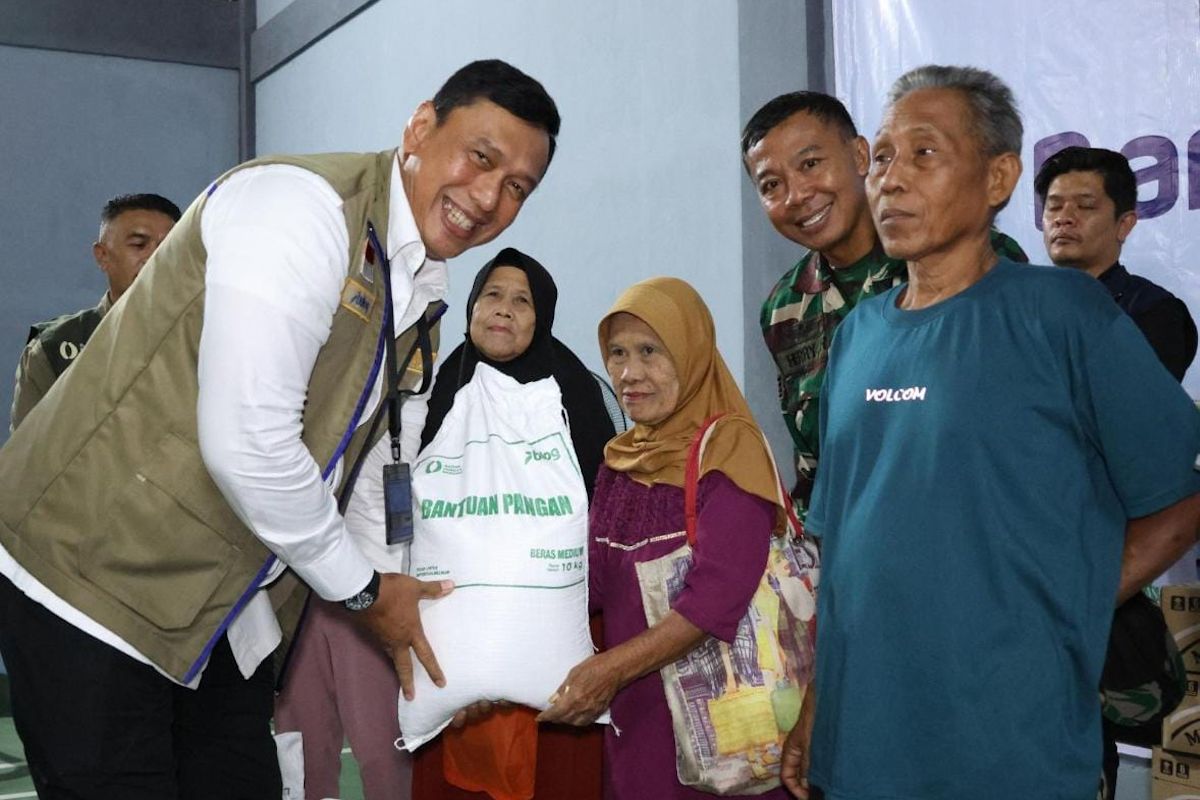
Perum Bulog is optimising two government instruments—the distribution of Stabilisation of Food Supply and Prices (SPHP) rice and rice food aid—to maintain supply availability, strengthen affordability, and ensure the stability of rice prices for the public.
“We continue to optimise the two main government instruments in controlling rice prices, namely the distribution of SPHP rice and rice food aid, to strengthen supply while simultaneously ensuring rice remains affordable for the community,” stated the President Director of Perum Bulog, Ahmad Rizal Ramdhani, in Jakarta on Thursday.
He noted that with strong stock levels and a national warehousing network, both programmes are being deployed massively from Sabang to Merauke as part of the government’s steps to maintain food stability across Indonesia. He added that SPHP rice and food aid operate through two complementary channels.
He explained that the SPHP programme strengthens the rice supply at the consumer level through various distribution channels, while direct food aid reaches eligible recipients to help meet household food needs. Under this pattern, the Government Rice Reserve (CBP) is not merely stored in warehouses but is continuously mobilised so that its benefits can be felt by the public, while supporting efforts to maintain the balance of rice supply and prices.
Calculating all targets and allocations for 2026—including 828,000 tonnes of SPHP rice, an additional 1 million tonnes of SPHP, and food aid for the February-March, July-September, and October-December periods—the scale of government assignments through the CBP in 2026 will approach 4.5 million tonnes. This large volume demonstrates the capacity of the CBP being deployed to strengthen market supply and support food access for tens of millions of beneficiary families across Indonesia.
The scale of assignments in 2026 is set to increase significantly. The initial target for SPHP distribution is set at 828,000 tonnes, while food aid for the February-March period has a ceiling of 664,888 tonnes, and the July-September period reaches 997,332 tonnes.
“The addition of 1 million tonnes of SPHP and food aid for October, November, and December, which is expected to reach approximately 997,000 tonnes, will result in a higher use of the CBP compared to previous years,” he added.
Rizal emphasised that his side is ready to execute these assignments, supported by strong rice stocks distributed across a national warehousing network totalling approximately 4.6 million tonnes. “We are ready to support government efforts to maintain the stability of rice supply and prices. With stocks of around 4.6 million tonnes, we continue to mobilise this strength for the people,” he said.
Bulog noted that as of 16 September, the realisation of SPHP has reached 799,593 tonnes, or 96.57 per cent of the 828,000-tonne target. Meanwhile, food aid for February-March reached approximately 662,867 tonnes, and food aid for July-September reached approximately 618,581 tonnes. “Overall, approximately 2.08 million tonnes of rice have been distributed through these three assignments,” said Rizal.
According to Rizal, this readiness will continue to be strengthened ahead of the end-of-year period, including the Christmas and New Year 2026/2027 momentum, as well as anticipation for a predicted longer and drier dry season. “With strong stocks and ongoing distribution, the public is expected not to worry about rice availability,” he said.
He also emphasised that the government has the capacity to continue mobilising the CBP as needed, with SPHP being strengthened to maintain affordable rice supplies, while food aid serves as direct support for recipient families. The state-owned food enterprise is committed to optimally executing all government assignments by maintaining stock readiness, accelerating distribution, expanding reach, and ensuring the CBP can be mobilised precisely according to the needs of every region.