
Bulog Exceeds 4 Million-Tonne Rice Procurement Target Through Collaboration
Kendal, Central Java (ANTARA) – State logistics agency Perum Bulog has exceeded its 2026 domestic rice procurement target, reaching 4.25 million tonnes of rice equivalent, thanks to collaboration between farmers, field officers and food-sector stakeholders.
“Successful procurement depends on intensive coordination between Bulog and agricultural stakeholders,” said Kurnia Pradipta, deputy head of Perum Bulog’s Semarang branch, during a media visit concerning the agency’s procurement of 4 million tonnes of rice equivalent in Kendal, Central Java, on Thursday.
Farmers and farmer group associations provide information on harvest readiness, while agricultural extension officers (PPL) and village supervisory non-commissioned officers (Babinsa) help connect farmers with Bulog staff and share information about potential harvests in their respective areas, he said.
Support from local agriculture offices also strengthens coordination, helping procurement proceed in line with conditions and needs on the ground.
Kurnia said Bulog had prepared vehicles, quality inspectors and payment arrangements to ensure procurement ran smoothly and was convenient for farmers.
Perum Bulog has surpassed its 2026 target of procuring domestic paddy equivalent to 4 million tonnes of rice. As of 28 October 2026, national procurement stood at 4.25 million tonnes of rice equivalent, or 106 per cent of the target.
The achievement reflects the joint efforts of farmers and farmer group associations (gapoktan), Bulog’s Food Procurement Teams, PPL officers, Babinsa and local agriculture offices, which have worked together to oversee the purchase of harvests across Indonesia.
Coordination established early in the year meant information about harvest locations and timing could be received in advance, allowing Bulog to prepare staff, transport vehicles and other operational requirements to facilitate procurement.
“The involvement of various parties on the ground is vital to ensuring farmers’ harvests are purchased and to strengthening government rice reserves (CBP),” he said.
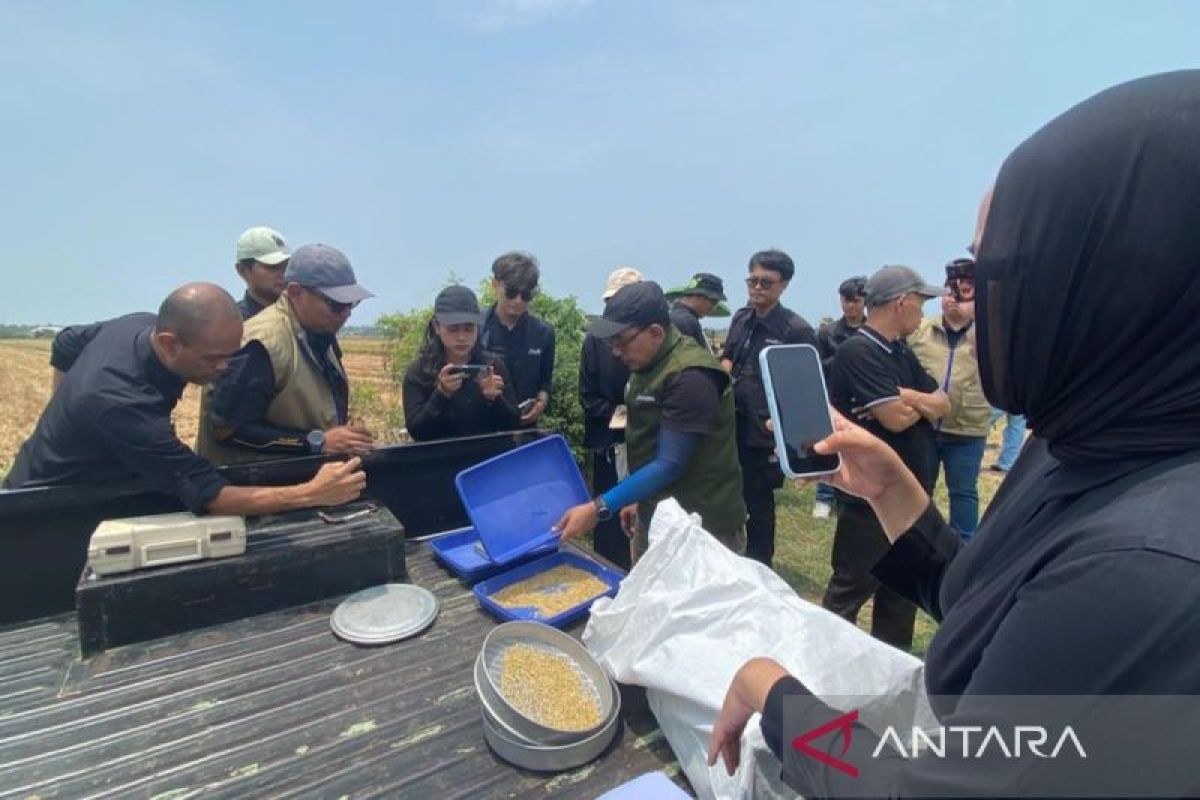
In Kendal district, Bulog’s Food Procurement Team acted on information about a potential harvest from a plot of around half a hectare, estimated to yield four to six tonnes of harvested dry paddy (GKP).
Staff then inspected the paddy and weighed it to confirm the quantity being purchased. Bulog quality inspectors helped ensure the process was orderly, transparent and in accordance with procedure.
Alongside staff and transport readiness, price certainty and convenient payment are also important to supporting procurement. The company offers farmers payment in cash or by bank transfer, as agreed.
Payment can be made on the same day or the following day, depending on the harvest time and completion of administrative processes.
The policy is intended to provide price certainty and maintain farmers’ confidence in the government procurement system.
“Once the main harvest period has passed, harvesting is usually no longer simultaneous. That is why information from PPL officers and Babinsa is very helpful in identifying the areas where harvesting is still under way,” he said.
“We will continue to procure at prices set in accordance with government regulations and make payment convenient for farmers,” Kurnia added.
The processed rice is subsequently stored in Bulog warehouses as part of the management of government rice reserves. The process shows that successful procurement depends not only on purchasing at the farm, but also on the readiness of staff, transport, processing facilities and an integrated warehousing system.
Bulog’s achievement in exceeding its national procurement target demonstrates the importance of cooperation throughout the supply chain in strengthening food security.
Farmers as food producers, farmer group associations, PPL officers and Babinsa coordinating field operations, local agriculture offices, and Bulog’s Food Procurement Teams and quality inspectors all played complementary roles in supporting the result.
Bulog is committed to continuing to optimise domestic harvest procurement even though it has already exceeded its 2026 target. The aim is to provide farmers with a reliable market, support price stability at producer level and maintain national rice reserves to meet public needs.