
Bulog East Java Rents 269 Additional Warehouses to Strengthen Food Reserves
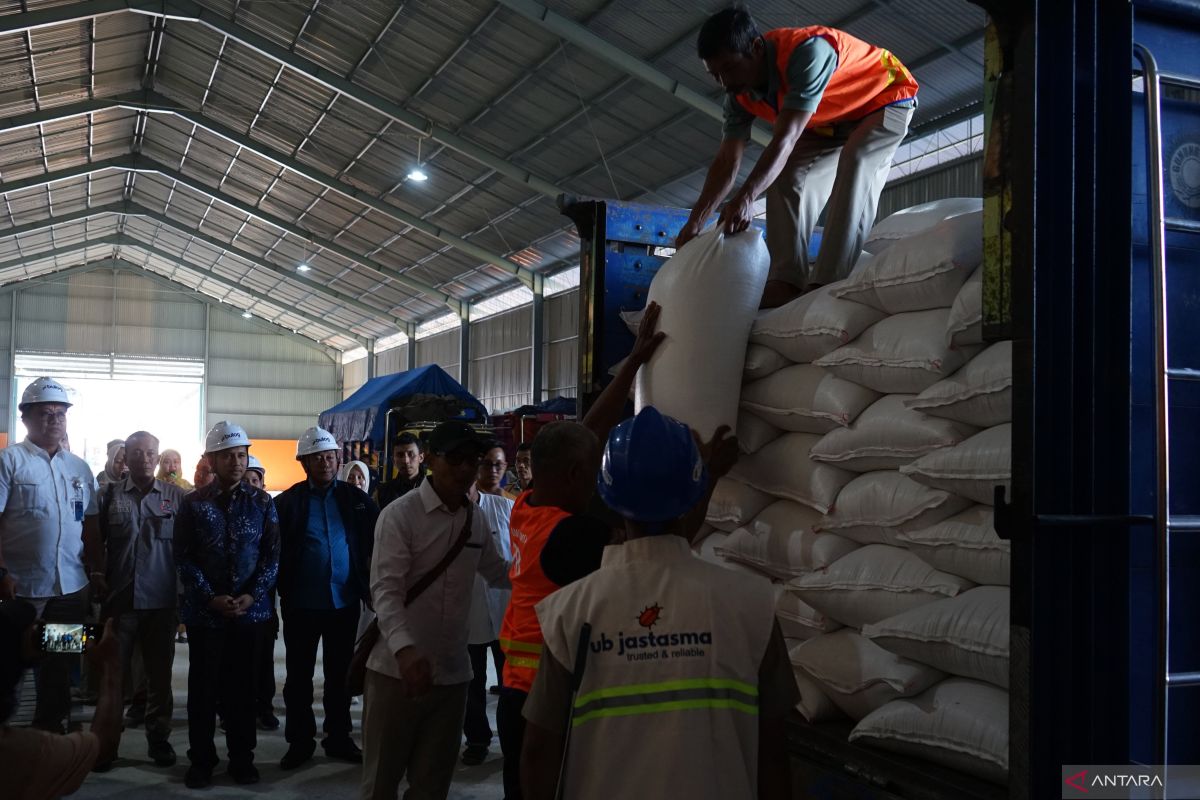
State logistics agency Perum Bulog is strengthening its food reserve storage capacity in East Java by renting 269 additional warehouses, including a sub-warehouse in Wonoanti Village, Trenggalek Regency, to expand the reach of its food logistics network.
Head of Perum Bulog’s East Java Regional Office, Langgeng Wisnu Adinugroho, said on Monday that the additional warehouses are intended to align storage needs with the volume of unhusked rice and rice absorbed from farmers.
“Bulog has 352 of its own warehouses, and we have now rented an additional 269 warehouse units. So we are capable of holding nearly two million tonnes of stock under our control,” Langgeng said during the inauguration of the Bulog sub-warehouse in Wonoanti, Trenggalek.
According to him, storage capacity can still be increased if demand rises, especially after the next harvest period begins. Bulog will again rent warehouses in locations deemed strategic according to the volume of harvest absorbed.
“If the second harvest is good, we will certainly rent more if it is needed,” he said.
Langgeng stressed that the distribution of warehouses is an important part of strengthening Bulog’s logistics network because food reserves not only require large storage capacity but must also be located close to production centres and distribution areas.
The existence of the sub-warehouse in Wonoanti is one of the points strengthening that network, particularly to reach the southern region of East Java. Filling the warehouse also involves local milling partners so that the process of absorbing harvests can be carried out closer to farmers.
East Java Deputy Governor Emil Elestianto Dardak said additional storage facilities are needed to ensure food reserves remain available amid the potential for a prolonged dry season.
“Trenggalek is an area that must also be reachable. It is a regency located in the south and here there is a warehouse that is being cooperated with,” said Emil.
According to Emil, the even distribution of the warehouse network is important because East Java’s food reserves are one of the pillars supporting the national rice reserve. With a spread-out storage network, rice distribution from surplus regions to areas in need can be carried out more efficiently.
Emil said the rice stock currently controlled by Bulog East Java is around 1.3 million tonnes, or about a quarter of the total national rice reserve, which has surpassed five million tonnes.
In addition to strengthening storage capacity through warehouse rentals, Bulog is also preparing the construction of new warehouses. Of the plan to build 100 Bulog warehouses nationally, four will be built in East Java, namely in Bojonegoro, Sampang, Jember, and Banyuwangi.
Langgeng said the construction of these warehouses is part of long-term capacity strengthening. However, the addition of warehouses through rental schemes will continue to be carried out flexibly according to absorption needs.
“If a warehouse can be rented, we will certainly rent it when it is truly needed,” he said.
The strengthening of warehouse capacity is proceeding in line with the high absorption of farmers’ harvests. As of 9 August 2026, Bulog East Java has absorbed 927 thousand tonnes of unhusked rice and rice against a target of 883 thousand tonnes.
This achievement has exceeded the first-semester absorption target, but Bulog has confirmed that absorption will continue to face the next harvest production.
Langgeng said the achievement was supported by regional governments, the Indonesian National Armed Forces and the National Police, as well as the growing formation of a rice absorption ecosystem that has made farmers better understand Bulog’s purchasing mechanism.
Emil assessed that strengthening food reserves is becoming increasingly important because East Java is entering the dry season and there is potential for El Niño, which could increase the risk of drought and disrupt agricultural production.
According to him, adequate rice reserves are one of the government’s instruments for maintaining supply continuity while controlling inflation if food production is affected by weather conditions.
On the other hand, Emil asked that the development of rice prices at the consumer level continue to be monitored amid rising unhusked rice prices, which in several regions have reached more than Rp8,000 per kilogram.
“We certainly want farmers to prosper, but prices at the consumer level must also be monitored so that inflation does not burden households,” he said.
With strengthened warehouse capacity, increased harvest absorption, and more evenly distributed storage points, Bulog East Java is preparing more widely spread food reserves to maintain rice supply continuity amid the threat of drought and potential production disruptions.