
Bulog CEO: Warehouse Capacity Still Available for Rice and Maize Stocks
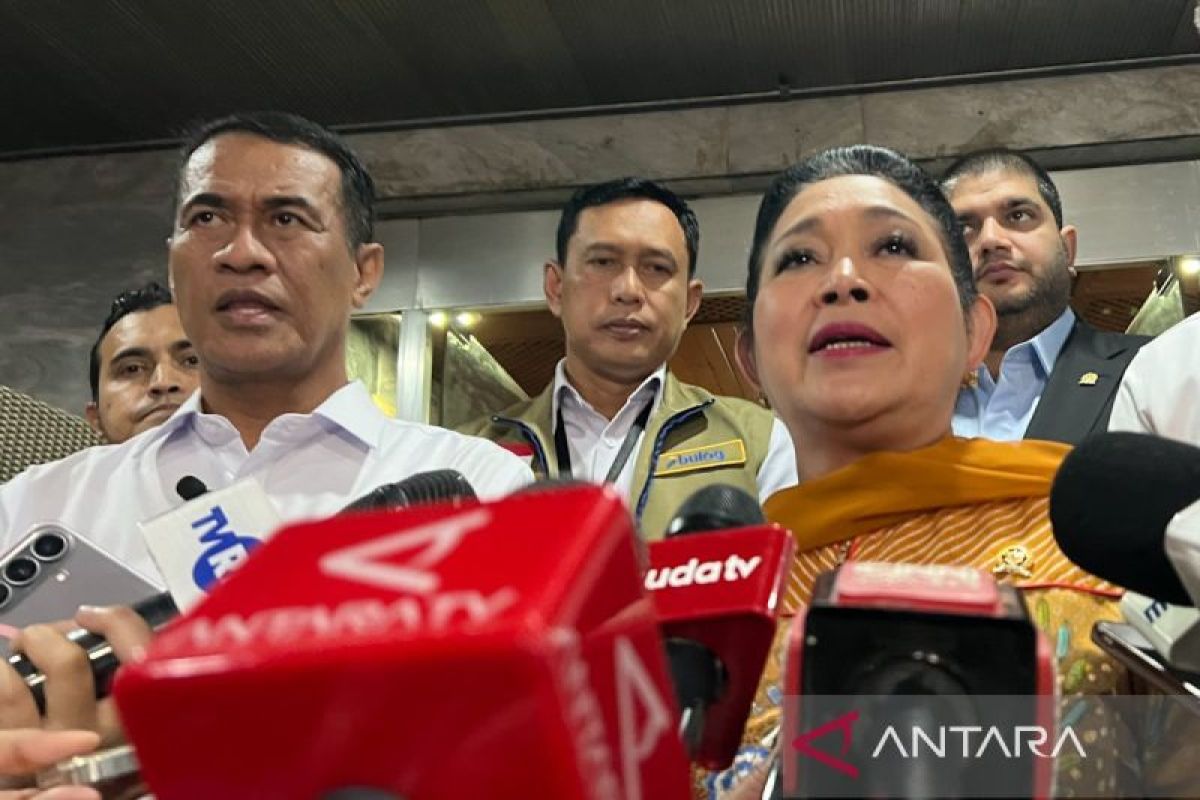
Jakarta (ANTARA) - Perum Bulog’s Director General Ahmad Rizal Ramdhani stated that warehouse capacity is still sufficient to accommodate national rice and maize reserves in order to maintain food security and supply stability.
During a working meeting with Commission IV of the House of Representatives (DPR RI) in Jakarta on Tuesday, Rizal said that the current government rice reserves (CBP) managed by Bulog amount to around 4.59 million tonnes.
To support the storage of government food reserves, Bulog still has remaining warehouse capacity of about 1.07 million tonnes, enabling optimal absorption of domestic farmers’ unmilled rice as the harvest season approaches.
“We report the amount of government rice reserves in line with what was conveyed by the Minister of Agriculture (Andi Amran Sulaiman) as of today (Tuesday, 7 April 2026), which is already 4.59 million tonnes. We have also prepared reserve warehouse space, with 1.07 million tonnes of space still available,” Rizal said during the meeting.
“With details that the total rented warehouses amount to two million tonnes. Then, those in the process of extended rental (capacity) 7.62 (tonnes) and those under construction around 250 tonnes,” he added.
Meanwhile, government maize reserves are recorded at 175,598 tonnes with a total warehouse capacity of 275,444 tonnes, leaving about 99,846 tonnes of storage space available for that commodity.
Going forward, Bulog will build 100 post-harvest infrastructure facilities for rice and maize in accordance with the President’s directive to strengthen the logistics system and improve the efficiency of national food reserve management.
The construction programme is planned to be distributed across 92 regencies with a total budget of around Rp5 trillion, consisting of approximately Rp4.4 trillion for main infrastructure development and around Rp560 billion for mechanisation, automation, and information technology systems.
The post-harvest infrastructure development plan includes 94 storage warehouse units; six unmilled rice silos; eight maize silos; 17 rice dryers; 17 rice milling units (RMU); eight maize dryers; and nine rice processing and packaging centres.
In its implementation, each location will undergo technical feasibility tests such as soil tests, land slope analysis, and road access studies to support logistics transport mobilisation.
Rizal explained that the physical construction will be carried out by state-owned construction enterprises in accordance with Presidential Regulation (Perpres) Number 14 of 2026 regarding the development of 100 post-harvest infrastructure points across Indonesia.
The infrastructure will be prioritised in food production centres such as Lampung, Java, and South Sulawesi with complete facilities including dryers, RMUs, silos, up to modern mechanisation and automation systems.
Meanwhile, in island regions such as Natuna, Rote, and Tidore, the development will focus on storage warehouses to maintain food supply stability, especially during extreme weather conditions.