
Bulog Central Sulawesi: Farmer grain absorption reaches 11 thousand tonnes
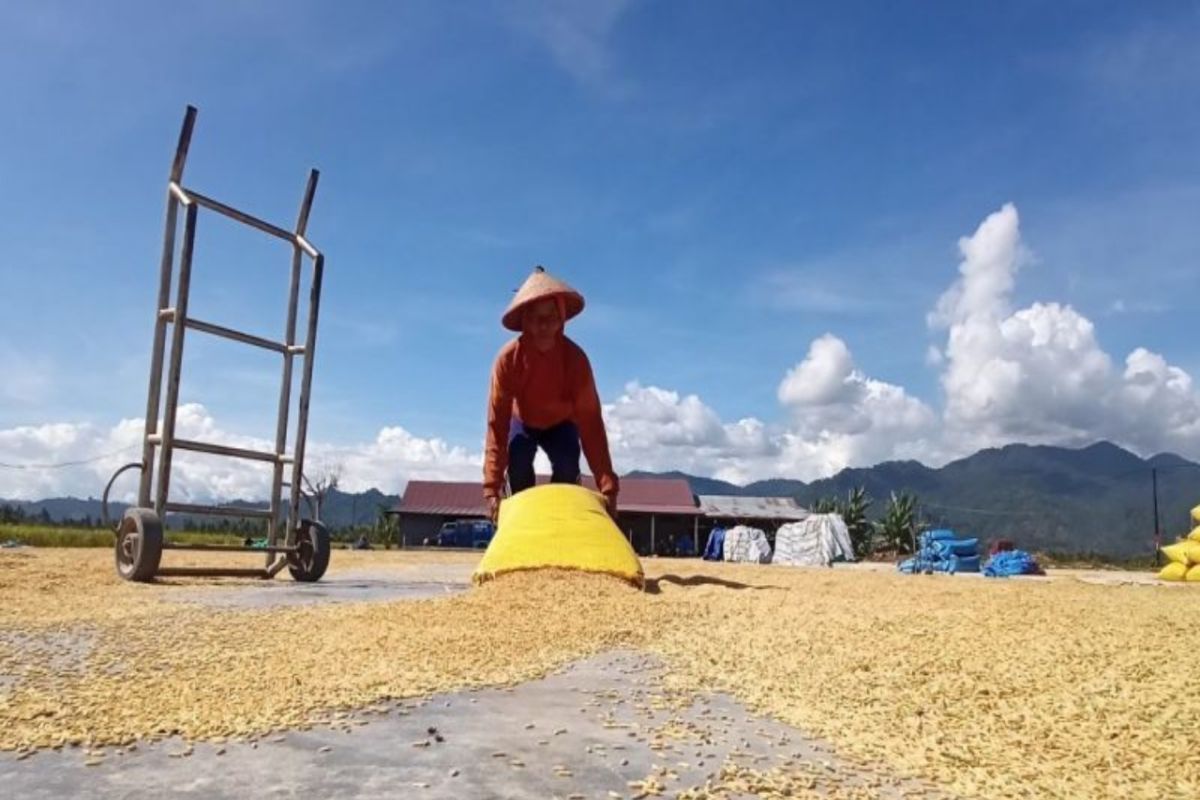
Perum Bulog Central Sulawesi has reported that absorption of locally produced unhusked rice in the province from January to August 2026 has reached more than 11,000 tonnes, or 96 percent of the target set by the government.
“The Central Sulawesi absorption target is 11,300 tonnes, and we have currently realised more than 11,000 tonnes,” said Bulog Central Sulawesi Regional Head Jusri in Palu on Monday.
He explained that the agency is optimistic that actual absorption will exceed the target, while Bulog’s planning continues to optimise absorption to support national food security.
Bulog is also working to expand its network of rice mill partners in food-producing regions as a strategy to support grain absorption achievements.
“Currently, within the Bulog regional office’s working area, we have seven rice mill partners, most of which are located in Parigi Moutong Regency,” he said.
He noted that in principle, Bulog uses two methods for purchasing farmers’ produce — either in the form of dry milled unhusked rice or ready-to-consume rice — to support the strengthening of national food security and the acceleration of food self-sufficiency.
According to him, the current challenge in the field is that not all farmers sell their produce in the form of unhusked rice. This lack of readiness is influenced by various factors, so the agency continues to intensify outreach to farmers and strengthen partnership patterns with rice mills, village supervisory non-commissioned officers, and agricultural extension workers to make absorption more optimal.
“The price set by the government is Rp6,500 per kilogramme. The price setting certainly takes into account the economic benefit for farmers,” said Jusri.
He added that farmers’ produce absorbed by Bulog is prepared for various government programme interventions for public welfare, such as the Food Supply and Price Stabilisation programme, government food assistance, and disaster relief assistance.
“In essence, the results of food absorption by the government are returned to the public to meet basic needs,” he added.