
Bulog absorption seen as key to maintaining grain prices amid rice surplus
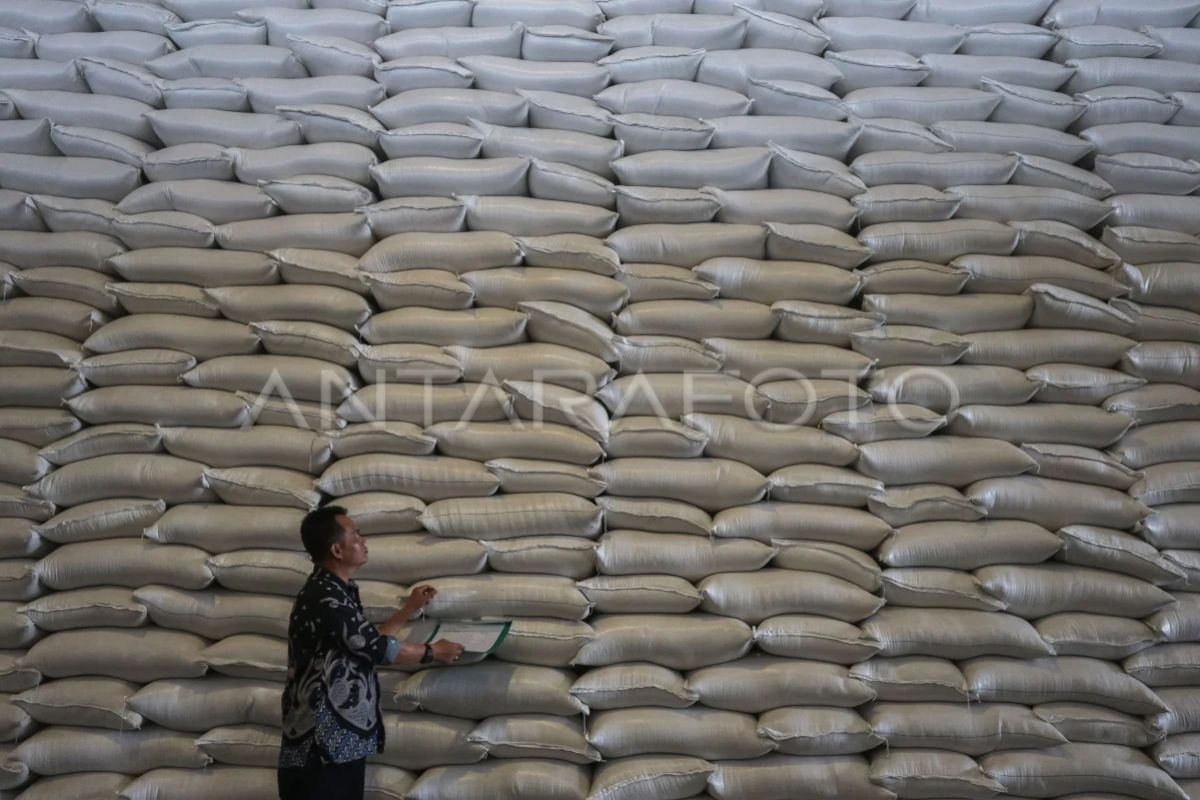
Agricultural observer from the Center of Reform on Economics (CORE) Eliza Mardian has said that the absorption capacity of Perum Bulog is one of the main factors in maintaining grain prices at the farm level when rice production is in surplus.
Based on the Ministry of Agriculture’s food balance projections, rice production in 2026 is estimated to reach 34.77 million tonnes, while national demand stands at 31.10 million tonnes, resulting in a surplus of around 3.67 million tonnes.
Eliza, contacted in Jakarta on Monday, explained that a rice production surplus has the potential to depress grain prices if the additional supply is not absorbed by the market.
This condition particularly needs to be anticipated during the main harvest season, when grain production increases within a relatively short period.
However, Eliza assessed that farm-gate grain prices are currently still relatively well maintained, supported by Bulog’s fairly aggressive purchasing. In addition, production in the second harvest season, according to her, is generally not as large as during the main harvest.
She said Bulog’s presence as a buyer offering more certain prices also means farmers do not depend entirely on middlemen or traders.
According to her, this condition differs from previous periods when Bulog’s absorption was considered more limited, leaving farmers more dependent on traders or middlemen who offered more volatile prices.
“Now farmers do not rely solely on middlemen, because Bulog is there to absorb at a fixed price,” Eliza said.
Nevertheless, Eliza assessed that increased food production needs to be accompanied by strengthened absorption and storage capacity so that the surplus does not become a source of pressure on farm-gate prices.
“The main determining factors for increased production to remain profitable for farmers are Bulog’s absorption capacity and the rice market, stock or storage management, supply chain efficiency, and competitive trade policies,” she said.
Meanwhile, Bulog recorded that the Government Rice Reserve (CBP) stock under its management reached around 5.2 million tonnes in August 2026. The government has also begun opening up rice export opportunities to absorb part of the production after ensuring domestic rice availability.
For the initial stage, Indonesia will export 1,000 tonnes of premium rice to Malaysia. This volume could potentially be increased to up to 200,000 tonnes per year to meet rice demand in Sarawak.
According to Eliza, exports can serve as one instrument for managing production surpluses, but should only be carried out after domestic needs and supply stability are guaranteed.
“Exports can be one way to prevent oversupply, but exports should preferably be carried out after domestic stocks are secure in all regions, even in remote areas, and farm-gate prices are stable,” Eliza said.