
Buleleng's Status as an Education City Cannot Be Measured Solely by the Number of Schools
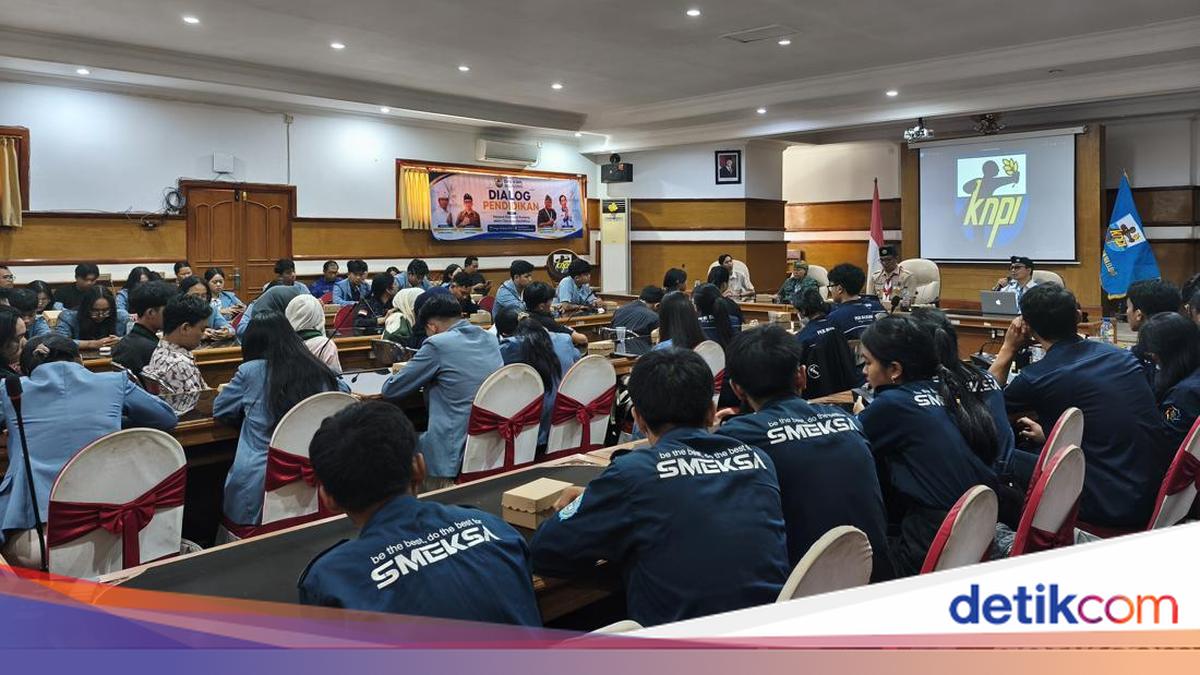
The status of Buleleng, or Singaraja, as an Education City is deemed insufficient if viewed only through the lens of the number of schools, students, or universities. The sustainability of education, including the formation of character, ethics, morals, soft skills, and life skills for the younger generation, is a vital component that must be continuously nurtured.
This sentiment emerged during an Educational Dialogue organised by the DPD KNPI of Buleleng Regency on Sunday (30/8/2026). The dialogue, themed ‘Maintaining the Existence of Buleleng within the Image of an Education City’, brought together the government, youth, students, and youth organisations to discuss various educational challenges in Buleleng.
The Chairman of DPD KNPI Buleleng Regency, I Putu Gede Parma, stated that Buleleng’s title as an Education City cannot be measured solely by figures, such as the number of students, schools, universities, or non-formal educational institutions. According to him, what is equally important is how the essence of education can continue to function effectively. Education, Parma noted, must be able to provide both hard skills and soft skills, as well as life skills, to the younger generation.
“It should not be viewed merely through numbers. Instead, we must look at the essence of educational sustainability, ensuring that not only hard skills but also soft skills and life skills are well-implemented in Bualaeng Regency,” he said.
Parma also emphasised the importance of implementing the ‘Tri Pusat Pendidikan’ (Three Centres of Education) concept, which encompasses formal, informal, and non-formal education. He argued that all regional components must be involved in maintaining educational sustainability through a pentahelix approach. The government, private sector, communities, civil society organisations, academics, and the media all play individual roles in supporting educational progress in Buleleng.
“We want the Tri Pusat Pendidikan—an established educational theory involving formal, informal, and non-formal education—to be earnestly implemented by all existing components in the Buleleng region,” he added.
Meanwhile, the Head of the Buleleng Regency Education, Youth, and Sports Office (Disdikpora), Ida Bagus Gde Surya Bharata, appreciated the dialogue organised by KNPI and youth organisations, noting that the theme was highly relevant. “This is very relevant to our regional development vision and mission, where one of our visions regarding education directs us towards equitable, fair, and quality education for all. This certainly involves all elements of our society,” he explained.
Surya Bharata stated that dialogue forums such as this serve as a space for the government to present programmes and receive input from students, youth, and the public. This feedback can subsequently serve as a reference for future educational policy formulation. He added that the government continues to open avenues for youth involvement in development, noting that Disdikpora has established communication with youth organisations through KNPI, BEM, and various student organisations.
Furthermore, three areas of youth development are currently being prioritised: leadership, entrepreneurship, and pioneering. All three are expected to provide opportunities for Buleleng’s youth to contribute more significantly to development.
The dialogue also addressed the issue of out-of-school children. Surya Bharata remarked that handling out-of-school children cannot be the sole responsibility of the Education Office but requires a collective movement. Disdikpora is currently identifying out-of-school children and is preparing a management workflow involving several existing systems and programmes.
These include the ‘Posko DO’ (Dropout Post), the Information System for Education for School-Age Children with Special Needs (Si Ulet), and the operation of equivalency schools. Moving forward, opportunities for youth contribution will be integrated into these systems.
“This is not just a matter for the Education Office; it is a collective effort to ensure that the 13-Year Compulsory Education programme benefits all members of the community,” said Surya Bharata.
Source: jawawa.id (https://jawawa.id/newsitem/bulelengs-status-as-an-education-city-cannot-be-measured-solely-by-the-number-of-schools-1788090709)
Originally published by detikBali (https://www.detik.com/bali/berita/d-8640835/predikat-kota-pendidikan-buleleng-tak-cukup-diukur-jumlah-sekolah), translated from Indonesian