
Buleleng Students Highlight Educational Equality and Infrastructure Development
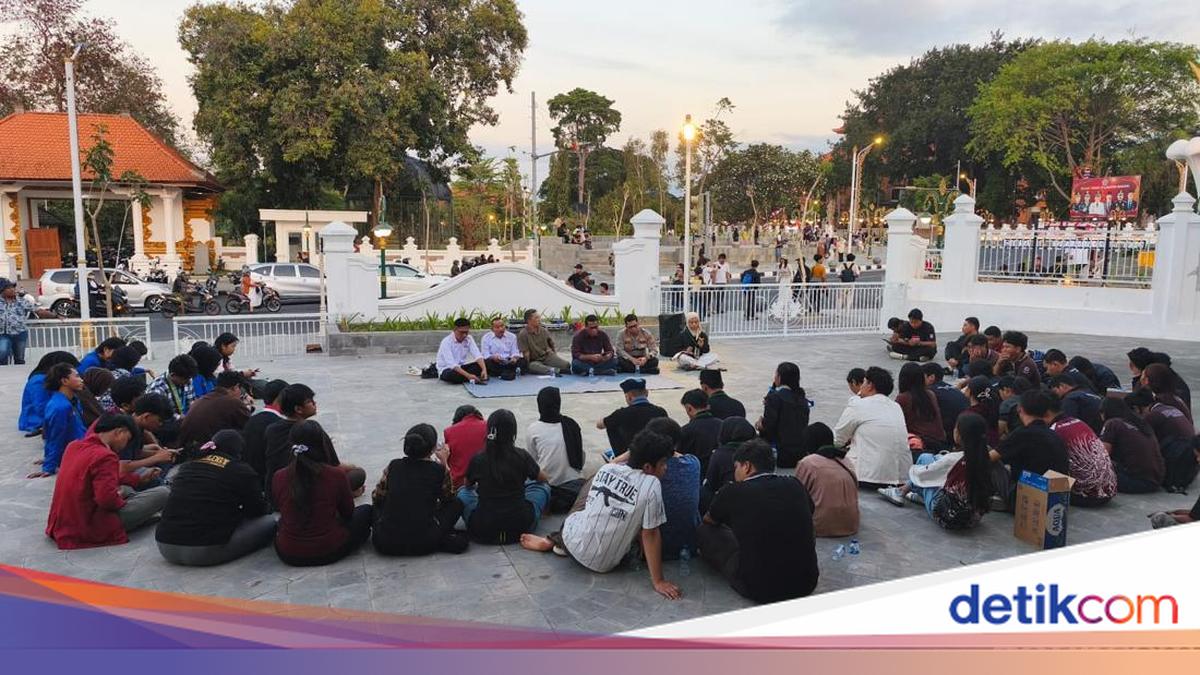
A student alliance in Buleleng, Bali, organised a demonstration titled ‘September Cerah’ (Bright September). They raised several regional issues, ranging from the equitable distribution of education and disaster preparedness to infrastructure development in remote areas.
The protest involved the Cipayung Plus Buleleng coalition (including KMHDI, HMI, GMKI, IMM, PMII, and GMNI) and Student Executive Boards (BEM) from various universities in Buleleng. The action was centred at the Laksmi Graha Building courtyard, Praja Mandala Singa Ambara Raja area, Buleleng, on Sunday (20/09/202cap).
The protest coordinator and Chairperson of KMHDI Buleleng, Komang Dia Damayanti, noted that while the month is nationally known as ‘September Hitam’ (Black September) due to human rights movements, students in Buleleng chose to convey a different message through ‘September Cerah’.
“Nationally, this month is identified with September Hitam, but here in Buleleng, we chose September Cerah. We want to showcase the unique character of Buleleng’s youth and hope this movement can bring bright changes to various regional issues,” said Dia.
One of the primary concerns raised by the students was education. They urged the government to accelerate the equalisation of educational quality, the fulfilment of teaching staff requirements, and the provision of school facilities and infrastructure in remote regions.
Students also highlighted the local government’s disaster preparedness. They questioned concrete steps to anticipate fires during the dry season and floods during the rainy season, among other potential disasters.
Furthermore, the students demanded more equitable infrastructure development, specifically regarding road networks connecting villages and remote areas within Buleleng.
On the other hand, the students expressed disappointment that the Regent of Buleleng and the Chairperson of the Buleleng Regional House of Representatives (DPRD) did not attend the dialogue in person. Their aspirations were received by several officials, including the Head of the Buleleng Education, Youth, and Sports Office, the Head of the Regional Disaster Management Agency (BPBD), the Head of the National Unity and Politics Agency (Kesbangpol), the Deputy Chairperson of the Buleleng DPRD, and the Buleleng Police Chief.
Dia stated that the students intended to discuss issues directly with regional leaders. She emphasised that students did not come merely to criticise, but also to offer ideas and open spaces for collaboration to resolve Buleleng’s problems.
“We do not only want to criticise. We also want to offer ideas and collaborate to solve the existing problems in Buleleng,” added Dia.
Meanwhile, the First Deputy Chairperson of the Buleleng DPRD, I Nyoman Gede Wandira Adi, appreciated the dialogue organised by the students. Wandira stated that criticism and input from students should serve as evaluation material for the local government.
“What the students have presented is the real condition that the local government must address together,” said Wandira.
Wandira noted that there were at least 14 points of input presented by the students during the dialogue, most of which related to education and disaster management.
Regarding education, Wandira acknowledged ongoing issues with school infrastructure and teacher shortages. He mentioned that several school buildings in Buleleng are in need of repair.
“It must be recognised that much of our school infrastructure is currently inadequate; some have even collapsed,” he said.
Regarding the issue of teaching staff, Wandira mentioned that the local government has been attempting to address teacher shortages through honorary staff. However, he noted that the need for educators must be resolved with competent teachers who meet official regulations.
Regarding disaster management, Wandira stated that the local government needs to strengthen prevention measures. “Floods in the rainy season and fires in the dry season are priorities for the local government. Naturally, the programmes we create must focus more on prevention,” he concluded.