
Buleleng DPRD and Regency Government Agree on Regional Regulation, Eating at Warungs to Face Tax
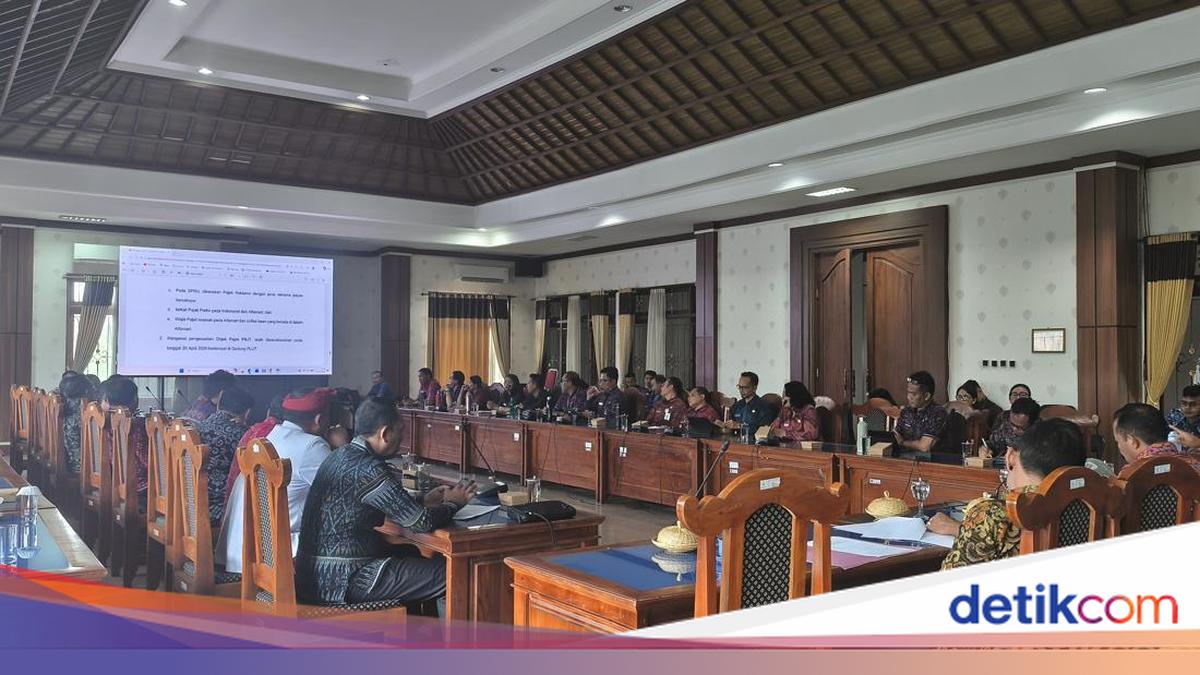
The Buleleng Regency DPRD and Regency Government (Pemkab) Buleleng have agreed on the Draft Regional Regulation (Ranperda) on Amendments to Regional Regulation Number 9 of 2023 concerning Local Taxes and Levies. The agreement was reached during a joint commission meeting at the Buleleng DPRD on Tuesday (21/4/2026).
The Ranperda regulates the Tax on Specific Goods and Services (PBJT), particularly food and beverages. One of its provisions is that consumers at restaurants, warungs, food courts, and similar establishments will be subject to a maximum tax of 10%. However, the rule exempts micro, small, and medium enterprises (UMKM) with turnover below Rp9 million per month.
During the discussions, the DPRD stated it could accept the submitted Ranperda, with several strategic notes. One of them is that every increase in levy rates must be accompanied by improvements in service quality to the public.
Buleleng DPRD Chairman Ketut Ngurah Arya said the discussion of this Ranperda has been ongoing for about 10 months since it was submitted by the Regent on 16 June 2025. The process was also influenced by adjustments to central regulations, including the Minister of Home Affairs’ Circular on local tax and levy policies.
Ngurah Arya stated that this agreement is a mandate from regulations that must be implemented by the region. Next, the Ranperda will be followed up with the drafting of a Regent’s Regulation (Perbup) as a derivative rule.
“The conclusion of today’s meeting is that we agree. This Regional Regulation is complete; now it’s just the derivative in the form of the Perbup. It’s about how the socialisation and implementation run well,” he said.
Regarding the regulation of the Tax on Specific Goods and Services (PBJT), Arya said it needs to be socialised massively, especially to UMKM actors. He emphasised that the tax is imposed on consumers, not the business operators.
“It needs to be understood that the ones taxed are the consumers, not the UMKM. Socialisation must be clear to avoid unrest in the field,” he stated.
He also stressed the importance of nurturing UMKM so they can develop amid existing fiscal policies. According to him, the main challenge for UMKM is not the tax, but their capacity and business strategies.
“UMKM should not fail because of taxes, but because of weaknesses in doing business. Therefore, training and mentoring must be strengthened,” he explained.
The DPRD also urged the local government through Bappeda to actively provide business strategy training, from site selection, understanding public purchasing power, to promotion techniques.
In addition, the Ranperda accommodates several tax and levy potentials that were previously not covered by regulations. One of them relates to the imposition of parking levies in modern business areas such as minimarkets.
“The new one is about parking at Indomaret. There, we don’t handle the parking, but the parking area size will be calculated later as a levy. The mechanism for collecting parking fees, whether free or not, depends on the businesses there,” Ngurah Arya clarified.
He hopes that this policy does not burden the public or business operators, but rather encourages improvements in product and service quality. “It’s not about being expensive or not, but how to improve product quality. If the quality is good, the public won’t mind the price,” he concluded.
On the other hand, the DPRD also highlighted the potential for budget leakages in several sectors. One that is of concern is the health sector, particularly regarding claims for poor patients that are not fully accommodated by BPJS Health.
According to Ngurah Arya, the lack of data synchronisation between the Health Office, Bappeda, and BPJS can impact the loss of regional revenue potential, especially at the RSUD and primary hospitals.
“We push for increased local own-source revenue (PAD), but don’t let it leak in other sectors. There must be agreement between agencies so that public rights remain protected and regional revenue is not disadvantaged,” he asserted.
With the agreement on this Ranperda, all factions and commissions of the DPRD assess that the substance of the amendments is in line with the region’s needs. The Ranperda will next enter the finalisation stage until it is enacted as a Regional Regulation to strengthen Buleleng’s Local Own-Source Revenue (PAD).
Source: jawawa.id (https://jawawa.id/newsitem/buleleng-dprd-and-regency-government-agree-on-regional-regulation-eating-at-warungs-to-face-tax-1776768745)
Originally published by detikBali (https://www.detik.com/bali/berita/d-8454732/dprd-pemkab-buleleng-sepakati-ranperda-makan-di-warung-bakal-kena-pajak), translated from Indonesian