
Bukit Serelo Train: Affordable Access Sustaining Economic Movement in South Sumatra
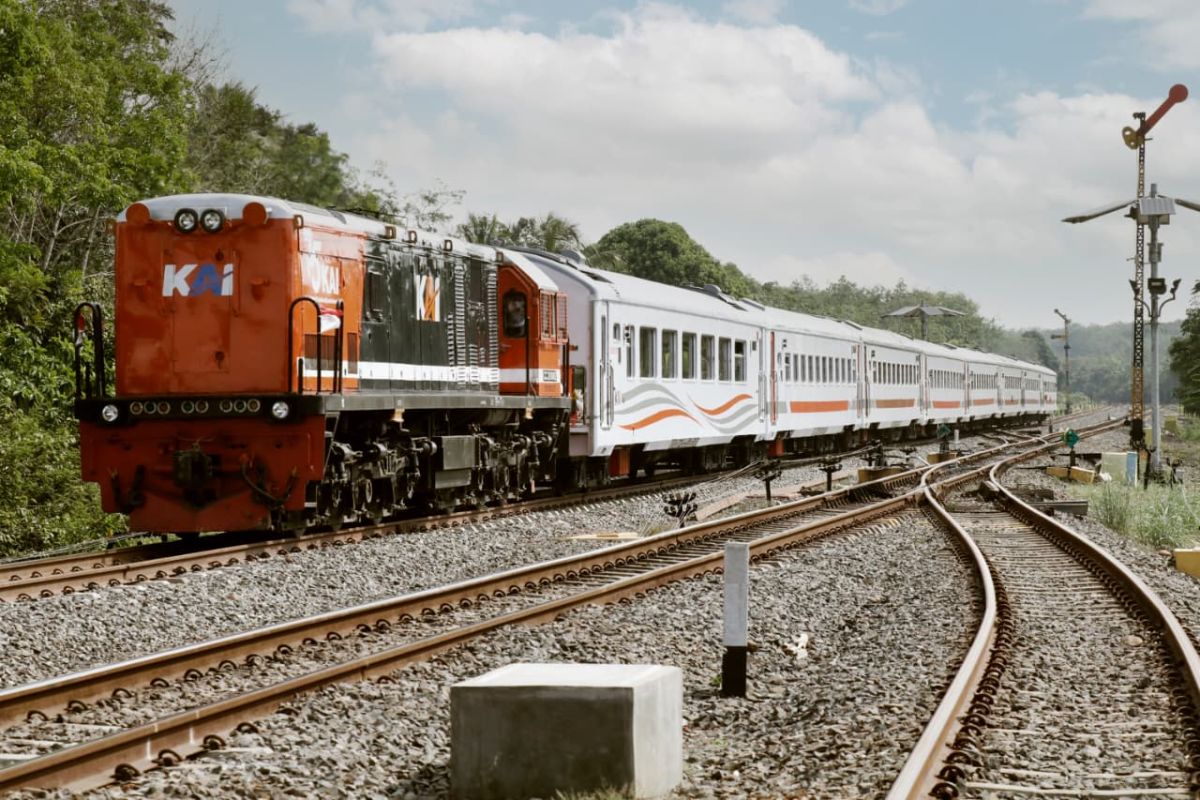
In South Sumatra, distance is an integral part of daily life. Economic, educational, and social activities unfold across a vast expanse, with activity centres scattered across various cities and regencies.
According to data from the Central Statistics Agency of South Sumatra Province for 2025, the province’s area covers approximately 91,592.43 km², making it one of the largest on the island of Sumatra, with a population exceeding 8.9 million people. The population is distributed across various regions with an economy dominated by the agriculture, trade, and services sectors. This condition creates a high need for inter-city mobility over long distances.
One of the main routes is from Palembang to Lubuklinggau. The distance is around 294 kilometres via the railway line, with a travel time that can exceed 7 hours. By road, the distance can surpass 300 kilometres, with travel time depending on traffic conditions and the nature of the roads along the route.
This route connects areas with daily economic activities. In this space, the Bukit Serelo train emerges as a service close to the lives of the community. This train serves the Kertapati (Palembang) to Lubuklinggau (return) route with a maximum fare of Rp32,000.
The name Bukit Serelo is taken from one of the natural icons in Lahat Regency, in the form of hills well-known to the local community. This naming reflects the connection of the train service to the identity of the regions it passes through.
This service is part of the Public Service Obligation (PSO) programme together with the Directorate General of Railways under the Ministry of Transportation. This scheme ensures that travel access remains open to the wider community at affordable costs.
Vice President of Corporate Communication at KAI, Anne Purba, stated that the Bukit Serelo train has a close role with community activities in South Sumatra.
“The Bukit Serelo train serves long-distance journeys that are a daily need for the community. The affordable fare provides space for the community to remain productive and sustain economic activities,” said Anne.
The development of the Bukit Serelo train service is reflected in the growth of the number of passengers. In the first quarter of 2026, the number of passengers reached 141,122, an increase compared to the same period in 2025, which recorded 131,494 passengers.
The approximately 7.32% increase strengthens the trend of growing public interest in this service. These figures also affirm that the Kertapati–Lubuklinggau route continues to be an important part of community movement.
The Bukit Serelo train passes through areas such as Prabumulih, Muara Enim, and Lahat, which have economic activities based on natural resources, trade, and services. This route serves as a connector that maintains the continuity of activities between regions.
Maintained travel access makes community mobility more certain. Workers reach activity centres, students have consistent travel options, and the community can travel between cities more regularly according to their needs.
From the expenditure side, travel cost efficiency provides space for other needs such as education, health, and business development. This directly influences the economic activities of the community along the route.
In addition to its mobility function, journeys on the Bukit Serelo train also pass through South Sumatra’s distinctive natural landscapes. The Lahat region and surroundings offer hilly terrain, river flows, and the lives of local communities growing around them. This potential opens opportunities for developing domestic tourism movement.
KAI views that rail-based transportation plays an important role in regions with long inter-city distances. Its large carrying capacity and more stable travel times provide certainty for the community in carrying out their activities.
Strengthening railway services in Sumatra is an increasingly relevant step as mobility needs continue to grow. With increasingly connected networks and increased capacity, the benefits will be felt more widely by the community.
“Reliable transportation infrastructure has a direct impact on community life. Activities run more orderly, time is better preserved, and productivity can increase,” Anne concluded.
The Bukit Serelo train becomes part of that system. On the long route, this service keeps community movement running, while connecting economic, social activities, and regional potential in South Sumatra.