
Building the Nation's Digital Soul: Ensuring AI is Productive, Wise, and Competitive for Indonesia
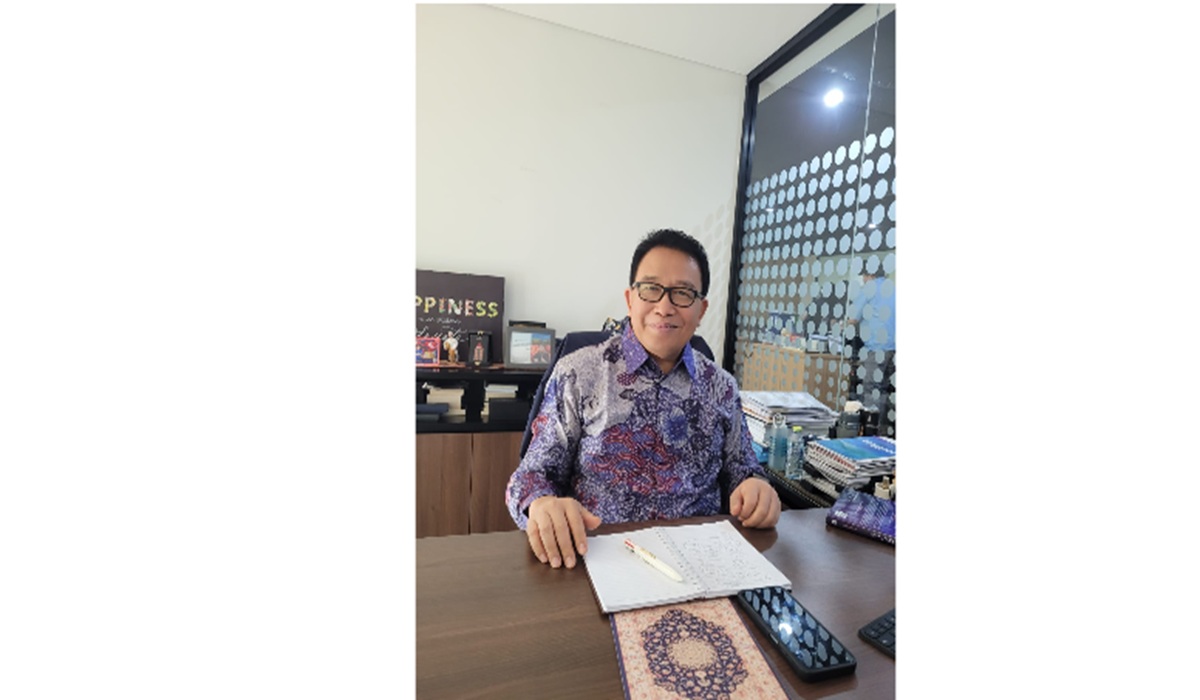
Humanity today is navigating one of the most consequential moments in history. The presence of artificial intelligence (AI) is no longer just a technological leap, but a massive force reshaping the global economic structure, social interactions, and civilisation. AI promises to accelerate sustainable development, broaden shared prosperity, and even provide solutions to the climate crisis plaguing our planet. Yet, behind this optimism, as cautioned by Pope Leo’s Encyclical Magnifica Humanitas regarding its impact on humanity, lies a chasm of anxiety: the AI divide. The benefits of this digital revolution threaten to concentrate solely in a handful of producer nations and global corporations, while developing countries risk being trapped as passive consumer markets. For Indonesia, bridging this AI divide is not merely a technological choice. It is a moral, social, and economic calling to ensure the future of technology is deeply rooted in a collective consciousness that serves humanity and preserves the earth. In line with the noble philosophy of Tri Hita Karana—the three harmonies aligning human relationships with God, fellow humans, and nature—we must steer AI adoption in the country to be productive, wise, and competitive on the global stage. To navigate this disruption, the government, legislators, industry players, and civil society must move in unison with a complete ecosystem awareness. We cannot walk alone. Three strategic mandates must be realised together. First, productive AI adoption must be interpreted not as the substitution of humans by machines, but as the augmentation of human capacity. The government and industry must facilitate workforce transformation to enable collaboration with AI as a productive assistant. In education, AI should be directed to create adaptive, inclusive learning systems reaching the nation’s remotest areas. For UMKM, the backbone of our economy, AI can serve as a tool for operational automation and market analysis, enabling local products to compete globally. AI-based productivity must generate efficiency that brings prosperity, not disruption that causes marginalisation. Second, technology without a moral compass breeds inequality and exploitation. This is where Indonesia holds a comparative cultural advantage. We possess strong social capital in the form of ethical consensus, such as the Istiqlal Declaration emphasising human harmony. Wise AI adoption demands that legislators and the government immediately formulate adaptive yet protective regulations. We need legal certainty guaranteeing personal data protection, algorithmic transparency to prevent bias, and risk governance to curb the spread of disinformation. Furthermore, being wise with AI means ensuring that the use of autonomous AI systems remains under human ethical control. AI may take over repetitive procedural tasks, but strategic decisions, empathy, and moral judgement must remain the absolute domain of humans. Third, Indonesia must not be a mere spectator or a provider of raw data for foreign AI models that are then commercialised back to the nation. We must build national competitiveness through sovereignty in three core pillars: Data, Algorithms, and Computation. Hyper-local data sovereignty means securing and processing local datasets—from the diversity of regional languages and tropical health data to archipelagic logistics patterns. With clean and protected data, we can build AI models that truly understand the Indonesian context. In terms of algorithmic capacity and domestic talent, educational and research institutions must be encouraged to produce data scientists and mathematicians capable of creating original algorithms, not just using ready-made foreign libraries. The government should provide tax incentives and regulatory ease for local startups focused on social-preneurship and deep tech AI. Regarding green computing infrastructure, AI computation demands enormous electrical power and risks worsening global carbon emissions. Indonesia has a golden opportunity to position itself as a global hub for green computing by utilising its wealth of renewable energy, such as geothermal and hydropower, to power future data centres. This is a future business model that is both profitable and planet-preserving. To realise this ideal AI ecosystem, a concrete division of roles and action agendas from all parties is required. Facing the digital future is no longer about our readiness to accept technology, but about how we imbue that technology with our identity. Through consensus and an integrated agenda, Indonesia has a significant opportunity to prove to the world that cutting-edge technological progress can walk hand in hand with spiritual values, humanity, and environmental sustainability. Let us synergise to weave the nation’s competitiveness for true shared prosperity for all people and the earth.