
Building the Future of Bank Syariah Indonesia
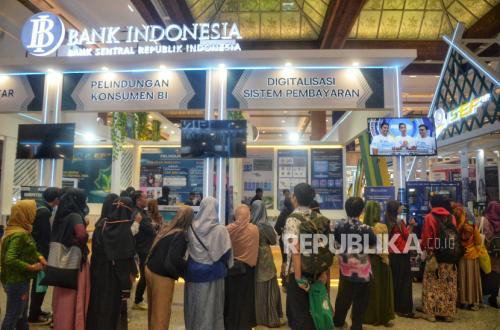
The Head of Bank Indonesia’s West Java Representative Office, Junanto Herdiawan, recently emphasised that the development of Islamic economics aims not only to boost economic activity but also to create an inclusive, equitable system that provides broad benefits to society. This statement reflects a noble commitment and the ideal vision consistently promoted by financial regulators.
Yet behind this encouraging narrative of inclusivity and justice lies a fundamental paradox that demands a real answer. Why, after more than three decades of presence in the archipelago, has Islamic banking still not managed to escape the trap of a market share stagnating at around 7 to 8 per cent? This fact is ironic considering Indonesia is the country with the world’s largest Muslim population, has more than 65 million MSMEs, a rapidly growing halal industry, and the greatest potential for zakat and waqf globally. If this system promises such broad benefit, why has the majority of the grassroots economy not yet considered it a primary choice?
This paradox between the ideal vision and the reality of market stagnation should serve as material for collective self-criticism. Growth in assets or financing, often showcased in annual reports, is important, but growth is not always synonymous with transformation. An industry can expand corporately without fundamentally altering the unequal economic structures it was meant to improve. It is in this context that we must call in the ethical promise that was the very reason for Islamic banking’s birth. More than 35 years ago, Islamic banking emerged not merely to provide an interest-free alternative. It carried a sacred mission: to build a just financial system, promote equitable welfare, strengthen the real sector, and introduce a financing mechanism based on risk-sharing partnerships rather than risk shifting.
Consequently, the success of Islamic banks should not be measured solely by quantitative figures such as asset size, profits, or the number of branches. The true indicator is the extent to which they can reduce economic inequality and empower economically weak communities. Unfortunately, herein lies the fundamental problem. Indonesia’s Islamic banking is not experiencing a growth crisis, but rather an identity crisis. Corporately, the industry is growing, but substantively, it has not yet fully succeeded in becoming an instrument of socio-economic transformation as promised by Islamic economics.
The root of the first problem lies in a business model that remains heavily reliant on sale-based financing, particularly murabahah contracts. In practice, the financing portfolio of Islamic banks is still dominated by these fixed-margin contracts. Meanwhile, genuine partnership-based financing such as mudharabah and musharakah accounts for a very small portion. As a result, the business orientation of Islamic banks increasingly resembles that of conventional banks. Often, only the contract terminology changes, not the underlying philosophy of risk management and profit sharing. This phenomenon is not merely a management error in product selection, but a consequence of an unhealthy industry structure. Islamic banks in Indonesia face relatively higher cost of funds because their ratio of low-cost funds (Current Account Saving Account/CASA) still lags far behind giant conventional banks. When the cost of acquiring funds is already expensive, the room to channel financing with low and competitive margins becomes increasingly narrow.