
Building the Competitiveness of Indonesian Tea Through Social Governance
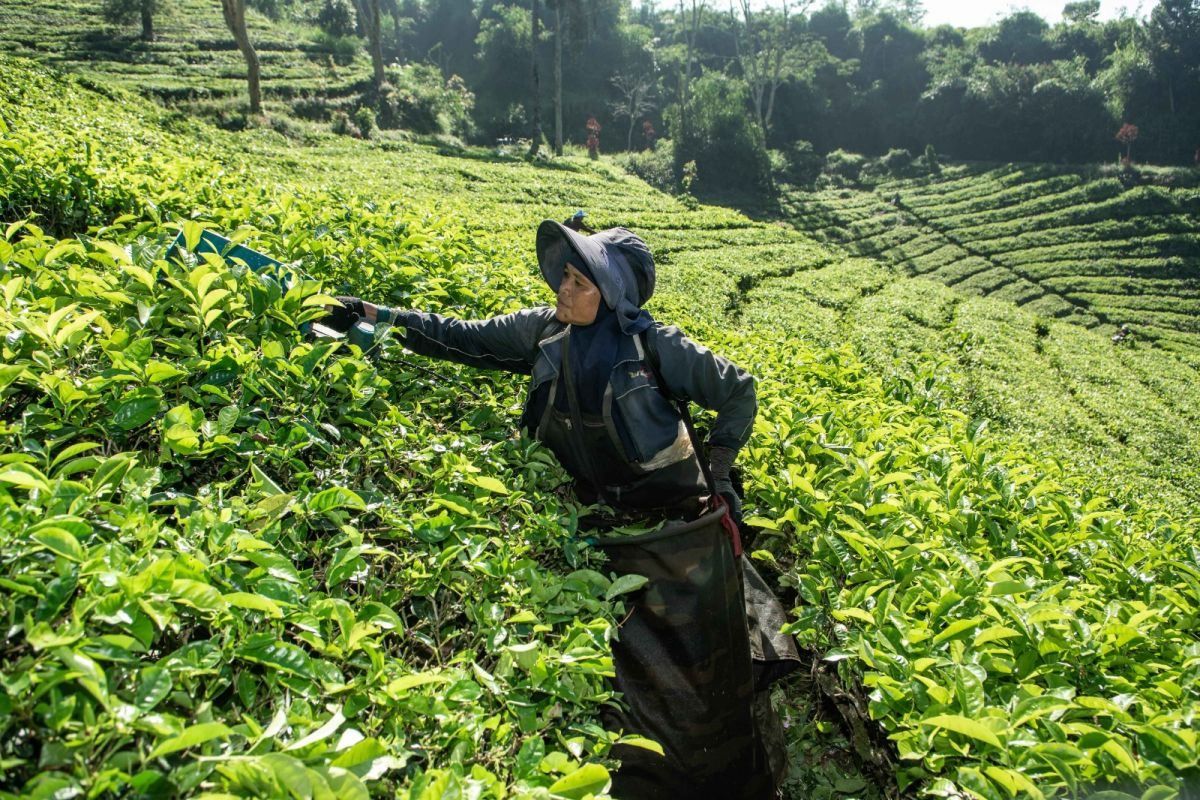
In recent years, the competitiveness of Indonesian tea is no longer determined solely by leaf quality, plantation productivity, or global market prices. Behind every tea supply chain are people, families, villages, and social relations that determine whether a commodity is truly born from a resilient and trusted system.
The global market is undergoing fundamental changes. Buyers, consumers, and certification bodies no longer assess only the final product, but also how it is produced. They question whether workers’ rights are respected, whether women have space to voice their concerns, whether social and environmental risks are managed properly, and whether companies build healthy relationships with surrounding communities.
Thus, the future of Indonesian tea depends not only on production capacity but also on the quality of social governance that underpins the entire supply chain.
In plantation communities, working life and community life are never truly separate. Issues of sanitation, worker welfare, landslide threats, gender-based violence, access to basic services, and family economic opportunities lie at the intersection between corporate and village domains. Companies manage operations, village governments carry out development through participatory planning and village funds, while communities strive to solve daily problems with the resources they have.
However, many social issues fall outside the clear authority of any single party. Some are too close to community life to be solely the company’s responsibility, yet too connected to workers to be ignored. Conversely, some issues are important to the village community but may not be included in formal development priorities. As a result, many problems exist in a grey area: known and felt, but never truly discussed or resolved together.
This is where the community development forum (CDF) finds its relevance. In several tea plantations in West Java, this approach was developed through a collaboration between Yayasan CARE Peduli, global supply chain partners, and implemented together with plantation company PTPN I and PT Kabepe Chakra.
The most important aspect of the CDF is not its name, but the mechanism it builds. The forum provides a structured and sustainable space for dialogue, where plantation management, workers, village government, community cadres, women, youth, and various community groups sit together to identify problems, set priorities, divide roles, and monitor the implementation of agreed solutions.
In truth, this approach is not foreign to Indonesia. Its values are rooted in the traditions of deliberation and consensus. What sets the CDF apart is its continuity, structure, documentation, and accountability, so that participation does not stop at attending meetings but develops into a real ability to influence decisions.
A female tea picker and forum member, Nyai Sunarsih, once said, “Now we are not just listening. We are part of the planning. Our ideas are considered, and we contribute to decision-making that affects our community.”
This simple statement shows that changes in governance often begin when those who previously only received decisions are involved in the process of making them.
The gender dimension is crucial in this process. In many plantation communities, women carry dual, even multiple, burdens: as workers, household managers, family economic drivers, and caregivers. They are also often the first to recognise problems related to sanitation, health, safety, violence, and family welfare.
Ironically, because these issues are often seen as domestic matters, women’s voices are frequently absent from decision-making spaces. Yet, many social risks in the supply chain first become visible through their experiences.
When women gain space in plantation and village governance through the CDF, various previously hidden issues become a shared agenda. Gender-based violence is no longer considered a private matter, sanitation is no longer seen as a minor issue, and worker family welfare enters the realm of planning, dialogue, and follow-up.
This is one of the CDF’s most important contributions: transforming women’s experiences into collective knowledge that enriches the decision-making process.
These changes do not stop at discussion. The impact is visible in concrete actions that improve the quality of community life.
In Banjarsari and Margaluyu villages, for example, environmental clean-up activities evolved into a joint movement between the community, village government, and plantation management. In other locations, the forum encouraged the joint identification of landslide-prone points, which were then addressed by planting vetiver grass as a mitigation measure. Problems previously trapped between the boundaries of corporate and village authority began to find solutions through collaboration.
The CDF also opened a safer space for workers to voice aspirations and complaints. A study on the CDF showed that nearly 68.4 percent of workers used the forum to convey their views on working conditions, relationships with supervisors, wages, fairness, and even gender-based violence and sexual harassment.