
Building the City, Nurturing Tradition
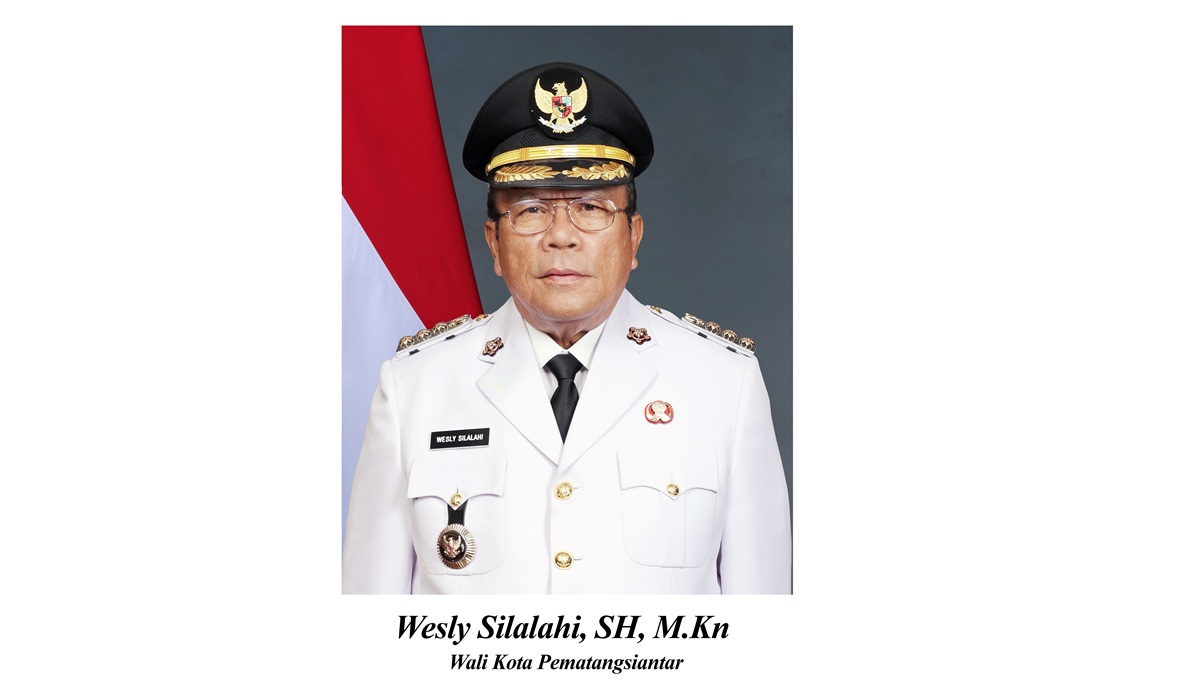
Building a city is not solely about infrastructure development, economic growth, or improving public services. More than that, development is truly about preparing human resources. The future quality of a region is largely determined by how we build today’s generation. In this context, attention to children becomes a foundation that cannot be ignored. Children are a nation’s greatest investment. They are not only the successors of development but also the future performance of Indonesia. For this reason, the Pematangsiantar City Government places human resource development as a top priority through various programmes touching on education, health, character, and strengthening the role of the family.
In the journey to build human resource quality, collaboration is key. The government cannot walk alone. Involvement is needed from various parties, including the education sector, communities, the public, the business world, mass media, and social institutions that care about generational development. Collaborative programmes that can have a broad impact on human resource development focus on the education and health sectors. These two areas require a systemic, cross-sectoral, and long-term oriented approach, as part of concrete steps to realise the vision and mission of Pematangsiantar City, namely Smart, Healthy, Creative, and Harmonious.
Human development cannot be resolved by a single institution. Collaboration must involve the government, private sector/philanthropy, academics, media, and community groups (Pentahelix). The government, as regulator and facilitator, provides regulations, supporting policies, and basic funding. We can partner with the private sector/philanthropy and communities as initiators who have access to resources, operational efficiency, technology, and impact-oriented social programmes. Through this collaboration, a simultaneous focus on converging education and health has proven capable of producing significant double impacts. Stemming from one fundamental issue, the low literacy and numeracy index of the Pematangsiantar City community, the government together with the private sector developed a collaborative programme to improve literacy and numeracy skills as the main foundation for building educational quality.
Literacy is not just the ability to read and write. Literacy is a person’s ability to understand information, think critically, make decisions, and adapt to changing times. Similarly, numeracy is a basic ability to solve everyday life problems. Various collaborative programmes between the Pematangsiantar City Government and the philanthropic institution, Tanoto Foundation, are jointly driving change in improving the quality of education and early childhood care and stimulation through strengthening the capacity of educators. The best teachers are sent to receive training and competency development so they can become agents of change in their respective schools. We create change agents from teachers and school principals who have become regional facilitators in improving the quality of other teachers, so that a peer-to-peer learning approach among colleagues and professionals will be much easier and have a broad impact on the advancement of basic education in Pematangsiantar City.
From the collaboration process, stronger commitments were born through the issuance of a Mayor’s Regulation on the Literacy Movement. This regulation serves as a legal umbrella so that the literacy movement does not become a temporary programme, but a collective movement involving the government, schools, communities, and the public. The presence of this regulation provides wider space for the growth of various literacy and numeracy activities in Pematangsiantar City. The government is no longer just an implementer, but has begun to take on the role of facilitator. The results can be seen together. The Community Literacy Development Index of Pematangsiantar City in 2025 became the highest in North Sumatra. This significant increase previously fell into the low category, and the figure rose to reach the very high category. This achievement is not just a statistical figure. It is proof that when the government, community, and development partners move together, change can occur.
Even more proudly, the literacy movement has begun to grow into a community movement. Various communities, universities, and educational institutions have started to take on roles. The City Government is no longer the sole initiator of activities, but is present as a supporter and facilitator. For me, this is the measure of a government programme’s success. When the community already has the awareness and ability to move on its own, then the programme has taken strong root. In maintaining sustainability, programmes are needed that can touch the most fundamental issues, namely safeguarding the most crucial foundation in human development, a direct role in protecting the First 1,000 Days of Life (HPK) because this period requires intensive nutritional, health, and care interventions. If the first 1,000 days of life fail to be protected, the impact on the child’s health and learning ability will be permanent. Attention to early childhood care issues can detect the potential for stunting in a child’s growth. According to the results of the 2024 Indonesian Nutritional Status Survey, the prevalence of stunting in Pematangsiantar City was stated to be at 12.2 percent. Pematangsiantar City is in the third lowest or third best position out of 33 regencies and cities in North Sumatra Province. With these results, all parties must not be complacent. We must strive to