
Building Public Transport Can Bring Multiple Economic Benefits to Regions
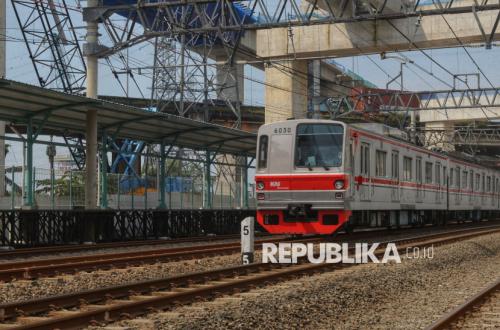
The development of public transport is considered capable of improving public welfare by reducing travel costs and generating new economic activity around service points. This impact is not only felt in large cities but also has the potential to spread to regional areas.
Policy and Program Director of the Prasasti Center for Policy Studies, Piter Abdullah, said that affordable and reliable public transport can help the public reduce their daily expenditure burden. “If we want to improve the welfare of our people, one way we can start is by providing good public transport, because that will greatly help them,” Piter said in a written statement on Friday (12/6/2026).
He cited the example of Jakarta, where with the 2026 Provincial Minimum Wage (UMP) of around Rp5.7 million, people can allocate 25 to 30 percent of their income to transport needs. This condition shows the significant burden of travel costs for workers. Data from the 2023 Jabodetabek Commuter Statistics by the Central Statistics Agency (BPS) also recorded variations in daily transport spending. Some 8.2 percent of commuters spent less than Rp5,000, 14.7 percent were in the range of Rp5,000 to Rp10,000, while 28.6 percent spent at least Rp25,000 per day, or around Rp750,000 per month.
According to Piter, the presence of comfortable and affordable public transport can reduce these expenses. “Reducing their travel costs is already part of improving our people’s welfare,” he said. Besides lowering living costs, public transport is also seen as driving local economic growth. Areas around stations and bus stops often develop into centres of economic activity, including for micro, small, and medium enterprises (MSMEs). “How many families will be helped? The chain effect is that productivity becomes healthier and better,” he said.
Piter assessed that this impact can also occur in regions if public transport development becomes a priority for local governments. According to him, the commitment of regional leaders is a crucial factor in pushing for the realisation of such infrastructure projects. “It must start from the determination of the leader, our regional head,” he said.
He acknowledged that public transport development requires a large initial investment. However, the long-term benefits are considered capable of covering these costs through increased economic activity and state revenue. “So there is no loss from investing in public transport, even though the investment is certainly large,” he said. To support financing, Piter suggested collaboration between the government and the private sector through Public Private Partnership schemes and the use of financing instruments such as bonds. According to him, legal certainty and policy consistency are important factors in attracting investor interest. “Because investors will certainly think about the risks,” he said.
He added that policy changes due to leadership transitions could become an investment barrier. Therefore, a guarantee of policy continuity is needed so that infrastructure projects can run optimally. “So besides good calculations in the proposal, there must also be a legal guarantee. That this will not change later. The fear is that if the regime changes, the regional head changes, the policy changes. That would be chaotic,” he remarked. Piter believes that if public transport development such as KRL, MRT, LRT, and JakLingko can be expanded to various regions, the economic impact will spread and also help change the economic structure of cities. “Looking at the chain effect, I am convinced the impact is huge. What we will change is not limited to matters related to transport itself. But it will change the city,” he concluded.