
Building Health Resilience: It Is Time to End Seasonal Blood Donation
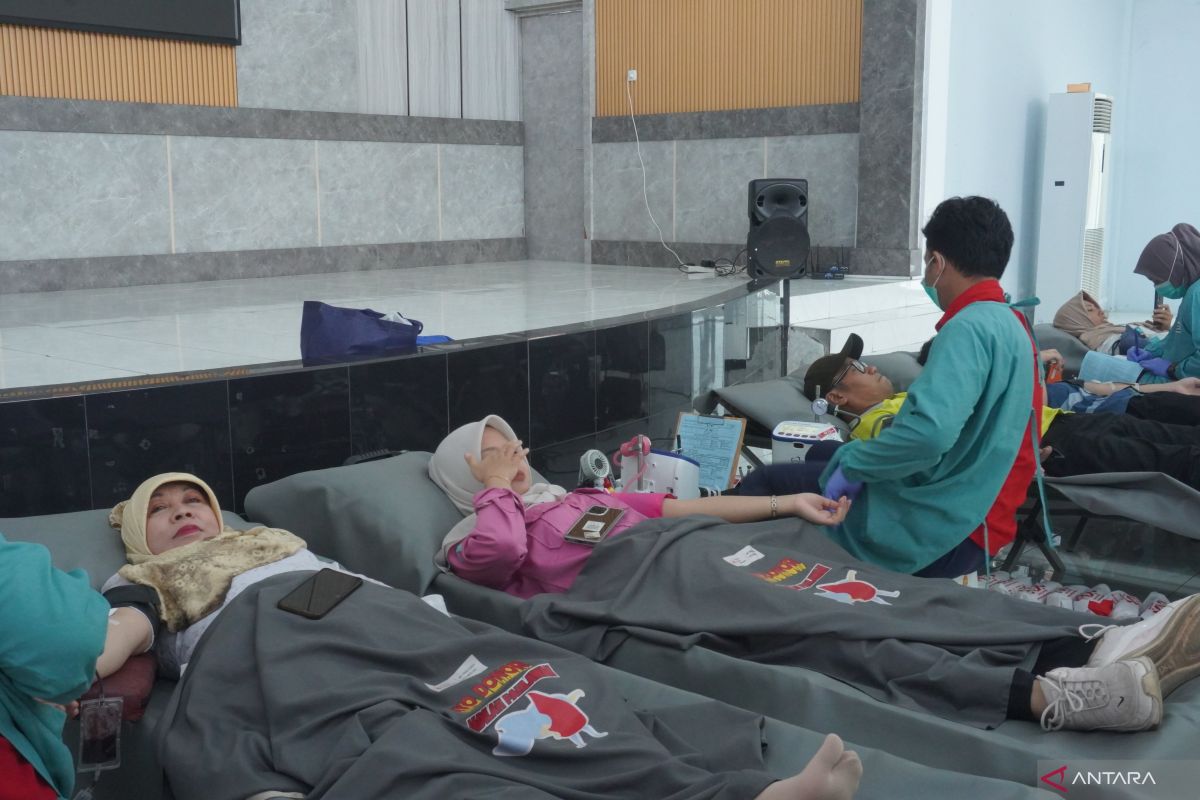
Jakarta (ANTARA) - When people understand that blood donation has mutual benefits for donors and recipients, their perspective can shift from “helping others” to “looking after their own health while saving lives”.
Human blood is a necessity within the healthcare system that cannot be met simply through advanced technology, hospital construction or increased health budgets.
No factory can produce human blood to replace donations. The only source of blood for patients requiring transfusions — whether because of accidents, major surgery or other emergencies — is the voluntary donation of another person.
In reality, most of us are still replacement donors: people who give blood only when a hospital asks them to help a relative receiving treatment.
We remain trapped in a reactive, seasonal mindset rather than adopting a preventive and sustainable approach. In an emergency, social media and messaging groups are suddenly flooded with requests for help finding a particular blood type. Solidarity emerges, but often when time is already desperately short.
Blood supplies, however, should be prepared before patients need them. As demand for blood continues to rise, donation must not be limited to spontaneous campaigns when a patient is in an emergency.
The shortfall
Ministry of Health data show that Indonesia’s ideal blood requirement is estimated at 5.5 million to six million units a year. The Indonesian Red Cross (PMI), meanwhile, consistently manages to supply only around four million to 4.5 million units annually. This leaves a gap of about 1.5 million units against the national ideal requirement.
These figures show that blood availability remains a major challenge for Indonesia’s healthcare system. Blood is needed in a range of situations, from accidents and major surgery to bleeding during childbirth and chronic conditions such as thalassaemia, which requires repeated transfusions.
The World Health Organization (WHO) says a country should ideally have at least 2 per cent of its population as voluntary blood donors to meet national needs. With Indonesia’s population exceeding 270 million, the country should have at least 5.4 million active donors. WHO also maintains that voluntary, non-remunerated blood donation (VNRBD) is the safest and most sustainable approach.
Empowering communities
How, then, can we escape the cycle of seasonal donation? The answer lies in empowering communities and educational institutions. Universities are a rich source of potential donors. As agents of change, students have the energy, idealism and good health needed to become regular donors.
Universities bring together young people who can be reached relatively easily through educational activities and student organisations. At health education institutions in particular, blood donation initiatives should form part of learning about public service and social responsibility.
Poltekkes Kemenkes Semarang in Magelang, Central Java, has recognised this. In partnership with the Magelang City branch of the Indonesian Red Cross and the Magelang Utara Community Health Centre, it regularly educates students and the public to make blood donation a habit.
The programme emphasises three points. First, it educates the public that regular blood donation can also benefit donors’ health. Among other things, it stimulates the regeneration of red blood cells and helps reduce blood viscosity, which can contribute to the risk of heart disease.
Second, one-off donation drives should be transformed into an institutionalised system. Educational institutions should facilitate blood-donor communities whose schedules are coordinated with the Indonesian Red Cross. Community health centres, as the frontline of primary care, should also proactively register and support donors in their areas. If every campus and every subdistrict in Indonesia had an active pool of voluntary donors, there would be no need to scramble for blood during disasters or emergency operations. This would build national health resilience from the grassroots up.
Third, such initiatives should be a starting point: people should stop being seasonal donors and make blood donation a lifelong commitment.
The government’s role
The blood supply issue cannot be resolved simply by holding more donation drives. A whole chain of systems must work together. Collected blood must be tested for safety, processed and stored, and then distributed to healthcare facilities.
This is why blood donation must be viewed as part of national health resilience. It is not enough for the government merely to urge people to donate. The state must also ensure that blood management units have sufficient capacity, testing equipment and storage facilities, as well as adequate health workers and effective distribution systems.
Government Regulation No. 28 of 2024 affirms the responsibility of central and regional governments to ensure blood services and supplies are safe and accessible to the public. Public participation is essential to blood donation, but organising the system is the state’s responsibility.
Ultimately, blood is not merely a medical issue; it is a national one. Indonesia is vulnerable to natural disasters, including earthquakes, tsunamis and volcanic eruptions. When we become voluntary blood donors, we uphold the values of Pancasila and the spirit of mutual cooperation that form part of the nation’s identity.
In healthcare, mutual cooperation can be expressed through a willingness to help others regardless of their social or economic background or whether they are relatives.
Blood donation is one of the most tangible expressions of this solidarity. A person gives some of their blood without knowing who will eventually receive it.
Extending an arm to give blood for a fellow Indonesian fighting for their life in a hospital bed is one of the clearest and most heartfelt expressions of patriotism. Let us start today, with what is closest to us.
Source: jawawa.id (https://jawawa.id/newsitem/building-health-resilience-it-is-time-to-end-seasonal-blood-donation-1794120734)
Originally published by Antara (Indonesian) (https://www.antaranews.com/berita/5839571/membangun-ketahanan-kesehatan-saatnya-berhenti-dari-donor-musiman), translated from Indonesian