
Building Family Economic Independence Through Training
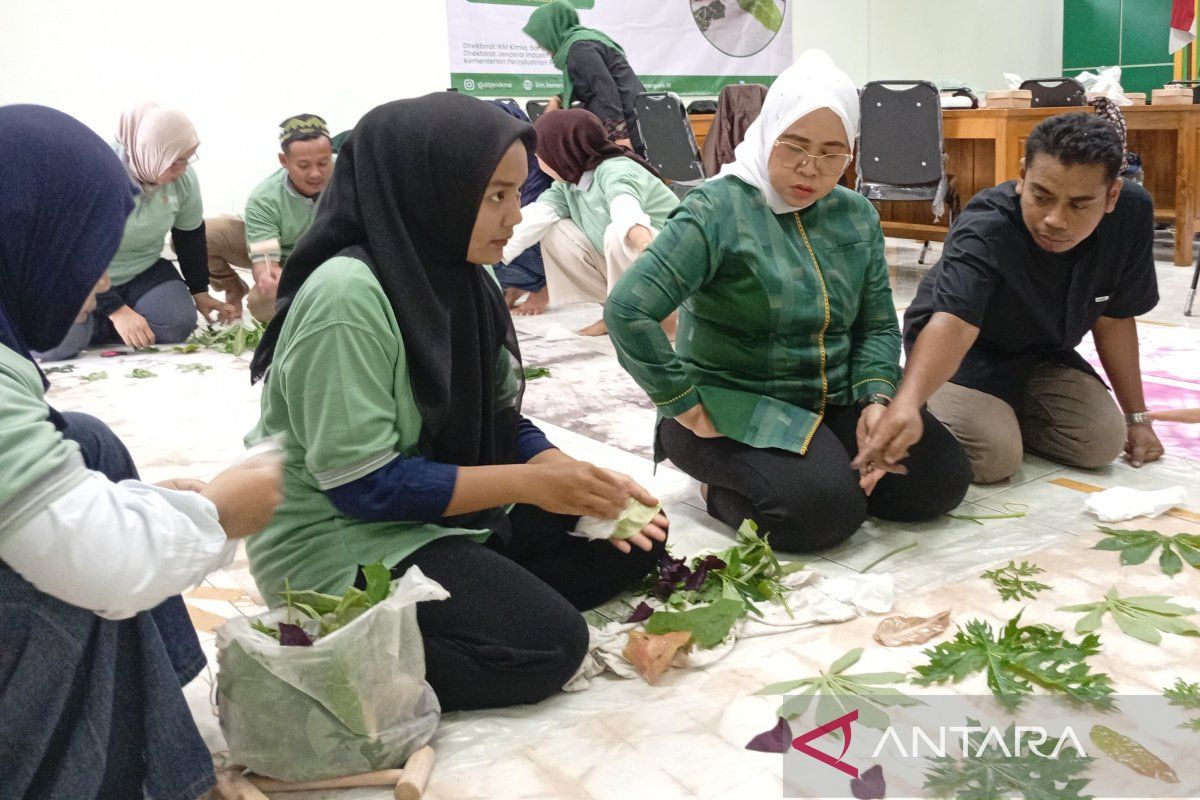
Purwokerto (ANTARA) – Leaves around the home that were once taken for granted, pastry made from flour dough and coffee beans crafted into contemporary drinks are now opening up opportunities for people to start businesses and improve their families’ economic prospects.
Mumtahana, an ecoprint training participant from Binangun sub-district, Cilacap regency, Central Java, has begun to recognise this potential. Previously, she was unfamiliar with the technique of dyeing fabric using natural materials.
But through the New Small Industry Entrepreneur Development and Growth training programme, organised by Commission VII of the House of Representatives (DPR RI) and the Ministry of Industry from 30 October to 2 November, she learned to use leaves and flowers to create fabric patterns with commercial value.
For Mumtahana, the training changed how she viewed the resources available in her neighbourhood. Leaves and flowers that had once seemed ordinary could, she realised, be used to make handicrafts.
After learning that ecoprint products could command relatively high prices, she became more interested in developing the skill into a business.
“The prices are surprisingly high. It’s really impressive. I hope that after the training we can also develop what we’ve learned,” she said.
Yunita Rizka Damayuti, a pastry-making course participant in Banyumas, shared a similar sense of enthusiasm. She had made bread before, albeit only occasionally for her family, particularly ahead of Eid al-Fitr.
The training, however, encouraged her to turn that ability into a business opportunity. She said young people’s fondness for spending time in coffee shops could also create a market for foods served alongside drinks, such as cakes, croissants and other pastries.
“I think it’s very useful, especially if we want to try starting a business. When young people hang out at coffee shops these days, they usually like pastries, cakes or croissants as well as coffee,” Yunita said.
Nisfi Ramdhani, a coffee-processing course participant in Banyumas, identified another opportunity. Through barista training, she learned about selecting coffee beans, assessing raw-material quality, roast levels and serving techniques.
The knowledge provides an initial foundation should she decide to start a coffee shop or café. She acknowledged, however, that some skills still require practice, particularly steaming milk and making latte art.
“The difficult part is steaming the milk, because making the foam turns out not to be easy. Latte art requires additional skill, too. You can’t master everything on the first try,” Nisfi said.
The experiences of the three participants show that business opportunities can grow out of skills closely connected to everyday life. However, being able to make a product alone is not enough to ensure that a business can grow and survive.
Six training programmes
Source: jawawa.id (https://jawawa.id/newsitem/building-family-economic-independence-through-training-1793767994)
Originally published by Antara (Indonesian) (https://www.antaranews.com/berita/5830555/merintis-kemandirian-ekonomi-keluarga-melalui-pelatihan), translated from Indonesian