
Building Digital Entrepreneurship Skills for Students through Mini Creativepreneur Lab at SMAN 5 Bekasi
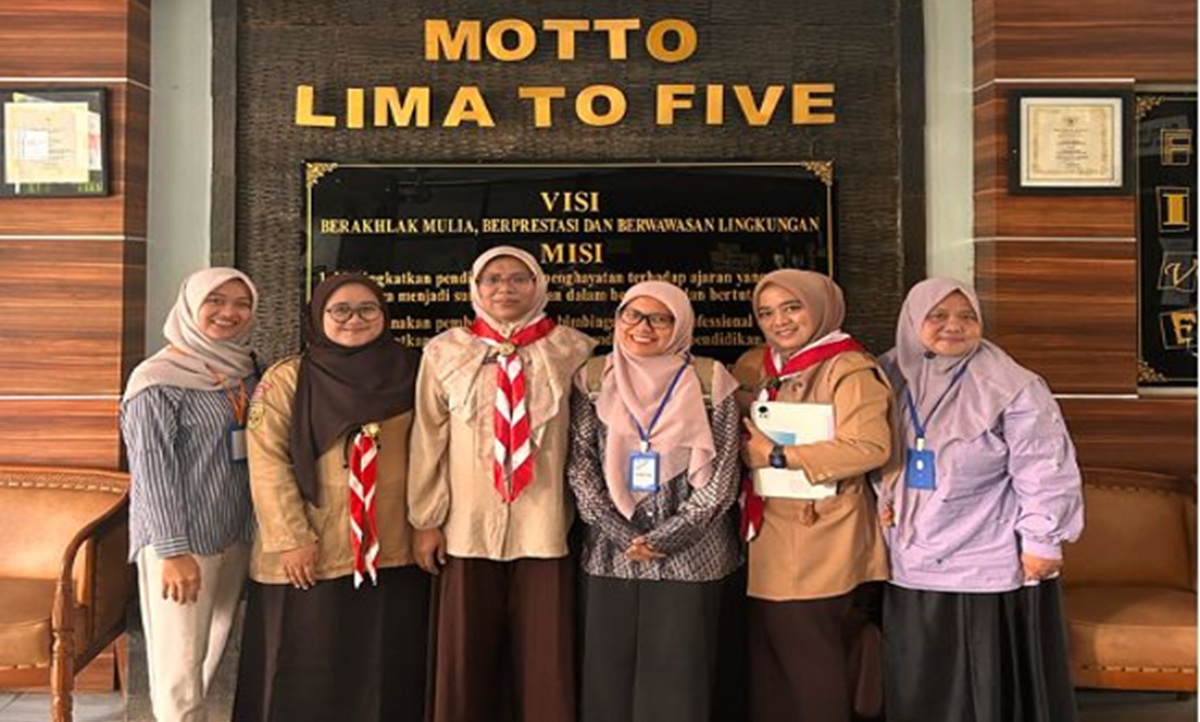
The advancement of digital technology has transformed how the younger generation learns, creates, and engages in entrepreneurship. Skills in digital design, content production, and social media-based marketing are becoming increasingly essential to face the challenges of the modern workforce and the rapidly growing creative economy. To address this need, the Community Service Team (PKM) from the Institute of Transportation and Logistics (ITL) Trisakti is implementing a Digital Entrepreneurship strengthening programme through a Mini Creativepreneur Lab at SMAN 5 Bekasi, an effort to build student capacity in creative design, digital entrepreneurship, and technology-based marketing.
This programme is designed to connect student creativity with productive economic activities through a practical learning approach. In addition to enhancing individual competence, the activity is also aimed at building a sustainable school entrepreneurship ecosystem. The programme received funding support from the Directorate of Research and Community Service (DPPM), Ministry of Higher and Higher Education, Science, and Technology of the Republic of Indonesia for the 2026 Fiscal Year, as part of efforts to strengthen community capacity through university community service. This support enables the transfer of knowledge, technology, and mentoring oriented towards the long-term sustainability of the programme within the school environment.
The programme implementation consists of four main systematic and continuous visits. The first visit focused on identifying and mapping the needs of the partner through discussions with the school, supervising teachers, and students. This stage aimed to understand the existing conditions and identify various obstacles faced in developing entrepreneurship based on design and technology.
After the programme was approved for funding, the PKM team conducted a second visit to present the implementation plan to the school. During this stage, the team presented the various technologies to be provided to the partner, the expected outputs of the activity, and the implementation strategies to be applied. The discussion was participatory to ensure that the designed programme truly met the school’s needs and could be utilised optimally after the activity ended.
The third visit took the form of seminars and workshops discussing digital entrepreneurship, creative content creation, branding strategies, digital marketing, and social media management. Through this activity, students gained an understanding of how to transform creativity into products with economic value and how to utilise digital platforms as tools for promotion and communication with consumers.
The fourth visit served as the technology implementation stage through the handover of production support equipment to SMAN 5 Bekasi. On this occasion, the PKM team did not only hand over equipment but also provided direct training and workshops on the use of the devices so that students and teachers could operate and utilise them independently in learning and entrepreneurship practice.
Based on the results of the needs identification with the school, the PKM team found three main problems that required attention. The first problem lies in the production aspect, specifically the sub-optimal ability of students to develop designs into creative merchandise products that meet design standards and good production processes. Furthermore, the limited availability of production equipment meant that students had not yet gained sufficient experience in directly linking digital design with the production process.
To address these issues, the PKM team provided creative design training and merchandise production workshops, supported by the provision of technology such as printers, mug press machines, and other production support devices. This technology is part of the development of the Mini Creativepreneur Lab, a practical learning space that allows students to transform digital designs into real products with functional and economic value.
The second problem lies in the business management aspect. Before the programme was implemented, students’ creative activities lacked a structured working system. The division of roles, activity management, business recording, and sustainability mechanisms had not yet functioned systematically, meaning the potential for student creativity could not fully develop into sustainable entrepreneurial activities.
As a solution, the PKM team developed the Student Creativepreneur Team (SCT) as a project-based entrepreneurship learning platform. Through the SCT, students are introduced to the concepts of task division, business activity management, the preparation of work procedures, and the development of systems that can be passed down to subsequent generations. With this approach, student entrepreneurship activities are not merely temporary but possess a stronger institutional foundation.
The third problem lies in the marketing and branding aspect. Creative products previously produced by students had limited marketing reach and had not optimally utilised digital media. In fact, social media and digital platforms can be effective means to build product identity, increase visibility, and expand market opportunities.
To overcome these challenges, the PKM team provided training in digital marketing, branding, digital catalogue development, and social media-based creative content creation. Students were guided to understand the importance of product identity, digital communication strategies, and content management techniques capable of attracting audiences and supporting sustainable product marketing.