
Building an Organisational Ecosystem to Maximise Human Resources in the AI Era
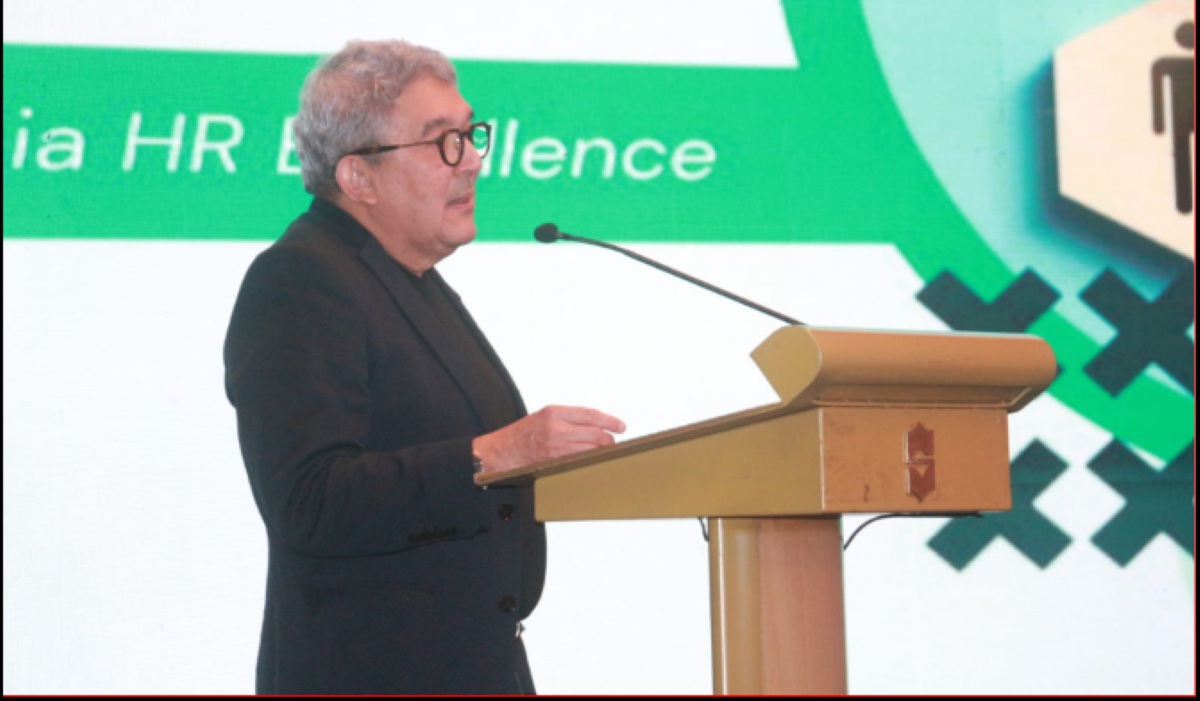
The concept of engineering human performance emphasises the importance of designing systems that enable every individual to work optimally, adaptively, and sustainably. This performance engineering is not understood as a mechanistic approach, but rather as an effort to build an organisational ecosystem capable of maximising human potential amidst the acceleration of digital transformation and the adoption of artificial intelligence. Group Chief Editor of Swa, Kemal Effendi Gani, stated that the business world is currently facing very rapid changes, ranging from technological developments and shifts in business models to the transformation of the world of work and the competencies required by organisations. “Technology is important, artificial intelligence is also important, but the most decisive factor remains humans. Superior humans, a strong culture, and good leadership are far more difficult to replicate. When AI focuses on enhancing human capabilities rather than replacing them, humans retain the power to derive value from the innovation created,” said Kemal at the annual 17th Indonesia HR Excellence Conference & Awarding 2026 in Jakarta. Echoing this, Managing Director of LM FEB UI, Yasmine Nasution, assessed that a company’s competitive advantage can be built through three approaches: a market-based view, a resource-based view, and a knowledge-based view. Advantage stems not only from possessing unique human resources but also from the organisation’s ability to retain and manage knowledge. “People can change and move, but how knowledge remains within the company will be the main differentiator compared to other organisations,” Yasmine explained. A similar view was shared by Vice Chairman of SEAL AWS and member of the Indonesia HR Excellence 2026 jury, Priyantono Rudito. According to him, the implementation of a human-centric AI strategy is not measured by how far automation is carried out, but by its ability to strengthen human capabilities, democratise access to knowledge, and build a sustainable ecosystem of prosperity. “Human-centric AI must be able to amplify human capabilities, distribute the required knowledge and capabilities throughout the organisation, and create an ecosystem that continues to develop,” he said. Senior Vice President of HC Strategy & Talent Management at Bank Mandiri, Handi Kurniawan, explained that human resource management is no longer sufficient if it merely focuses on workforce administration; it must be directed towards building organisational capabilities that can support long-term business transformation. According to him, Bank Mandiri has made significant investments in capability development through updating its competency model, which maps current skills as well as future skills so that the organisation can anticipate changes in industry needs. This step is taken to ensure all company personnel have competencies relevant to future business requirements. Meanwhile, Associate Director of People Partner & Development at PT Great Giant Pineapple, Adhi Hutama Habibi, presented the gamification approach applied by the company as the foundation of its HR management practices. The strategy is implemented comprehensively, from the process of attracting talent and employee development to shaping the work culture and the way the organisation operates. According to him, the entire employee life cycle has been designed using gamification principles so that every achievement becomes more visible, provides clear recognition, and encourages intrinsic motivation for each individual to develop. At this year’s event, 40 companies participated in the Indonesia HR Excellence 2026 programme. Several companies received awards in the Employer Branding and Talent Acquisition category, including BCA, Bank Mandiri, Amartha, Great Giant Foods, and Huawei Tech Investment. In the Learning & Development and Knowledge Management category, awards were given to TechConnect, Semen Indonesia, Asian Bulk Logistics, DSN Group, Garuda Food, and several other companies. In the HR Digitisation & People Analytics category, awards were won by HSBC, Triputra Agro Persada, and other companies. The Wellbeing Management category was awarded to Kapal Api Group, Perkebunan Nusantara III, and several other organisations. In the Reward Management & Talent Retention category, awards were won by PAM Jaya, Jakarta Industrial Estate Pulogadung, and several other companies.