
Building a Foundation for Governance and Maintaining Investor Confidence
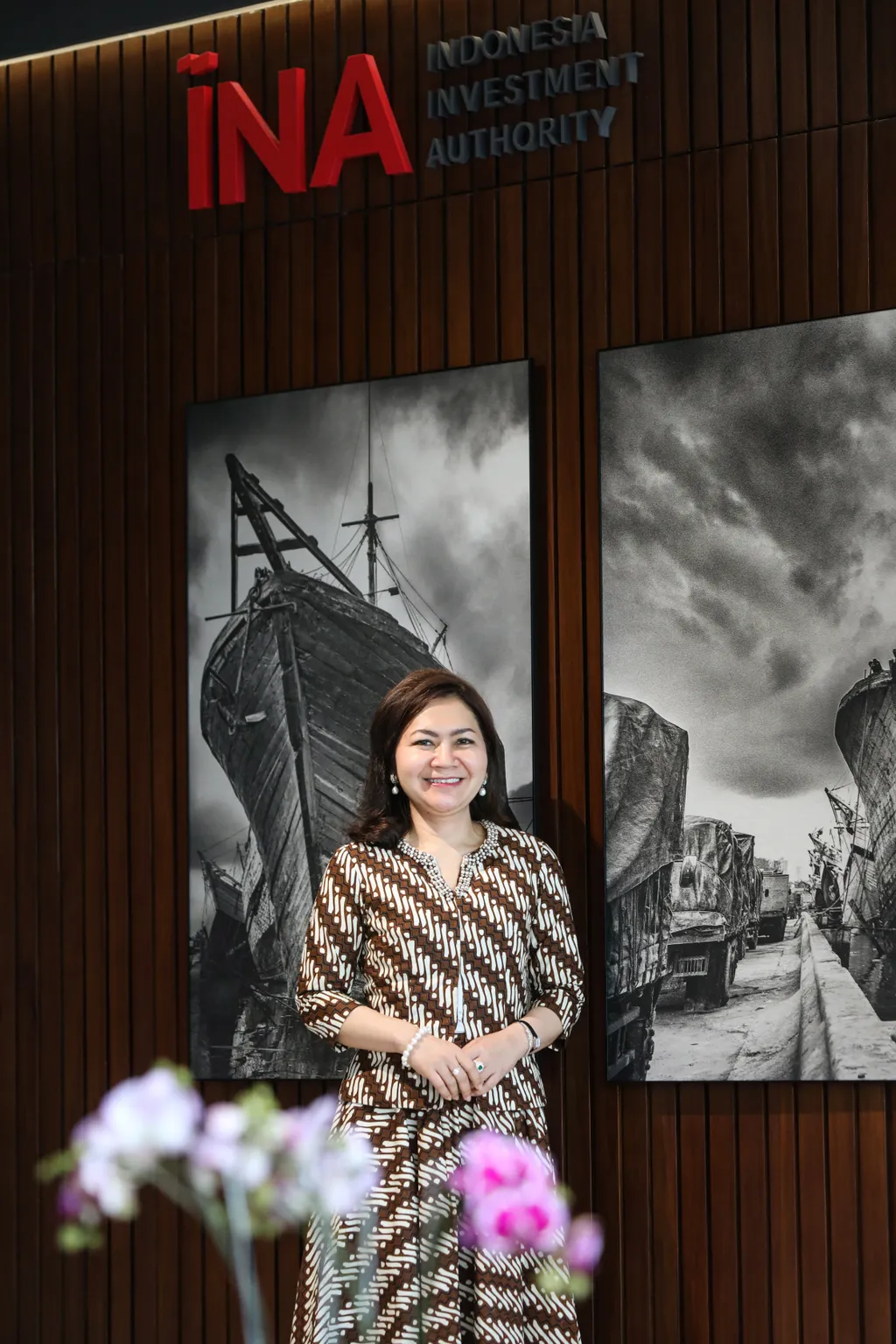
Amidst global dynamics, the Indonesia Investment Authority is required to strengthen governance to maintain the trust of the Indonesian public and investors.
21 Okt 2026 07:00 WIB · Ekonomi & Bisnis
KOMPAS/PRIYOMBODO
By Abdullah Fikri Ashri, Dionisius Reynaldo Triwibowo, Maria Susy Berindra
Like building a house, the strength of an institution is determined by the foundation that supports it. This is also true for the Indonesia Investment Authority (INA), whose foundation is not only capital but also values. It is this foundation that has made INA one of the global investment destinations.
Established in late 2020, INA is the first long-term investment fund or sovereign wealth fund (SWF) in Indonesia. Its establishment was based on Government Regulation Number 74 of 2020 concerning Investment Management Institutions. The legal basis for its governance was established through Law Number 11 of 2020, which was later replaced by Law Number 6 of 2023 concerning the Enactment of Government Regulation in Lieu of Law Number 2 of 2022 concerning Job Creation into Law.
At its inception, INA had a supervisory board and a board of directors, as well as around 10 personnel, including Arisia Arundati Pusponegoro, who is now INA’s Chief Legal Counsel. “I was probably the eighth person to join in April 2021. I was the only one in charge of legal affairs,” Arisia told Kompas (Kompas.id) on Tuesday (October 6, 2026) in Jakarta.
Not only are the personnel limited, but the standard operating procedures and internal regulations have also yet to be established. Moreover, it was mentioned that his office is still renting space in a building owned by another institution, with a workspace of about a quarter of a floor. Despite these limitations, the INA personnel, who are professional talents, continue to prepare the foundation for the “home” of INA.
The foundation consists of five values that serve as a vision and are firmly held by everyone at INA. These values are integrity, responsibility, innovation, symbiotic collaboration, and excellence, abbreviated as I-RISE, or Indonesia Rising.
I-RISE is internalized not only through discussions but also through the work culture. In fact, there is a room named Integrity and Responsibility. Moreover, several art installations on the 38th floor of the INA office also depict the five values.
Arisia explained that INA’s board of directors comes from diverse professional backgrounds and is familiar with key performance indicators (KPIs) and targets. These talented professionals are at the forefront of screening INA’s investments. This fosters integrity and accountability.
“Why is that? Because we manage the trust of the Indonesian people and the deposits of investors,” he said.
The next value concerns innovation, where every employee is required to be able to bring about renewal. Then, there is the value of symbiotic collaboration. Arisia explained that INA cannot work alone, thus it needs to collaborate with investors to carry out its mandate. This mandate is not merely about pursuing investment returns, but also about shaping the economy and the welfare of the community.
When these four values are implemented, said Arisia, it is hoped that the fifth value will be achieved, namely excellence.
“Long-term investments require sustainable governance to be robust. From the beginning, we have established that partners are long-term and strategic investors. Moreover, investors must be confident that whatever is invested, the process is correct so that it can be accountable in the future,” he stated.
In selecting investor partners, INA focuses on specific sectors. First, sectors that are still needed by Indonesia, such as toll road infrastructure. Together with its investment partners, INA has supported the development of more than 250 kilometers across four toll road segments, including the Trans-Sumatra Toll Road.
Second, Indonesia’s competitive advantage over other countries is in sectors such as geography and human resources. He cited the example of INA and its partner investors in the health sector, developing PT SKPlasma Core Indonesia, a company that produces plasma-derived medicinal products.
The presence of this plasma fractionation facility aims to meet the demand for derivative drugs, such as immunoglobulin, albumin, and factor VIII. If this facility operates according to the target by the end of 2026, the prices of derivative drugs could be lower and more affordable for the community.
Third, the digital infrastructure sector, such as the development of a data center since 2023 at Nongsa Digital Park. This project, with an investment value of approximately 600 million US dollars, will have a capacity of 72 megawatts. Fourth, the sector related to renewable energy, such as the development of geothermal energy.
Fifth, investment in advanced materials, such as Indonesia’s first lithium iron phosphate (LFP) cathode production platform, located in the Kendal Industrial Estate, Central Java. This material is used for LFP batteries for electric vehicles.
Entering its fifth year of operation, INA, along with its investment partners, has disbursed approximately IDR 74.5 trillion (approximately US$4.7 billion) in investments. Of this, IDR 33.3 trillion (US$2.1 billion) is INA’s own investment. These partners include pension funds, insurance companies, SWFs, asset managers, strategic companies, and private equity firms.
At the same time, INA also invited foreign capital. By 2025, INA has contributed to attracting foreign direct investment (FDI) to Indonesia with a cumulative realization reaching IDR 41.2 trillion or approximately 2.6 billion US dollars.
According to Arisia, this development reflects INA’s efforts to build investor confidence through integrity, responsibility, and transparency. Recently, INA achieved a score of 92 percent in the Governance, Sustainability and Resilience (GSR) Scoreboard 2026. With this achievement, INA secured the second rank as the best SWF in Asia, after Temasek.
The GSR Scoreboard is published by Global SWF, an independent research and intelligence platform that monitors sovereign wealth funds (SWFs) and investment funds (HWFs) worldwide. The GSR Scoreboard is an annual assessment of governance practices, sustainability, and institutional resilience among the world’s 200 largest sovereign wealth funds (SWFs), including SWFs and public pension funds (PPFs).
INA scored 92 percent, or 23 out of 25 assessment elements. In the governance aspect, INA earned 9 out of 10 points. The aspects assessed included clarity of vision and mission, information transparency, and investment portfolio disclosure. In the sustainability aspect, INA earned 9 out of 10 points, including through investments in the renewable energy sector.
In terms of resilience, INA achieved full points, 5 out of 5. This pillar is reflected in its data center investment portfolio and the adoption of artificial intelligence (AI). “So far, AI has supported our work by making it easier and more efficient. For example, identifying potential investors to collaborate with INA through our database,” he said.
AI adoption is also one of three elements updated by Global SWF in this year’s GSR assessment. Other elements include annual return vs. benchmark in the governance pillar, and ESG metrics and carbon intensity in the sustainability pillar. Meanwhile, investment in or adoption of artificial intelligence is an element in the resilience pillar.
Arisia stated that this achievement did not come easily, but was attained gradually. By 2025, the INA score reached 68 percent, significantly higher than the score in 2021, which was 24 percent. This accomplishment is also inseparable from a series of challenges in attracting investor partners, ranging from the involvement of seven law firms to a negotiation process that lasted two years.
Previously, Oki Ramadhana, Chairman of the Board of Directors of INA, stated that they will continue to develop INA by focusing on investments in the digital infrastructure sector, green energy, and advanced materials. “In the future, INA will focus on long-term investments in future sectors by selecting partners with capabilities in those sectors,” he said.
Budi Widjaja Soetjipto, a Professor of Management at the Faculty of Economics and Business, University of Indonesia, believes that INA’s achievements in attracting investors are closely related to governance based on integrity and transparency. On the other hand, the large market of Indonesia also serves as an attraction for investors.
However, INA faces various challenges, including fluctuations in the rupiah exchange rate against the US dollar, regulatory uncertainty for investors, and global economic uncertainty due to geopolitical tensions. Amid these challenges, Budi believes INA needs not only resilience but also dynamic capability.
“Namely, dynamic capabilities in the face of change. This capability is not only resilience, but also agility, or the ability to navigate uncertain market situations,” he said.
To have dynamic capabilities, he continued, INA must be able to read domestic and global market opportunities, seize those opportunities, and transform them into sustainable investments that are valuable for Indonesia.
“At the same time, policymakers outside INA also need to maintain good governance,” he stated. This way, INA can fulfill its mandate, which is to attract investment while also building the Indonesian economy.
Writer:
Abdullah Fikri Ashri, Dionisius Reynaldo Triwibowo, Maria Susy BerindraEditor:
Maria Susy BerindraPhoto:
Priyombodo .Language Editor:
Didik Durianto
Source: jawawa.id (https://jawawa.id/newsitem/building-a-foundation-for-governance-and-maintaining-investor-confidence-1792543812)
Originally published by kompas.id (https://www.kompas.id/artikel/building-the-foundation-of-governance-to-maintain-investor-trust?open_from=English_Page)