
Building a Circular Economy in Indonesia's Energy Transition
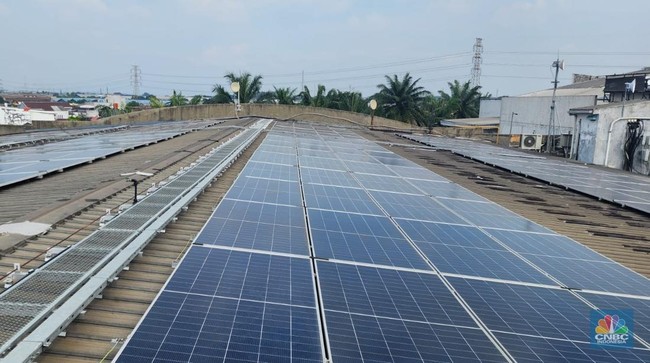
Indonesia is entering a critical phase in its energy transition journey. The construction of solar panels, wind turbines, batteries, smart grids, and various low-carbon electricity infrastructures will form part of the foundation of the future economy. This narrative must be welcomed with optimism. To support the acceleration of clean energy, the country needs to sharpen its ability to manage all green technology assets when their service life ends.
This management capability is essential because some vital technological assets, such as solar panels, cannot be used forever. Wind turbines have a technical lifespan. Batteries, inverters, cables, steel structures, composite blades, and various other supporting components will also enter their end-of-life phase.
In the next two or three decades, the first wave of clean energy infrastructure built today will begin to reach the end of its economic life. If preparations are not made now, the energy transition originally intended to strengthen the green economy could instead give rise to a new problem in the form of clean technology waste.
Therefore, the energy transition must not be viewed solely from the perspective of installed generation capacity. The measure of success is not sufficiently calculated by how many gigawatts of solar panels are built, how many wind turbines stand, or how much the renewable energy mix increases. A more mature measure is the country’s ability to design the entire life cycle of these technologies, from upstream minerals, manufacturing, financing, operation, and maintenance, to recycling at the end of their service life.
Behind the risk of waste lies a significant economic opportunity. Solar panels contain glass, aluminium, silicon, copper, and in some technology types, high-value materials such as silver. Wind turbines contain steel, copper, resin, glass fibre, and composite materials. Batteries store strategic minerals that are increasingly important for global industry. This means that what is often called waste is essentially a reserve of future industrial materials. The question is whether Indonesia will let this value be lost or transform it into a new industrial base.
The government needs to start viewing the recycling of clean energy technology as part of the national industrialisation strategy. Discussions on renewable energy have too often stopped at the generation project stage. In reality, the value chain of the energy transition is much longer. There are opportunities in manufacturing, operation and maintenance services, green financing, logistics, digital technology, and the recycling and re-refining of critical materials. If designed seriously, the energy transition will not only reduce emissions but also create a new industrial base and strengthen the security of national raw material supply.
The first step is to include decommissioning and recycling obligations from the outset of a project. Every solar power plant, wind power plant, or energy storage system project should not be assessed solely on electricity price and installed capacity. The government also needs to require developers to submit an asset end-of-life plan. It must be determined who is responsible for dismantling panels, the delivery location for turbine blades, the battery take-back scheme, and the composition of materials that must be recycled domestically. All these aspects must be answered when the project contract is signed, not when the assets are already damaged and become an environmental burden.
Circularity clauses need to become part of power purchase agreements, renewable energy tenders, and investment licensing. In this way, the recycling market is not left to grow by chance. The state creates demand certainty from the start. Recycling investors gain supply certainty. Banks have a basis to finance processing facilities. Local industries get the opportunity to enter new value chains. This is how the state turns potential waste into an industrialisation opportunity.
The second step is to prepare a special financing scheme to build a green energy recycling industry. Solar panel, turbine blade, and battery processing plants will not grow merely by relying on ordinary market mechanisms. The technology is complex, research costs are high, and its economic scale requires volume certainty. Therefore, a bolder green fiscal architecture is needed. The government can direct a portion of green financing instruments, energy transition funds, or revenues from the extractive sector to build this circular industry.
The logic is simple. The wealth obtained over decades from the natural resource-based economy needs to begin to be rotated to finance the low-carbon economy of the future. Revenues from the extractive sector, including potential additional income from commodities, can become strategic capital to build green material recycling facilities. Thus, the state is not only spending funds for short-term needs but also investing capital in industrial infrastructure that strengthens long-term competitiveness.
National green funds, whether in the form of a sovereign green fund, blended finance, or public-private partnership schemes, can be directed towards three main needs. First, financing research on material extraction from used panels, turbines, and batteries. Second, providing patient capital for pioneer companies building recycling facilities. Third, strengthening the capacity of universities, laboratories, and local industries so that Indonesia does not only become an operator but also a technology owner.
The third step is to build a digital tracking system for all green energy assets. On a national scale, renewable energy assets will be spread across house rooftops, industrial estates, large power plants, small islands, mining areas, ports, and offshore areas. Without accurate data, the government will find it difficult to know when assets enter their end-of-life phase, what volume of material is available, and where the nearest recycling capacity is located.