
Building a Circular Economy from Livestock Waste in the Upper Cikapundung River Basin
Overall, water quality in the Cikapundung River has improved compared with conditions in 2016 and 2021. However, pollution control must continue to ensure water quality is maintained along the river, from its upper reaches to downstream areas.
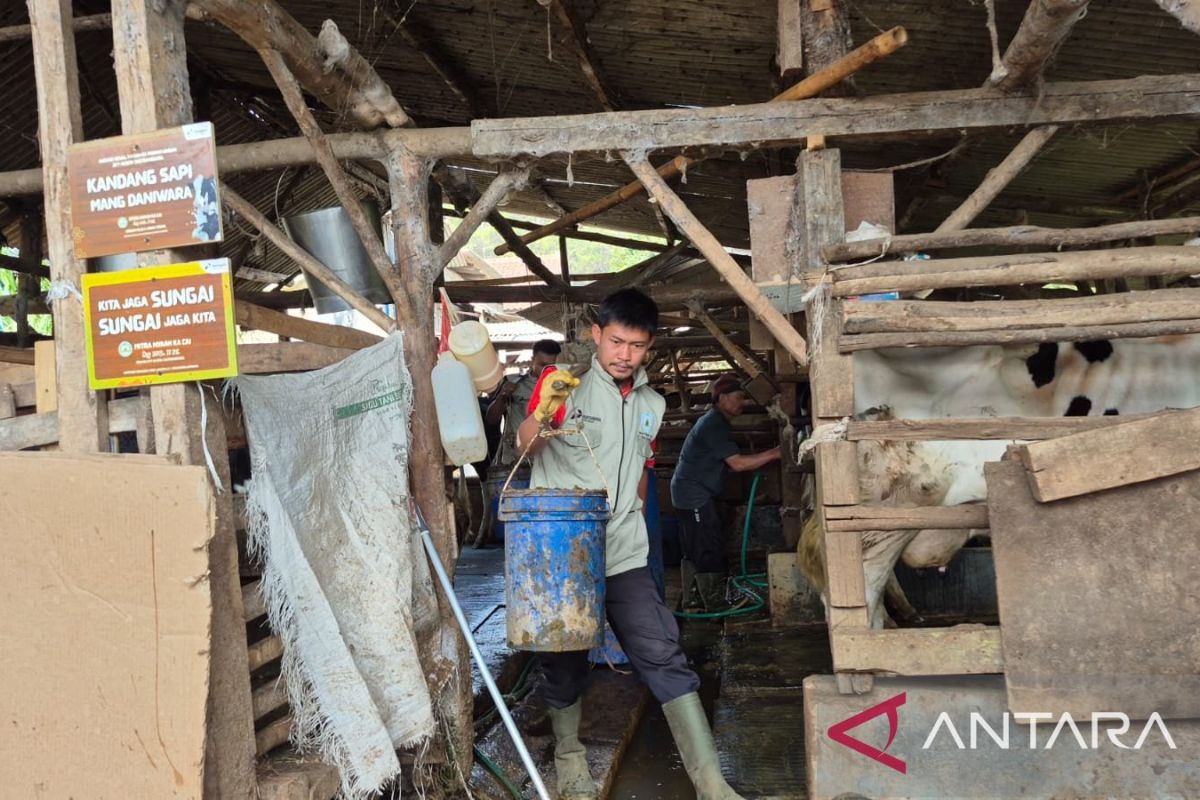
Suntenjaya village in West Bandung regency, West Java, is shrouded in morning mist. In the cold mountain air, dairy farmers begin their daily work, cleaning the cattle sheds and preparing feed. This routine sustains the flow of milk that underpins local livelihoods.
But this business faces a persistent challenge: livestock manure. Because the village lies in the upper reaches of the Cikapundung River, untreated waste poses a significant risk of polluting the river downstream. A lack of facilities is a major obstacle for farmers.
Amid these concerns, Atep Suhendar, head of the Motekar Youth Association in Sukaluyu hamlet, saw an opportunity. He proposed turning cow manure into biogas as an alternative energy source, as well as organic fertiliser for agriculture.
Through the Nyaah ka Parahyangan programme, which has been running since 2022, Atep and his group have begun putting the circular-economy concept into practice. Their work has helped reduce environmental pollution while generating added value that supports the welfare of Suntenjaya residents.
Under the Nyaah ka Cai scheme, manure from farmers’ cattle sheds is no longer wasted. The organic material is collected and sent to biodigester facilities, where it is converted into biogas.
“There are two biodigester units: one with a capacity of 10 cubic metres and the other with a capacity of four. Together, they can process around 600 kilograms of cow manure,” Atep said.
The biogas produced is supplied directly to six households nearby.
Using biogas has reduced those households’ LPG consumption from two or three cylinders a month to around one, and sometimes they still have gas left over.
Atep said biogas offers residents a dual solution. It helps protect the upper Cikapundung River from pollution while strengthening household finances through savings on everyday energy costs.
The manure’s journey does not end with biogas production. Some of the livestock waste is also processed into farmyard manure and vermicompost, with a processing capacity of about 150 kilograms of cow manure a day.
The organic fertiliser has been tested in a laboratory at Padjadjaran University. It is used to grow Japanese spinach, romaine lettuce and coffee, and to support the planting of saninten trees as part of environmental conservation efforts.
On a trial plot, around 100 romaine lettuce plants yielded 15 kilograms, with production potential of up to 50 kilograms.
Of that amount, about 30 kilograms could be sold at Rp15,000 per kilogram, generating Rp450,000 in revenue per harvest—or Rp5.4 million a year if sales take place every month.
Source: jawawa.id (https://jawawa.id/newsitem/building-a-circular-economy-from-livestock-waste-in-the-upper-cikapundung-river-basin-1793235147)
Originally published by Antara (Indonesian) (https://www.antaranews.com/berita/5818331/merajut-ekonomi-sirkular-dari-limbah-ternak-di-hulu-sungai-cikapundung), translated from Indonesian