
Buffet-Style Free Nutritious Meals Trial Begins, National Nutrition Agency Aims for Warmer and Fresher Food
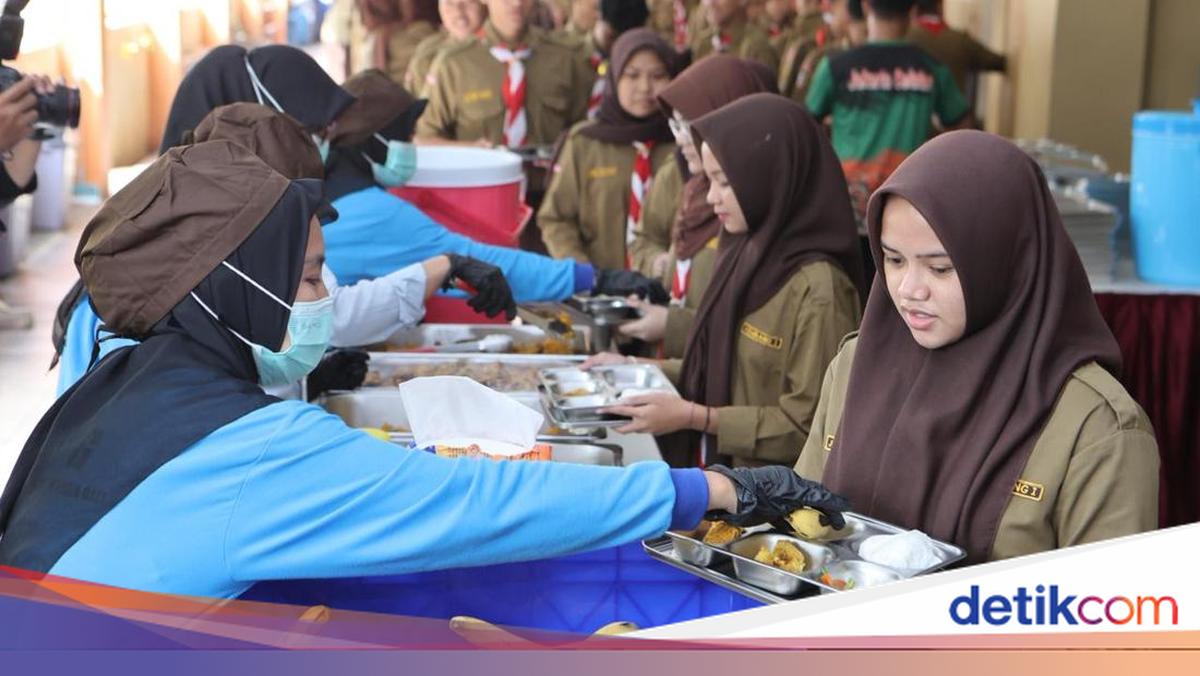
The National Nutrition Agency (Basting) has begun trialling the distribution of Free Nutritious Meals (MBG) using a buffet-style concept in several schools. The trial is being conducted across more than 60 Nutrition Fulfillment Service Unit (SPPG) kitchens spread throughout Central Java, East Java, Yogyakarta, and Jayapura, starting Monday (5/10/2026).
According to Sudaryono, Head of the BGN, the implementation of the buffet concept is expected to ensure that the food received by students remains warm and fresher. This scheme is also considered capable of reducing the risk of food spoilage, which could potentially lead to health issues.
“As of today, the 5th, we have started piloting in perhaps more than 60 kitchens for in-class buffets. The food is brought warm to the classroom and served there. We are currently piloting this, and we hope for prayers and support so we can expand this; firstly, so the food is more delicious because it is warm. Secondly, it is certainly fresher because there is no time delay, thereby reducing the risk of food spoilage that could cause health disturbances,” Sudaryono stated at the Ministry of Agriculture, South Jakarta, on Monday (5/10/2026).
He noted that serving food in a warm condition not only improves food quality but also reduces the time gap between the cooking process and consumption. Consequently, the risk of food spoilage can be minimised.
Beyond food safety aspects, the buffet scheme also serves an educational purpose for students. In its implementation, students will be involved in helping serve food to their peers through a duty roster system.
Students will be divided into duty groups of 5-6 people responsible for serving their classmates. It is likely that students will be provided with aprons and gloves to serve food, similar to the system used in Japan.
“There is also an educational function. This certainly requires a form of cooperation. In this buffet system, both the kitchens and the schools are being trained. Since the students are the ones serving, there will be a duty system, much like in Japan,” he said.
He emphasised that the food is still cooked at the SPPG, then transported to the school and served while warm.
“If a school is large and has many students, some cooking may take place within the school. It is the same for us; for example, if an SPPG is located within an Islamic boarding school (pesantren) where there are more than 1,000 students, they can establish a kitchen on-site,” he added.
“In many countries, we have seen—for instance, with JICA from Japan—the use of a central kitchen. Food is cooked in a central kitchen, then distributed to schools and served warm in a buffet style in the classroom,” he continued.
Sudaryono claimed that based on reports received, the trial of the MBG scheme using the buffet method has shown positive results.
“So far, I have received reports that the rate of food being finished is good. This means the food is fresher, and there may be those who want seconds; if there are leftovers, they can have more. Additionally, waste is lower because of the buffet system,” he said.
When asked whether this scheme would be permanently implemented to replace the existing model, Sudaryono could not yet confirm. However, he expressed hope that the scheme could be implemented in more locations.
“We hope to implement this more widely in the future,” he concluded.