
Buffet-Style Free Nutritious Meals Piloted at 66 Centres as Government Reviews Roll-out
The government is piloting buffet-style service for its Free Nutritious Meals (MBG) programme at 66 Nutrition Fulfilment Service Units (SPPGs) across 10 provinces. The approach is one measure intended to improve food safety and nutritional quality in the programme.
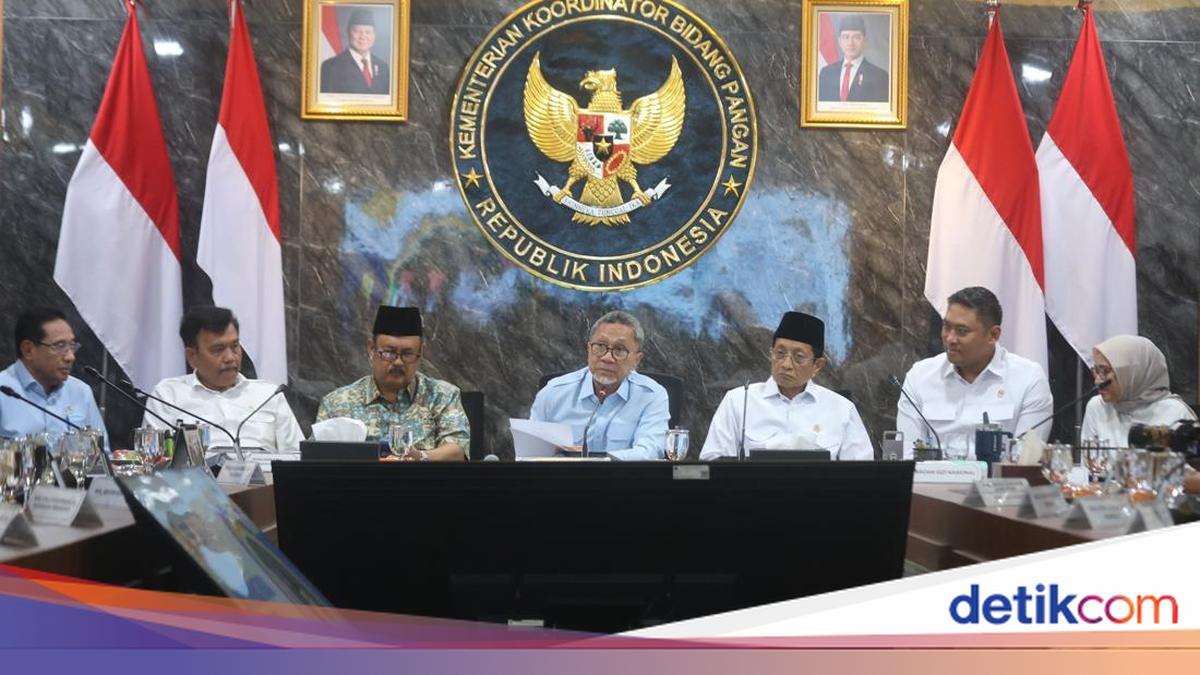
The trial is part of four priorities for improving MBG set out by Coordinating Minister for Food Zulkifli Hasan (Zulhas) at a ministerial-level limited coordination meeting on the programme on Monday (19 October). The priorities are accelerating the expansion of MBG in disadvantaged, frontier and outermost (3T) areas; improving SPPG kitchen governance; enhancing food safety and nutritional quality; and bringing beneficiary data into order and eliminating irregularities.
“As the government enters its second year, the President’s directive is for MBG to be implemented evenly, especially in 3T areas and places with high stunting prevalence. Shortcomings must be addressed, governance put in order, and irregularities dealt with firmly,” Zulhas said in a statement on Wednesday (21 October 2026).
Four priorities for improving MBG
The first priority is to accelerate the expansion of MBG services in 3T areas, including regions with high stunting prevalence. The National Nutrition Agency (BGN) activated 480 new SPPGs in 16 provinces in eastern Indonesia on 2 October. A further 980 new SPPGs in Sumatra, Kalimantan and Bali were activated on 14 October.
In the third phase, scheduled for the fourth week of October, expansion will focus on Islamic boarding schools and religious schools in remote areas. Technical guidelines for SPPGs in 3T areas are also expected to be completed that week, providing operational certainty for centres already activated.
The second priority is to improve the governance of MBG. One measure is a new incentive scheme of Rp 2,000 per portion, which took effect on 2 October 2026.
The government is also reviewing its records to ensure that operating SPPGs meet the requirements. Under the provisions of Temporary Determination Letter 2 (SPS 2), centres must hold a Certificate of Proper Hygiene and Sanitation (SLHS), not be subject to an operational suspension, have no record of a fatal incident, and serve more than 1,000 beneficiaries.
BGN data show that 26,385 SPPGs have operational status under SPS 2.
The third priority is to improve food safety and nutritional quality. In response to the President’s direction, the government has benchmarked countries with experience in school meal programmes, including Japan and Italy.
One measure already being tested is buffet-style MBG service at 66 SPPGs in 10 provinces. The method is expected to keep food warm when served, reduce leftovers and strengthen nutrition education through the involvement of teachers and pupils. The results will be reviewed regularly before the approach is extended to other areas.
The fourth priority is to bring beneficiary data into order and eliminate irregularities. Going forward, MBG recipient data must be validated by name and address (by name by address/BNBA) and National Identity Number (NIK).
The data cover pupils, Islamic boarding school students and the “3B” groups: toddlers, pregnant women and breastfeeding mothers. Integrating the data will underpin beneficiary selection and assessments of MBG’s impact, helping ensure that the programme is delivered accurately to the intended recipients.
Zulhas also stressed that improvements must be accompanied by a clean-up of irregular practices, including intermediaries and collusion involving individuals that could amount to corruption.
“In the past, foundations were set up and locations designated, and it ended up in corrupt collusion. That is what we are cleaning up. If there has been deliberate wrongdoing and the evidence is clear, it can be taken to court,” Zulhas said.
The government will also strengthen the role of regional MBG task forces in monitoring and supervision, in line with their duties under Presidential Regulation No. 115 of 2025.
BGN chief explains the buffet trial
BGN chief Sudaryono said the buffet method involves bringing warm food to classrooms and serving it to pupils there. The approach is intended to preserve food quality by shortening the interval between cooking and mealtimes.
“As of today, the fifth, we have piloted buffet service in classrooms at more than 60 kitchens. The food is brought warm to the classroom and served there,” Sudaryono, commonly known as Mas Dar, said.
He said serving food directly in classrooms is expected to make it warmer and fresher when eaten, while reducing the risk of food spoilage that could cause health problems.
“First, we hope the food will taste better because it is warm. Second, it will be fresher because there is no delay. This reduces the risk of food spoilage that could then cause health problems,” he said.
The buffet method is also expected to reduce food waste, as pupils can take more if food remains available.
“So far, the reports I have received indicate a good rate of food being finished. It is fresher, and anyone who wants more can have another serving if there is some left. There is less waste with the buffet method,” Mas Dar said.
As well as improving food quality, the approach is expected to strengthen nutrition education through the involvement of teachers and pupils. However, it will require familiarisation and adequate training.
“Buffet service will work well once people are used to it, as it does in other countries. But it does require sufficient training,” he said.
The trial results will inform an assessment before buffet service is introduced more widely. The review will examine how the method supports food quality and the delivery of MBG.
BGN strengthens kitchen oversight
Alongside testing the serving method, BGN is stepping up oversight of SPPG operations through the use of technology. One initiative is to connect kitchen CCTV systems to a central monitoring centre, with support from artificial intelligence (AI).
Sudaryono said all kitchens already have CCTV, but footage has so far been used only internally. BGN is testing a system that connects cameras at a number of kitchens to a central centre so compliance with standard operating procedures (SOPs) can be monitored.
“All kitchens already have CCTV, but the cameras are not connected [to the centre] and are used only internally. We are piloting this at around 70 kitchens, bringing their CCTV feeds to the centre and using artificial intelligence so we can monitor SOPs — including food processing, preparation and washing of food containers,” Sudaryono said.
The monitoring will cover procedures for food processing and preparation as well as washing the meal containers. The initiative is part of efforts to strengthen oversight and reduce the risk of fatal incidents in the MBG programme.
The coordination meeting was also attended by the Deputy Coordinating Minister for Food; the Minister for Administrative and Bureaucratic Reform; the Minister of National Development Planning and head of Bappenas; the Minister of Religious Affairs; the head of the Government Communications Agency; the deputy ministers of Health, Population and Family Development, and Primary and Secondary Education; a deputy head of the Financial and Development Supervisory Agency (BPKP); a deputy head of BGN; and officials from relevant ministries and institutions.
Source: jawawa.id (https://jawawa.id/newsitem/buffet-style-free-nutritious-meals-piloted-at-66-centres-as-government-reviews-roll-out-1792601566)
Originally published by detikcom (https://news.detik.com/berita/d-8718170/mbg-prasmanan-diuji-coba-di-66-sppg-pemerintah-evaluasi-penerapannya), translated from Indonesian