
Buffet-Style Free Nutritious Meal Programme Under Trial, Says National Nutrition Agency Head
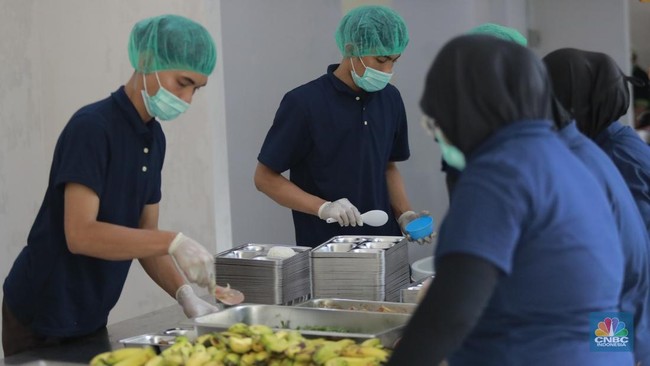
The National Nutrition Agency (BGN) has begun piloting the Free Nutritious Meal (MBG) programme using a buffet-style concept in schools. Under this scheme, food prepared in Nutrition Fulfilment Service Unit (SPPG) kitchens is transported to schools while still warm and served directly in classrooms.
Head of the BGN, Sudaryono, stated that the trial has been underway since 5 October 2026, involving more than 60 kitchens across various regions in Indonesia. “I want to convey that, as of today, since the 5th, we have been piloting the buffet-style service in classrooms in more than 60 kitchens. The food is brought warm to the classroom and served there; this is what we are currently piloting,” Sudaryono said when met at the Ministry of Agriculture office in Jakarta on Monday (5/10/2026).
“We hope for prayers and support so that we can expand this. Firstly, the food will be tastier because it is served warm; secondly, it will certainly be fresher as there is no time delay, which reduces the risk of food spoilage that could lead to health issues. There is also an educational component,” he added.
According to Sudary/no, this concept is also expected to reduce food waste. Based on preliminary reports received, almost all food in the buffet-style trials has been consumed. “From the reports I have received regarding the buffet pilot, it appears everything is being finished,” he noted.
He explained that the buffet system requires the involvement of both school staff and students. Students will be assigned tasks to assist in serving food to their peers. “This certainly requires cooperation. For this buffet system, training is required for both the kitchens and the schools, because the students are the ones serving. Students will have duties, similar to the system in Japan,” said Sudaryono.
He noted that initial evaluations show the system keeps food fresher by reducing the waiting time between cooking and consumption. “We want to see how the implementation goes. So far, I have received reports that the rate of food being finished is good. This means it is fresher, and there is an option for those who want seconds, which reduces waste through the buffet format,” he explained.
Meals Still Produced by SPPG
Sudaryono emphasised that the buffet concept does not mean every school must have its own kitchen to cook the MBG meals. Food will continue to be produced via SPPGs or central kitchens and then distributed to schools while warm.
“SPPG and central kitchens are the same. We are mimicking the Japanese model. In other more advanced countries, not all kitchens are located within schools. If a school is large and has many students, some cooking may happen on-site. It is the same for us; for example, an SPPG might be located within a boarding school (pesantren) because they have more than 1,000 students, so they can have an internal kitchen,” he said.
The trial locations for this concept span several regions, including Central Java, East Java, Yogyakarta, and Papua. He noted that implementing the buffet system requires preparation and training, as students are involved in the serving process.
“Clearly, once accustomed to this buffet style, it will be beneficial, just like in other countries. However, sufficient training is necessary because it involves the school and the students. Students will eventually need to wear aprons and gloves. They will take turns, with 5-6 students serving their peers and teachers,” he concluded.