
Budiman Sudjatmiko Proposes Institutionalising Four of Prabowo’s Flagship Programmes
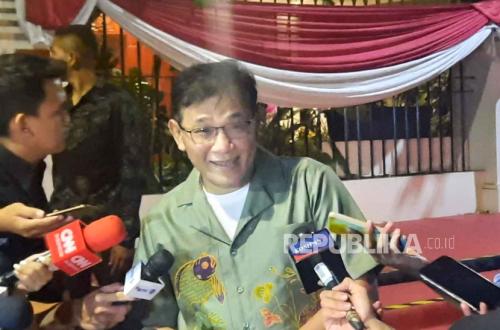
JAKARTA — Budiman Sudjatmiko, head of the Poverty Alleviation Acceleration Agency (BP Taskin), has called on all parties to enshrine President Prabowo Subianto’s priority programmes in law, institutions and budgets, so they can mature over the next 25 years—one generation—regardless of who is in power.
He stressed that 25 years refers to the programmes’ lifespan, not the duration of anyone’s rule. The lesson, he said, comes from Brazil: President Luiz Inácio Lula da Silva’s terms in office will total 16 years if he completes his fourth term, but the social programmes he launched have already outlasted him.
Brazil’s 2026 presidential election was closely contested. Lula initially trailed Flávio Bolsonaro in the first round on 4 October, with 45.16 per cent against Bolsonaro’s 47.03 per cent.
Lula then came from behind to win the second round on 25 October with 51.79 per cent of the vote, the first such comeback victory in Brazil’s history.
Budiman, who met Lula in São Paulo in 2011 shortly after the Brazilian leader completed his second term, welcomed the result as a product of Lula’s commitment to an agenda of fighting hunger.
Flávio has refused to recognise the result and plans to seek its annulment, while his party, PL, has acknowledged Lula’s victory as declared by Brazil’s Superior Electoral Court (TSE).
Bolsa Família, Brazil’s conditional cash-transfer programme, was launched in October 2003, during Lula’s first year in office.
The programme was renamed Auxílio Brasil in 2021, before reverting to its original name in 2023. It has continued under presidents who supported and opposed it, and is now 23 years old.
“Personalised programmes will fall with the person. Institutionalised programmes will outlast whoever is in power,” Budiman said.
According to Budiman, 25 years represents one generation. A child who starts Year 1 of primary school in 2025 and receives the Free Nutritious Meals (MBG) programme will be about 31 years old in 2050, forming part of the workforce that will sustain Indonesia after the 2045 Golden Indonesia milestone.