
Budget for Free Nutritious Meals Cut, Purbaya Guarantees Portions Won't Be Reduced
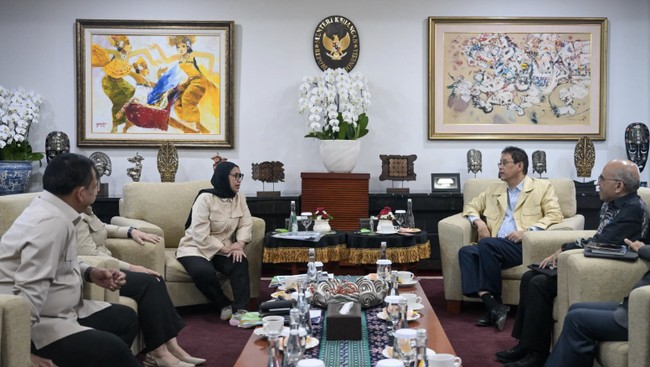
Finance Minister Purbaya Yudhi Sadewa has confirmed that the government will not reduce the food budget per portion for the Free Nutritious Meals (MBG) programme, despite significant efficiency measures. “No. It remains (the budget),” he told reporters at the Juanda building in Jakarta on Friday (26/6/2026). The food ingredient budget alone for MBG is between Rp8,000 and Rp10,000 per portion. Purbaya confirmed that the National Nutrition Agency (BGN) and the Ministry of Finance agreed to cut the MBG budget following a meeting with BGN Head Nanik S. Deyang at the Ministry of Finance office on Thursday (25/6/2026) afternoon. “Yesterday I met with the Head of BGN here (Ministry of Finance). She reported that there will be further savings from the MBG programme. I think the savings are quite significant, but let the Head of BGN announce it,” Purbaya said. He continued that the MBG budget after further cuts could be lower than Rp268 trillion in 2026. Before the initial cuts, the MBG budget was still Rp335 trillion. “The reduction is quite significant, which clearly makes our budget safer. It will be a significant cut, but I wasn’t the one who proposed it, the Head of BGN herself did. So you can ask the Head of BGN,” he explained. Purbaya added that the evaluation and budget cuts for the MBG programme will not reduce the menu portions or their nutritional value. “So it is confirmed that the food remains nutritious. But that is more the domain of the Head of BGN,” he clarified. Previously, Finance Minister Purbaya held a meeting with BGN Head Nanik yesterday afternoon. In the meeting, he said at least three topics were discussed, including budget efficiency efforts. Several tactical steps discussed together included: Refocusing the budget to fully align allocations with national priority programmes; Optimising regional infrastructure by utilising State Property and Auction Service Offices (KPKNL) at the district/city level to assist with physical inspections of Nutrition Fulfilment Service Units (SPPG); and Enhancing human resource capacity by organising financial accountability training for SPPG heads to comprehensively improve accountability standards.