
Budget Efficiency: National Nutrition Agency to Pivot from Target of 82 Million Beneficiaries, Private Schools to be Evaluated
The National Nutrition Agency (BGN) has stated that it will implement a moratorium on the construction of nutrition fulfilment service units (SPPG). This move is intended to ensure budget efficiency for the Free Nutritious Meal (MBG) programme.
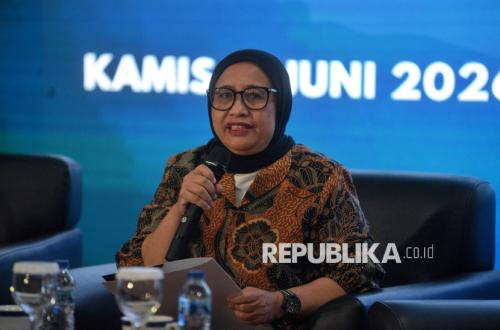
BGN Head Nanik S. Deyang stated that the agency will no longer focus on chasing targets to increase the number of beneficiaries within the MBately MBG programme. She noted that she has received approval from President Prabowo Subianto to focus on improving the quality of this flagship programme.
“Yesterday, the three of us were called by the President, and we conveyed to him that for 2026, we request not to pursue quantity, but rather to improve quality,” she said during a press conference at the BGN Office on Thursday (4/6/2026).
As a result of this decision, the BGN will no longer strive to reach the target of 82 million MBG beneficiaries this year. Furthermore, the BGN intends to improve governance to ensure that MBG kitchens can truly provide high-quality, nutritious food to beneficiaries.
“It is possible we will not pursue the 82 million target, but rather focus on how these kitchens are healthy and provide nutritious meals,” Nanik added.
She revealed that instances of the MBG programme being misdirected have been identified, such as when meals are distributed to private schools with high tuition fees. Consequently, the BGN will conduct a review or refocusing of the programme’s beneficiaries. Distribution that is deemed inappropriate will be redirected to more needy communities.
“For example, if there are expensive schools, we will ask whether they still require MBG. We will redirect this to 3T areas (frontier, outermost, and least developed). In effect, the number of beneficiaries might not increase, but we are reducing those who were previously not the primary focus,” she concluded.