
Budget Absorption at 30.61%, Transmigration Ministry Secretary General Explains
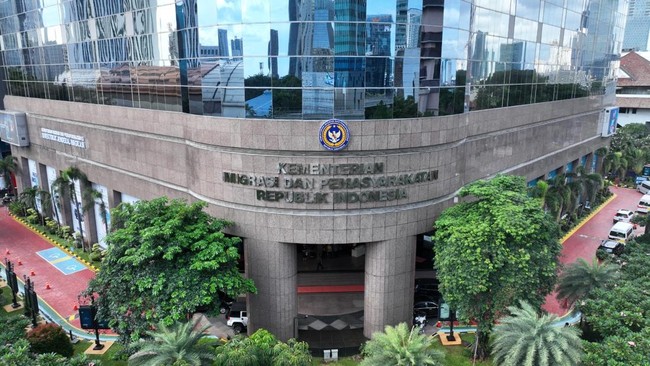
Jakarta, CNBC Indonesia - The Secretariat General of the Ministry of Transmigration is optimistic that budget absorption will increase significantly by the end of the year. This confidence comes as a number of strategic activities, procurement processes, and training programmes begin to roll out in the second half of 2026.
Meanwhile, the government has also prepared next year’s budget policy. The focus is directed towards meeting personnel needs, ministry operations, and strengthening governance and digital transformation.
“For the first semester of 2026, as of today the Secretariat General has only achieved a budget realisation of 30.61 percent,” said Secretary General of the Ministry of Transmigration Edy Gunawan during a meeting with Commission V of the Indonesian House of Representatives on Wednesday (24/6/2026).
This absorption rate remains in line with the planned implementation stages. The Secretary General has also mapped out budget realisation projections from each bureau and work unit. This step was taken to ensure all programmes can run according to the established targets.
“God willing, we have projected that the budget realisation for the Secretariat General by the end of the year can reach 97.97 percent,” he stated.
While pursuing the 2026 absorption target, the Ministry of Transmigration is also preparing next year’s work programme. The indicative budget ceiling received by the Secretariat General for 2027 will be used to support the ministry’s basic services as well as several institutional transformation agendas.
“The Secretariat General’s indicative budget ceiling for 2027 is Rp310.63 billion. As much as 97.26 percent is used for management support programmes and 2.74 percent for technical transmigration programmes,” Edy said.
The budget will be focused on strengthening bureaucratic reform, improving planning and budgeting quality, enhancing human resources, digital transformation, data management, public communication, and training for transmigration communities.
“Of the total budget, 38.58 percent is allocated for personnel expenditure, 55.6 percent for operational expenditure, and 5.13 percent for non-operational expenditure,” he explained.
He emphasised that the budget was prepared with a prudent principle amid limited fiscal space. The main priority remains ensuring personnel needs and basic ministry operations before allocating funds for other programmes.
“In principle, we follow the leadership’s directive that the priority is personnel spending, then operational spending that must be prepared, and lastly non-operational spending. We hope for support so that with this limited budget we can still support the success of transmigration programmes and the achievement of national development targets,” Edy concluded.