
BTN Housingpreneur Comes to Bali, Encouraging Modern Homes with a Local Touch
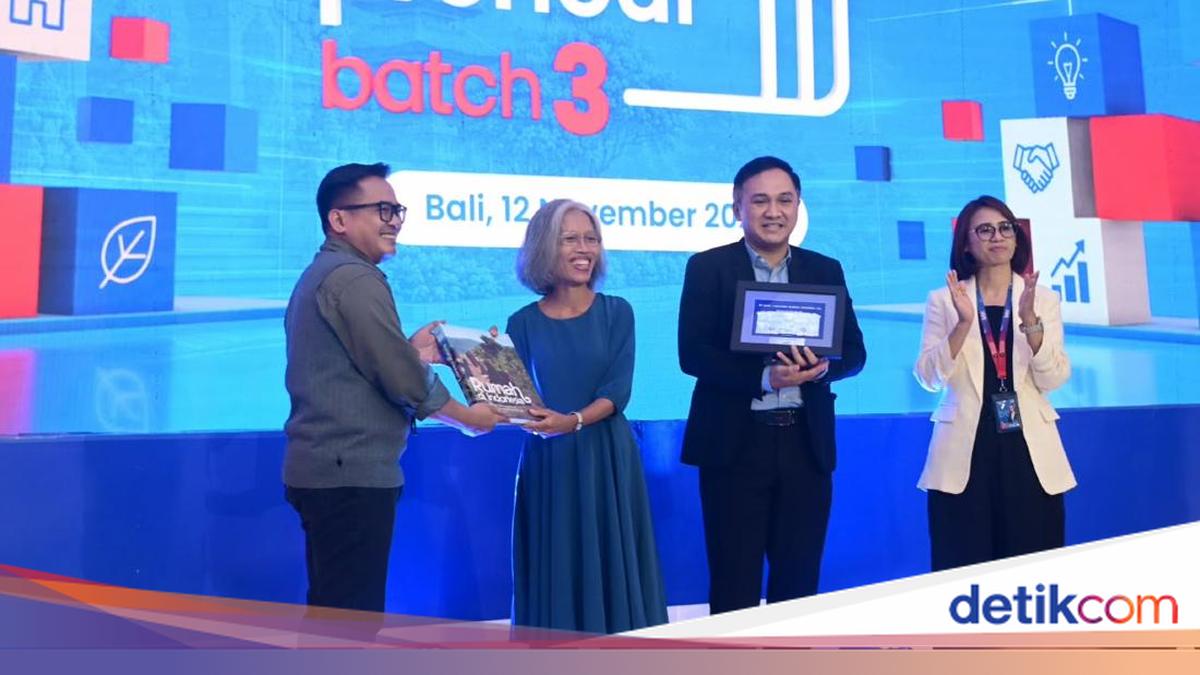
BTN Housingpreneur Batch 3 has arrived in Bali. The roadshow brought together design innovation, community needs and the future of sustainable housing. One of the ideas put forward was to promote modern homes while preserving local identity and character.
Professor Gusti Ayu Made Suartika, a professor of urban and regional planning at Udayana University (Unud), said a home reflects its occupants. Changes in people’s behaviour and way of life, she said, directly affect a home’s form and function.
“Traditions in building a home actually come from ourselves, because a home reflects us. So when our behaviour and way of life change, the home changes too,” said the lecturer, known as Professor GAM, at the BTN Housingpreneur Batch 3 roadshow at Unud in Bali on Thursday (12 November 2026).
Professor GAM outlined the challenges facing future housing, which extend beyond limited land and the efficient use of space. She cited the development of architecture in Bali, where a key challenge is preserving cultural identity amid changes in people’s lifestyles.
She gave the example of the community in Bayung Gede, Bangli, whose traditional homes are organised into zones according to local rules. As economic activity has developed, some residents have had to work far from their village. This has led to a need for private vehicles to support their daily mobility.
Suartika said the view that traditional homes must never be changed should be considered more openly. Traditions in home-building, she said, should also take residents’ choices and needs into account, rather than simply following rules dictated by others.
“A home is a place for a person’s life in its entirety. It represents someone not only as part of a society or community, but also as an individual with distinct needs and characteristics,” she said.
Suartika stressed that culture is not static, but continues to evolve with the changing lives of people. Preserving identity, therefore, does not always mean retaining every physical feature of a building exactly as it was.
“The real challenge is how to preserve the values considered important while building a new identity that remains connected to local culture,” Suartika said.
“Developments in artificial intelligence (AI) are also expected to change the needs of future homes,” she added.
Suartika also stressed that people’s decision to keep traditional homes unchanged must be respected. She said this choice represents collective agreement, or communal action, to safeguard the values considered important by a community.
Innovative adaptable homes
Jakarta-based architect Engelberth Yakobus Grenti S also shared his experience at the BTN Housingpreneur Batch 3 roadshow at Unud in Bali. He introduced the concepts of micro-living and the growable house through his Rumah Kampung Kota design. The innovation earned him second place in the general category of the Rumah Nusantara Business Ideation competition at BTN Housingpreneur 2025.
The founder and principal architect of E Design Studio said micro-living and growable-house concepts are not merely approaches to optimising limited space. They also allow a home to develop as its occupants’ needs change.
According to Engelberth, the main challenge in housing design today is making use of increasingly limited land without sacrificing function and comfort. An ideal space does not necessarily have to be large, he said; what matters is making optimal use of every part of the home.
In the Rumah Kampung Kota design, several functions are integrated into shared spaces. For example, the kitchen can be combined with the dining room, while a work area can connect with a communal space.
“Multifunctional and modular furniture also allows one area to serve more than one purpose,” Engelberth said.
He also emphasised the need to ensure comfort, including by maximising natural light and ventilation through internal courtyards, voids and large windows. With these design features, compact homes can still feel spacious and healthy.
One advantage of the concept is the flexibility of its spaces. A home does not need to have permanently fixed functions from the outset, he said, as residents’ needs may change over time.
He cited a carport as an example: it need not be used solely for parking, but could also serve as a business space or support other productive activities. A room initially designed as a bedroom could likewise be converted into a workspace, grocery shop, or coffee-and-laundry business.
“In this way, a home is not just a place to live. It can also support a family’s economic activities without always requiring an increase in floor area,” he said.
Drawing out innovation and creativity in housing
Joyce Ivone Mandagi, BTN’s deputy regional business head for the East Java, Bali and Nusa Tenggara regional office, said BTN Housingpreneur is one of the company’s initiatives to draw out innovation and creativity in the housing sector. Now in its third year, the programme’s Denpasar event was the fourth and final city on this year’s BTN Housingpreneur Batch 3 roadshow.
Ivone said students are an important group to involve because of their potential to generate fresh and innovative ideas. The programme also has an open category, giving people from a range of backgrounds the chance to take part.
BTN has provided home ownership loans (KPR) since 1976, Ivone said. Over nearly five decades, millions of people—from low-income households to middle- and upper-income groups—have been helped to own homes through this financing.
BTN’s business development is not focused solely on home ownership finance, she said. The company is also expanding its focus to the housing ecosystem as a whole, including facilities and infrastructure, interior needs and home design.
Sustainability is another priority, including the development of environmentally friendly materials and the use of recycled materials. “These include recycled plastic for paving materials and other recycled materials for roof tiles,” Ivone said.
BTN is also encouraging waste management through its “Pay Your Instalments with Your Waste” programme. Waste collected and managed by customers can be recorded, with the proceeds potentially used to reduce their mortgage instalments.
“We hope to see more innovation and creativity develop in the future, particularly from students,” Ivone added.
Meanwhile, Udayana University Vice-Rector for Resources Professor Agoes Ganesha Rahyuda welcomed the university’s involvement in BTN Housingpreneur Batch 3. He said the event provided a space for collaboration between higher education and industry.
“Bringing these two environments together gives students the opportunity to understand real-world challenges, rather than relying only on theory learnt in lectures,” Agoes said.
Agoes said Bali’s housing future must be built around three considerations: rootedness in local identity, adaptability to change and relevance to community needs. A home is not merely a place to live, he said, but also a social space reflecting the values of the community.
Housing development, therefore, must take into account more than design, construction technology and economic value. “The character of the region, environmental balance and the needs of the people who live there must also be considered,” he said.
Source: jawawa.id (https://jawawa.id/newsitem/btn-housingpreneur-comes-to-bali-encouraging-modern-homes-with-a-local-touch-1794480660)
Originally published by detikBali (https://www.detik.com/bali/bisnis/d-8750226/btn-housingpreneur-hadir-di-bali-ajak-rancang-rumah-modern-bernuansa-lokal), translated from Indonesian