
BTN Expands Waste Station to Banyumas, Turning Household Waste into a Source of Income
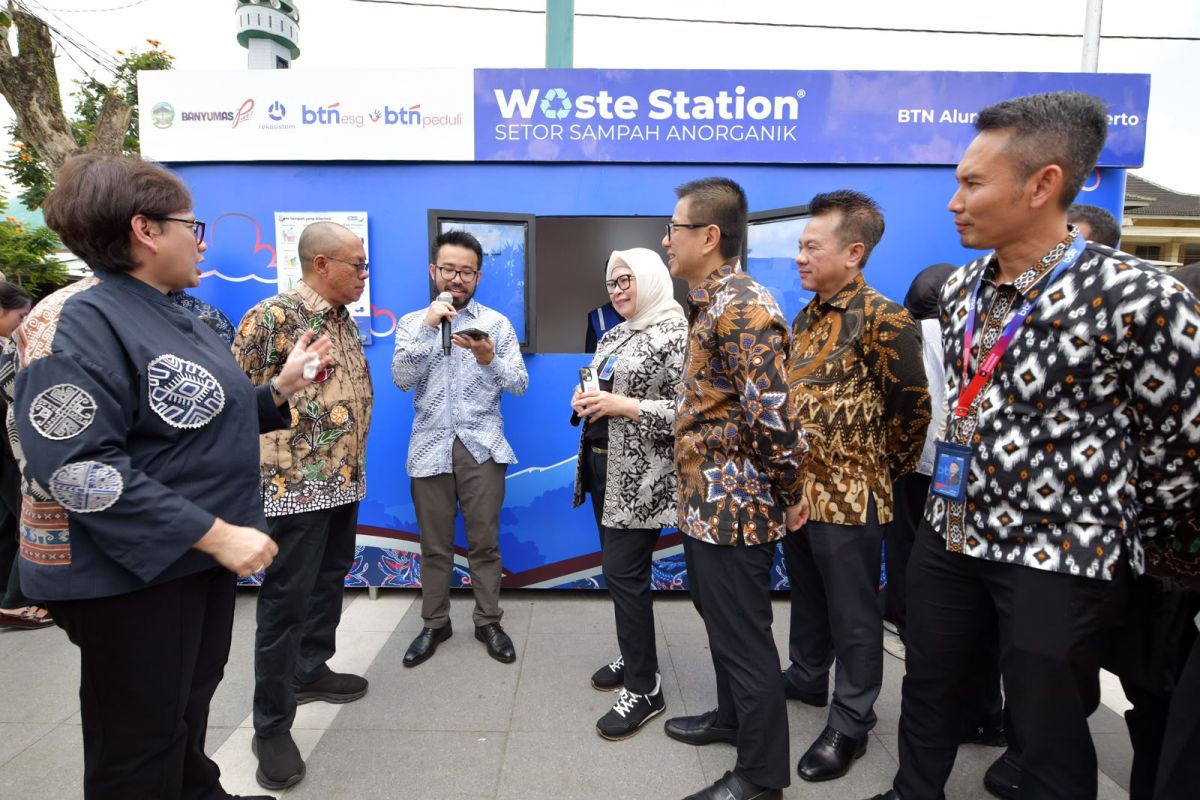
Jakarta (ANTARA) – PT Bank Tabungan Negara (Persero) Tbk (BTN) has expanded its circular-economy-based waste management initiative by opening a Waste Station at Purwokerto Square in Banyumas Regency, Central Java, on Thursday (5 November). Following an earlier facility in Situbondo, East Java, the station—a collaboration between BTN, the Banyumas Regency Government and Rekosistem—allows residents to turn inorganic waste into economic value that can be withdrawn through a BTN account.
BTN Commercial Banking Director Hermita said the Waste Station was part of the bank’s Beyond Mortgage strategy, which extends BTN’s role beyond housing finance to developing ecosystems that support people’s quality of life.
“BTN is now Beyond Mortgage. That means we are not just managing homes, but the entire ecosystem around them,” Hermita said at the opening ceremony at Purwokerto Square in Banyumas Regency, Central Java, on Thursday (5 November 2026).
Hermita said BTN was developing five main ecosystems: local government, health, education, tourism and trade. These are closely connected to housing needs and to residents’ daily activities, which generate waste. Waste management is therefore part of BTN’s effort to build a more sustainable housing ecosystem.
According to 2024 data from the National Waste Management Information System (SIPSN), household waste accounts for around 50.8 per cent of the 33.79 million tonnes of waste generated nationally. This significant contribution underscores the importance of managing waste at the neighbourhood level.
Hermita said BTN was open to working with housing developers, universities and local governments to expand waste management. One proposal is to provide waste-sorting facilities in every housing area, encouraging residents to manage waste at home.
BTN is also promoting the empowerment of young people with waste-processing innovations through training and business-matching with companies, including housing developers. In the future, Waste Stations are expected to handle organic waste as well as inorganic waste.
“We should not merely move waste around; we should manage it,” Hermita stressed.
The Purwokerto Square Waste Station has an average collection capacity of around four tonnes of waste per month and operates from Tuesday to Sunday, 9am to 6pm. Residents can deposit inorganic materials such as plastic bottles, cardboard, paper, cans, glass and electronic waste through the Rekosistem app. The weighed waste is converted into points according to its type and weight, which can then be redeemed for cash through a BTN account.
The Banyumas facility builds on BTN’s experience with its Waste Station in Situbondo, which has collected around 6.8 tonnes of inorganic waste and attracted 32 users since it began operating.
Vinda Damayanti Ansjar, Deputy for Waste, Hazardous Waste and Toxic Materials Management at the Ministry of Environment, said cooperation between local government, businesses, the banking sector and communities was key to establishing a sustainable waste management system.
Vinda said Banyumas already had a range of waste management initiatives, including integrated waste processing sites (TPST), 3R facilities, refuse-derived fuel (RDF) facilities and recycling centres. The Waste Station is expected to strengthen the network for collecting sorted waste and linking it with recyclers and industries that use recovered materials.
“Banking-sector involvement also creates opportunities to connect waste management with financial services and incentives, allowing people to directly experience the benefits of sorting waste,” Vinda said.
She stressed that the Waste Station’s success should be judged by its tangible impact, rather than simply by the existence of the facility.
“The success of a Waste Station cannot be measured merely by the establishment of a facility or the holding of today’s opening ceremony. True success will be seen in how many people take part, how much waste is collected separately and recycled, and how much sustained economic and environmental benefit is generated,” she said.
Banyumas Regent Sadewo Tri Lastiono said waste management was one of the local government’s priorities. The regency currently generates around 738 tonnes of waste a day. Of this, approximately 573 tonnes, or 77.76 per cent, is managed, while around 164 tonnes a day still require further treatment.
Sadewo said Banyumas continued to promote waste management at source through household sorting, support for community self-help groups, and the provision of processing facilities at village and urban ward level.
“Our way of thinking about waste must also change. Waste should no longer be seen simply as something to collect, transport and dispose of,” Sadewo said.
He hoped the Waste Station would further encourage residents to sort waste and gain economic benefits from materials that could still be reused.
“Let us make waste management a shared movement to create a clean, healthy, productive and sustainable Banyumas,” Sadewo concluded.
Source: jawawa.id (https://jawawa.id/newsitem/btn-expands-waste-station-to-banyumas-turning-household-waste-into-a-source-of-income-1793875962)
Originally published by Antara (Indonesian) (https://www.antaranews.com/berita/5834263/btn-perluas-waste-station-ke-banyumas-dorong-sampah-rumah-tangga-jadi-sumber-penghasilan), translated from Indonesian