
BSSN prepares cryptography migration to counter quantum computing threat
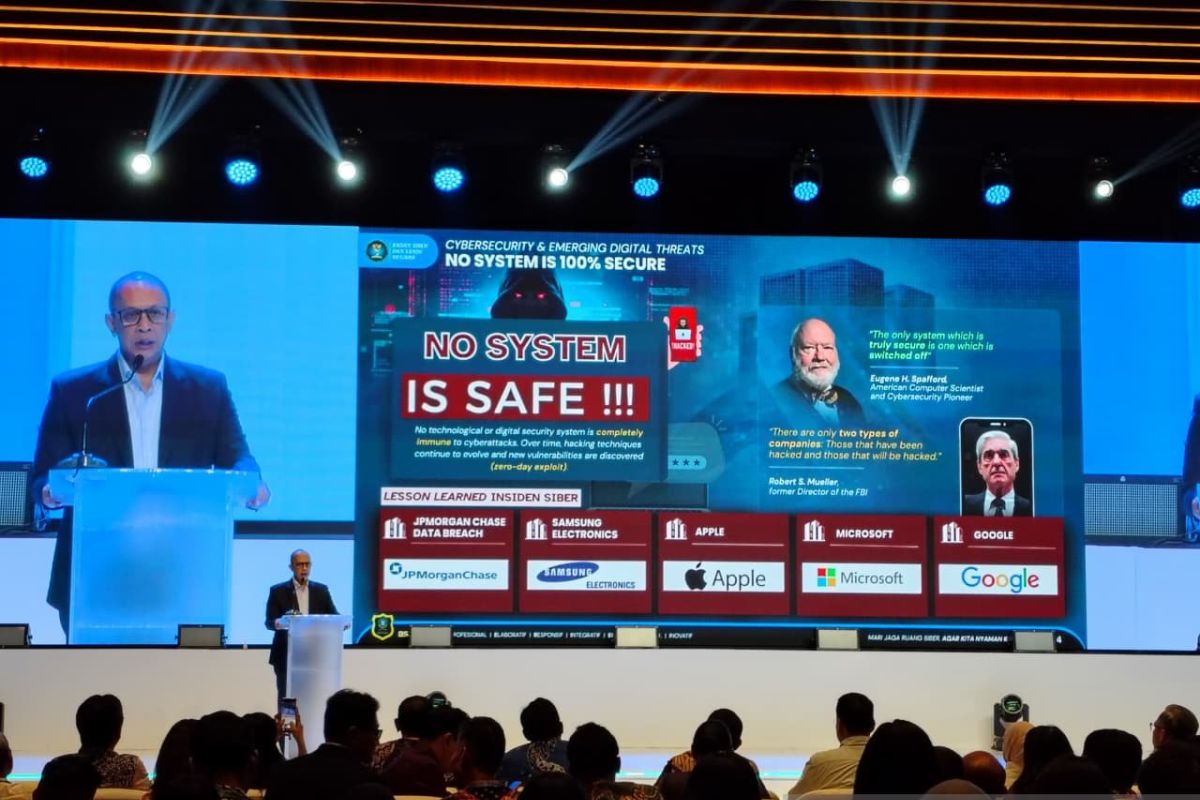
Denpasar (ANTARA) - Indonesia’s National Cyber and Crypto Agency (BSSN) is preparing a national cryptography migration to address the threat of quantum computing, which could weaken encryption systems currently in use.
Preparations include developing policy, cataloguing cryptographic assets, strengthening technical capabilities, and building domestic human resources and industry.
BSSN Deputy Chief Commissioner General of Police Albertus Rachmad Wibowo said in Denpasar on Tuesday that advances in quantum computing posed a new challenge to cyber security, as the technology could accelerate the breaking of cryptographic algorithms used to protect data.
“We already have cryptography, but when quantum computing arrives, the strength of the cryptography we use today could be broken quickly,” he said during a session at Bali Tech Week 2026 in Sanur.
Rachmad said some experts estimated that quantum computing could be ready for use within the next few years. Those estimates had moved forward, from 2030 to possibly as early as 2028.
Indonesia therefore needs to take precautionary steps early to ensure that strategic data and essential services are not vulnerable as the technology advances.
BSSN has drawn up a cryptographic independence roadmap for 2027–2035, divided into three phases. The first, covering 2027–2029, focuses on building foundations and readiness.
The second phase, from 2030 to 2032, is directed at implementation and integration. The third, spanning 2033–2035, aims to achieve cryptographic sovereignty.
One method involves attackers stealing and storing encrypted data now so that they can try to unlock it later, when technological capabilities allow.
“So, they harvest now and decrypt later,” he said.
To address this risk, BSSN has established a task force and is preparing several measures, including coordinated national policy and governance, an inventory and prioritisation of cryptographic assets, and stronger technical capabilities, standards and security assurance.
BSSN is also promoting the development of domestic cryptography talent and industry, while expanding international cooperation.
Rachmad stressed the importance of ministries, agencies and local governments being involved in identifying strategic data that must be protected. Such data needs to be backed up and prioritised in the migration to cryptographic systems better prepared for quantum computing threats.
He said BSSN could not undertake the work alone. Universities and researchers were needed to develop technology and talent, while industry was expected to provide solutions that met security standards.
BSSN will coordinate, supervise and evaluate national readiness for these technological developments.
Rachmad said preparations could not be delayed because there was still uncertainty about when quantum computing capable of threatening current cryptographic systems would emerge.
For that reason, asset inventories and migration planning need to begin before the threat becomes a reality.