
BSMI Holds Wound Healing Workshop in Egypt, Driving Innovation in Wound Care for Palestinian Patients
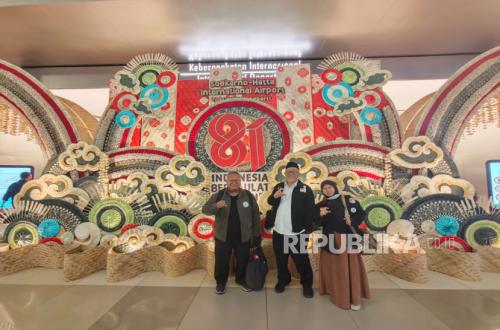
The Chairman of the Consultative Assembly of the Indonesian Red Crescent Society (BSMI) and Professor at the Faculty of Medicine of UPN Veteran Jakarta, Prof. Dr. dr. Basuki Supartono, Sp.OT, FICS, MARS, travelled to Egypt to provide materials and training in an Advanced Technique Wound Healing workshop.
The activity, held in cooperation with the Egypt branch of the Palestine Red Crescent Society (PRCS), took place on 13–17 August 2026 at the Palestine Red Crescent Society Hospital in Cairo. The workshop was attended by doctors from Egypt and Palestine.
The BSMI delegation consisted of the Chairman of the BSMI Consultative Assembly Prof. Dr. dr. Basuki Supartono, Sp.OT, FICS, MARS, BSMI Secretary General Muhamad Rudi, and General Treasurer of the BSMI National Board dr. Prita Kusumaningsih, Sp.OG.
Basuki said the activity holds significant importance because Egypt is one of the places that treats many patients from Gaza, Palestine, including patients with wound conditions requiring special care.
“Egypt treats many patients from Gaza, Palestine. Therefore, the ability to manage difficult-to-heal wounds is very important, especially in patients with complex conditions,” he said.
He explained that the wound healing process in patients can face various obstacles. Infection and malnutrition, for example, can cause the inflammatory process to last longer, making wounds difficult to heal.
Basuki said participants were introduced to an advanced wound healing approach that uses biological-based methods to support the wound healing process.
According to him, one of the approaches discussed relates to the use of biological components, including signalling molecules and cells used in stem cell groups to support tissue regeneration.
“In difficult-to-heal wounds, we face various inhibiting factors, from infection and malnutrition to prolonged inflammation. This biological approach is one of the innovations that can help overcome these problems,” he explained.
In addition to effectiveness, the method introduced in the workshop also has advantages in terms of application. Treatment can be carried out more simply and does not always require surgical intervention.
Dressing changes carried out approximately once a week can also help save energy, time, and the use of materials in the wound care process.
“The method is relatively simple and does not require surgery. Dressing changes also only need to be done once a week. This can certainly save energy, time, and materials, especially when applied in conditions with limited resources such as in Gaza, Palestine,” he said.
Source: jawawa.id (https://jawawa.id/newsitem/bsmi-holds-wound-healing-workshop-in-egypt-driving-innovation-in-wound-care-for-palestinian-patients-1786503131)
Originally published by Republika (https://khazanah.republika.co.id/berita/tjmvqp483/gelar-workshop-wound-healing-di-mesir-bsmi-dorong-inovasi-penanganan-luka-untuk-pasien-palestina), translated from Indonesian