
BSKDN Chief Urges Regional Researchers to Contribute to Evidence-Based Policymaking
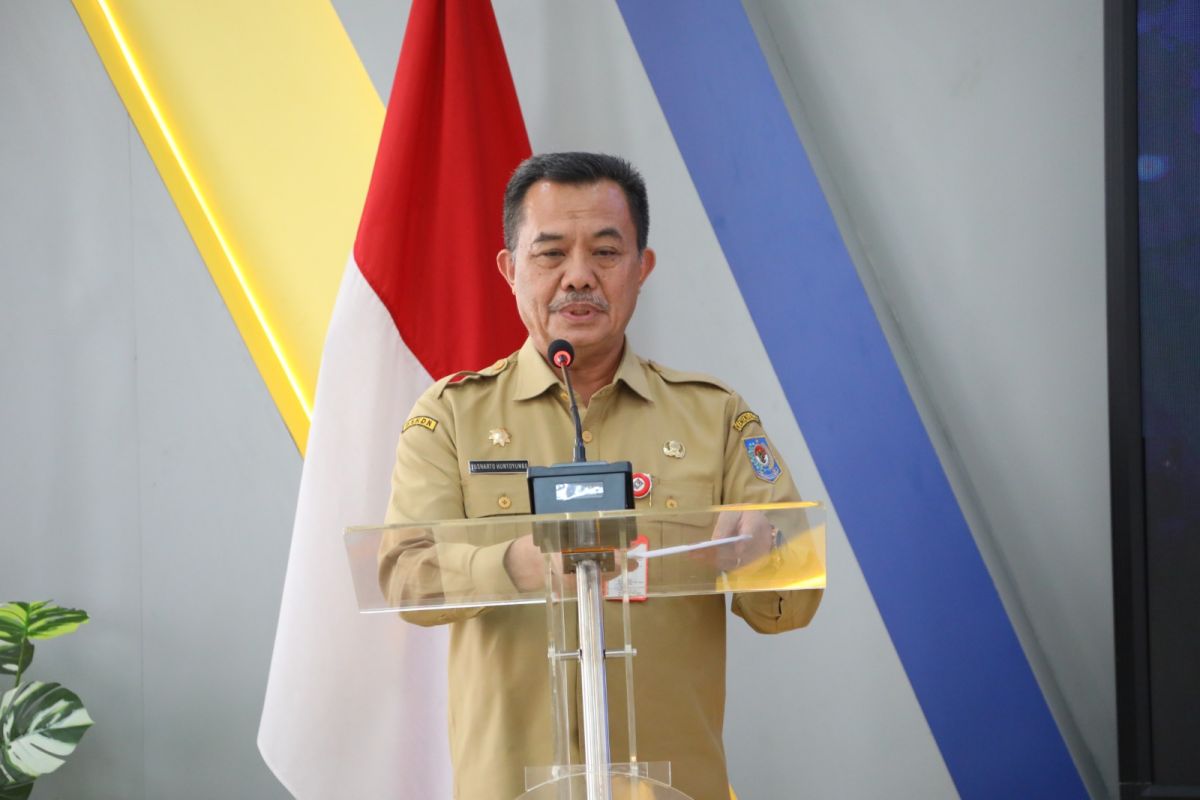
Head of the Domestic Policy Strategy Agency (BSKDN) at the Ministry of Home Affairs (Kemendagri) Yusharto Huntoyungo has called on functional researcher officials in the regions to strengthen researchers’ contribution to producing evidence-based policies.
Yusharto explained that researchers play an important role in the evidence-based policymaking process. The results of research and studies can serve as material for drafting recommendations, academic papers and policy briefs, which are then used by regional governments in formulating policies.
“Regional governments, with their local wisdom and policies, can adopt research findings as policies that can be applied at the local level to improve public welfare,” said Yusharto.
He made the remarks while speaking at the “Coordination Meeting on Minimum Work Output for Functional Researcher Positions at the East Java Regional Research and Innovation Agency (BRIDA)” held online from the BSKDN building.
On that occasion, Yusharto also reminded researchers to meet the minimum work output (HKM) requirements in accordance with regulations. According to him, fulfilling HKM is not only important for maintaining the continuity of functional positions, but is also part of efforts to produce evidence-based policies.
He said research results need to be communicated and utilised more quickly so that research does not stop at publication, but can provide direct benefits to the public.
He cited the Australian government’s response to research on moringa, or kelor, as an example. The study found that consuming moringa at certain levels can affect fertility rates in rats.
The finding then prompted several Australian states to exercise caution in the use of moringa for consumption, particularly among people of reproductive age.
“This is one example of how quickly a government can respond to research findings and turn them into policies that can be applied to the public or at the regional government level,” he said.
He assessed that this pattern can serve as a lesson for regional governments in utilising research findings to address various local needs.
“When research results can be communicated well and translated according to local conditions, research will have broader benefits, both for improving public welfare and protecting regional resources,” he said.
In this context, Yusharto sees researchers, the Regional Research and Innovation Agency (BRIDA), and policy analysts as having complementary roles. Researchers produce data and scientific evidence through research, development and assessment.
These results can then be translated by policy analysts into policy recommendations. Meanwhile, BRIDA plays a role in coordinating, guiding and encouraging the utilisation of research results in regional government policies.
One concrete form of researchers’ contribution to supporting evidence-based policy, Yusharto continued, can be made through the preparation of academic papers.
Under the provisions governing the Functional Researcher Position, academic papers for draft regional regulations, draft government regulations, draft presidential regulations and draft laws are recognised as part of the Minimum Work Output for researchers.
To that end, Yusharto expressed hope that researchers will pay attention to every stage of the HKM submission process while continuing to improve the quality of their performance and professional capacity.
He stressed that the development of the Functional Researcher Position is now increasingly oriented towards tangible achievements and performance portfolios, rather than merely length of service.
“We hope that those of you who are now researcher officials will pay attention to the HKM submission deadlines so that you continue to play a role and make the best contribution as part of the evidence-based policy decision-making chain,” he said.
Source: jawawa.id (https://jawawa.id/newsitem/bskdn-chief-urges-regional-researchers-to-contribute-to-evidence-based-policymaking-1786607753)
Originally published by Antara (Indonesian) (https://www.antaranews.com/berita/5692403/kepala-bskdn-ajak-peneliti-daerah-kontribusi-dalam-perumusan-kebijakan), translated from Indonesian