
BSKDN: Accelerating Regional Economic Growth Must Be Data-Driven
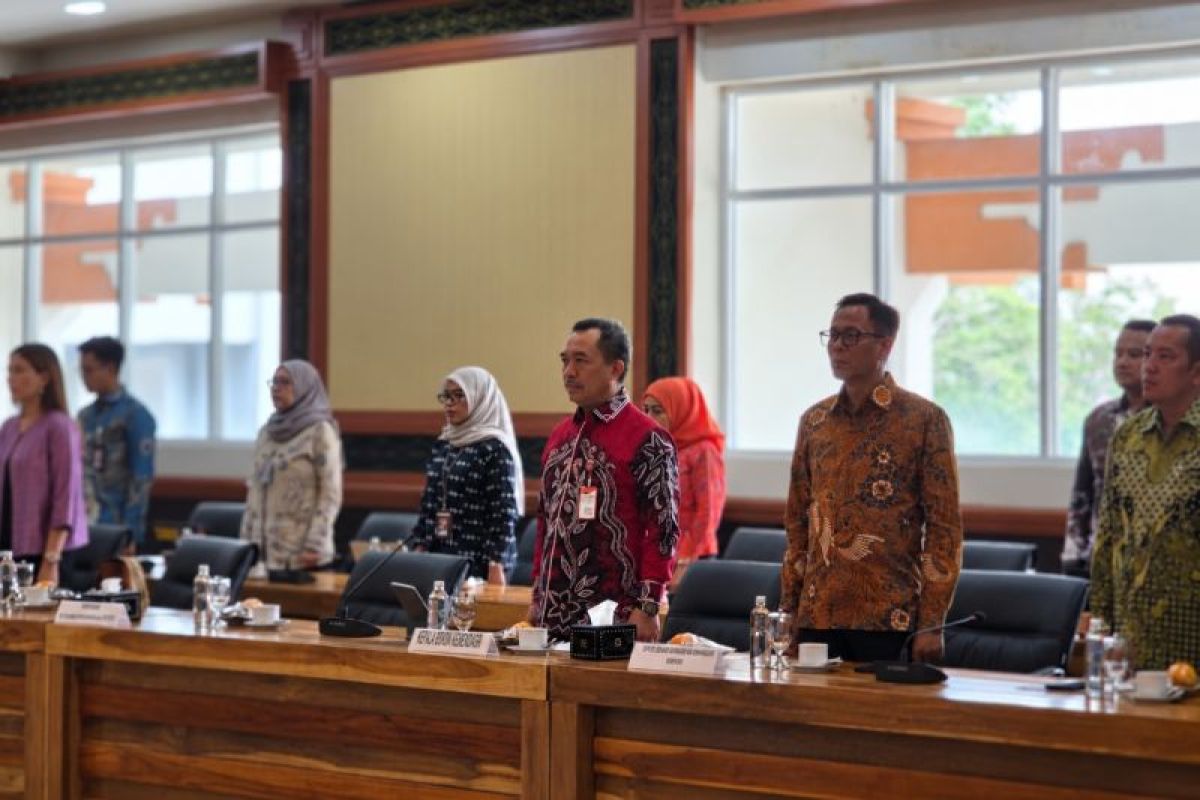
Jakarta (ANTARA) - The Agency for Domestic Policy Strategy (BSKDN) of the Ministry of Home Affairs has emphasised that the acceleration of regional economic growth must be carried out through a data-driven approach.
The Head of BSKDN, Yusharto Huntoyungo, stated that data serves as a vital foundation for identifying issues and potential, as well as determining the leverage points that can exert the greatest influence on other production factors.
“The most important thing is that we read the conditions before acting. From those conditions, we determine the leverage points that can influence economic growth,” Yusharto said in a statement in Jakarta on Monday.
These remarks were made during a webinar on monitoring the acceleration of regional economic growth towards an 8 per cent target for the provinces of Bali, West Nusa Tenggara, and East Nusa Tenggara, held at the Bappeda NTB office on Friday (11/9).
The activity follows the kick-off for regional economic growth acceleration led by the Minister of Home Affairs, which included the formation of a regional economic growth acceleration coordination team.
Yusharto stated that economic growth must begin with a comprehensive assessment of regional conditions before determining intervention steps. He explained that regional economic conditions are influenced by various interconnected sectors. Therefore, the team must examine the economic landscape holistically through the sectors that constitute economic growth.
This approach, Yusharto continued, is necessary to ensure that acceleration efforts are not applied uniformly. Each region needs to identify which sectors or factors are most decisive for its economic growth so that resources and interventions can be directed more precisely.
“We need to identify the leverage points. We must not attempt to do everything at once without having any true priorities,” he explained.
Meanwhile, there are nine potential steps to accelerate regional economic growth. These nine aspects include the realisation of regional budgets (APBD), foreign direct investment (PMA), domestic direct investment (PMDN), infrastructure, the price of basic goods as an inflation indicator, exports and imports, employment opportunities, agriculture and fisheries, manufacturing industry, and business licensing.
He emphasised that the team does not need to handle all these aspects simultaneously. From these nine options, the team must identify the three most dominant factors affecting economic growth in each region to be diagnosed in depth and provided with solutions.
“From these nine options, we will choose the three most decisive ones. These three factors will then be diagnosed, and we will seek solutions to increase economic growth,” said Yusharto.
According to him, selecting these three primary factors will make the monitoring process more focused. The team can track the development of each indicator, identify emerging obstacles, determine resolution steps, and monitor the extent to which interventions influence economic growth.
In addition to precision in focus, Yusharto also reminded the importance of time discipline. Every diagnostic result and resolution step must be prepared according to the established schedule to ensure that economic growth monitoring remains consistent.
“Time discipline is crucial. We must not stop at discussions; we must immediately prepare actionable steps,” he said.
He expressed hope that this monitoring would provide broader benefits to the public. Economic growth should not merely be reflected in rising figures but must be felt by the community as a whole.
“Growth must not only be felt by a few people; it must benefit the entire community. This is our focus,” Yusharto added.
In line with this, strengthening regional coordination is a vital part of the initial stage of economic growth monitoring. The teams for Bali, West Nusa Tenggara, and East Nusa Tenggara, operating under their respective regional coordinators, will prepare initial reports to be discussed at the next regional meeting on 18 September 2026.
By that time, each team is expected to have mapped regional conditions, identified growth leverage points, and prepared diagnostic results and alternative solutions. This step is intended to ensure that discussions at the next meeting are more focused and result in immediate follow-up actions.