
BSI: Many Halal Industries Still Use Conventional Banks
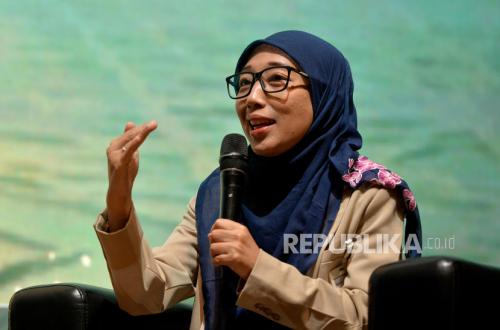
The connection between the halal industry and the Sharia financial sector in Indonesia is considered to be sub-optimal. To date, many halal industry players continue to use conventional banking services despite their products being officially halal-certified.
This was stated by Yosita Nur Wirdayanti, VP Business & Strategy Department Head of the Islamic Ecosystem at PT Bank Syariah Indonesia Tbk (BSI), during the Islamic Finance Dialogue (IFD) held as part of the Indonesia Sharia Forum (ISF) 2026 in Jakarta on Wednesday (1/7/2026).
“The halal lifestyle is actually very close to us. However, there is still a gap between the halal industry and Sharia financial institutions. Many industries produce halal products but still utilise accounts and services from conventional banks,” said Yosita.
According to Yosita, this condition indicates that the development of the halal industry has not been fully accompanied by the utilisation of Sharia financial services. Therefore, collaboration is required between banks, regulators, and other stakeholders to identify the obstacles faced by business actors.
“We need to see what the constraints are. Whether Sharia banking products are still insufficient, or whether business actors are unaware of the available services. This is what needs to be coordinated together,” she said.
Yosita stated that BSI continues to strengthen the halal ecosystem through SME financing, the distribution of People’s Business Credit (KUR), and business mentoring. The company is also collaborating with the National Committee for Sharia Economy and Finance (KNEKS) and the Halal Product Assurance Agency (BPJPH) to expand halal certification for business actors.
Additionally, BSI operates four SME centres in Aceh, Surabaya, Makassar, and Balikpapan. The company also runs the BSI Entrepreneur Talent programme, which provides training and assistance to business actors to help them scale up.
“We also have an incubator programme for business actors. So, we do not just provide training, but also mentoring to ensure their businesses can grow,” Yosita added.
In the same forum, Putu Rahwidhiyasa, Director of Sharia Business and Entrepreneurship and Acting Director of the Halal Product Industry at KNEKS, stated that the development of the Sharia economic ecosystem must be carried out gradually. According to him, strengthening the halal industry must begin with products and services that meet halal standards, followed by Sharia financing, and finally, business practices that align with Sharia principles.
“First, the goods and services must be halal; second, the financing; and after that, the business conduct. Once all of these are operational, only then will we have a complete Sharia economic ecosystem,” said Putu.
According to Putu, synergy between the halal industry and Sharia financial institutions is one of the keys to enabling Indonesia to strengthen its competitiveness as a global Sharia economic hub.