
BSI Invites Public to Turn Waste into Gold Through Green Zakat
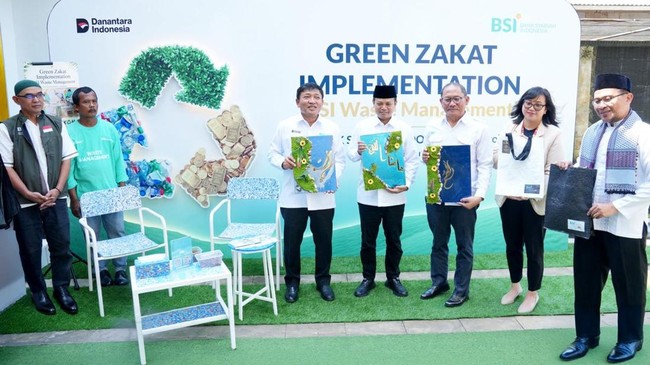
PT Bank Syariah Indonesia Tbk (BSI) has introduced a Waste Management programme that empowers zakat beneficiaries (mustahik) while inviting the public to transform inorganic waste into valuable assets through BSI Gold savings. The initiative is part of BSI’s effort to strengthen the role of Islamic finance as a solution to social and environmental challenges through the implementation of Green Zakat.
As Indonesia’s largest Islamic bank, BSI views zakat not only as a religious obligation but also as a strategic instrument for creating inclusive and sustainable welfare. Since its merger through to 2025, BSI, together with the National Zakat Agency (BAZNAS RI), has distributed approximately Rp1 trillion in zakat funds to support programmes in the economic, education, social, humanitarian, and community empowerment sectors.
BSI Vice President Director Bob T. Ananta stated that innovation in zakat management is key to broadening social impact while addressing sustainable development challenges. He noted that zakat plays a strategic role in reducing poverty, strengthening economic resilience, and creating sustainable social and environmental impacts.
Through the BSI Waste Management programme, zakat funds are used to empower beneficiaries in the waste management sector. Collected waste is sorted and processed into value-added products such as recycled goodie bags, plaques, chairs, and tables that have market value. This empowerment model opens new business opportunities, creates sustainable income sources, and encourages economic independence among beneficiaries.
The programme also actively involves the public in building a circular economy culture. Via recycling kiosks provided by BSI, individuals can deposit inorganic waste, which is then converted into BSI Gold savings balances. Once the accumulated waste value reaches a minimum of Rp55,000, the depositor receives a balance in a gold account, transforming previously worthless waste into a future investment instrument.
Bob added that the initiative aims to shift the paradigm that waste is not merely rubbish, but a resource capable of generating economic, social, and environmental value. Green Zakat serves as a bridge connecting beneficiary empowerment, environmental conservation, and improved public investment literacy.
The programme responds to Indonesia’s increasingly complex waste management challenges. With national waste production reaching approximately 30 million tonnes per year, BSI sees an opportunity to provide a social finance-based solution that delivers tangible impact, from reducing waste accumulation to improving community welfare.
In its initial phase, the programme targets more than 20 households or 73 beneficiaries in the Bantar Gebang and South Tangerang areas, aiming to manage over 27 tonnes of recyclable waste and strengthen the circular economy ecosystem at the community level. To expand its reach, BSI will gradually operate five Waste Management kiosks from June to August 2026 at five locations: Hafidz Indonesia Centre Islamic Boarding School in Bekasi, Malibu Village Housing Complex in Tangerang, Paramount Market in Serpong, Villa Dago Housing Complex in Pamulang, and Kampung Utan Pertamina Housing Complex in Ciputat.
To support the programme’s success, BSI has allocated Rp1 billion in assistance for waste management training, recycled goods production skills development, and the construction of kiosk facilities that will serve as economic activity centres for beneficiaries. The Green Zakat programme is aligned with the national development agenda, particularly in strengthening the people’s economy and sustainable development, and supports the achievement of Sustainable Development Goals (SDGs), including poverty alleviation, decent job creation, inclusive economic growth, and climate action.
BSI plans to continue developing innovative uses of Green Zakat as part of its commitment to delivering broader benefits to society. By integrating Islamic social finance, economic empowerment, and environmental conservation, BSI is optimistic that zakat can become a catalyst for transformation, turning waste into blessings, strengthening beneficiary independence, and creating a greener, more inclusive, and prosperous future for Indonesia.