
BSI introduces Hasanah KKI Card sharia financing card based on GPN
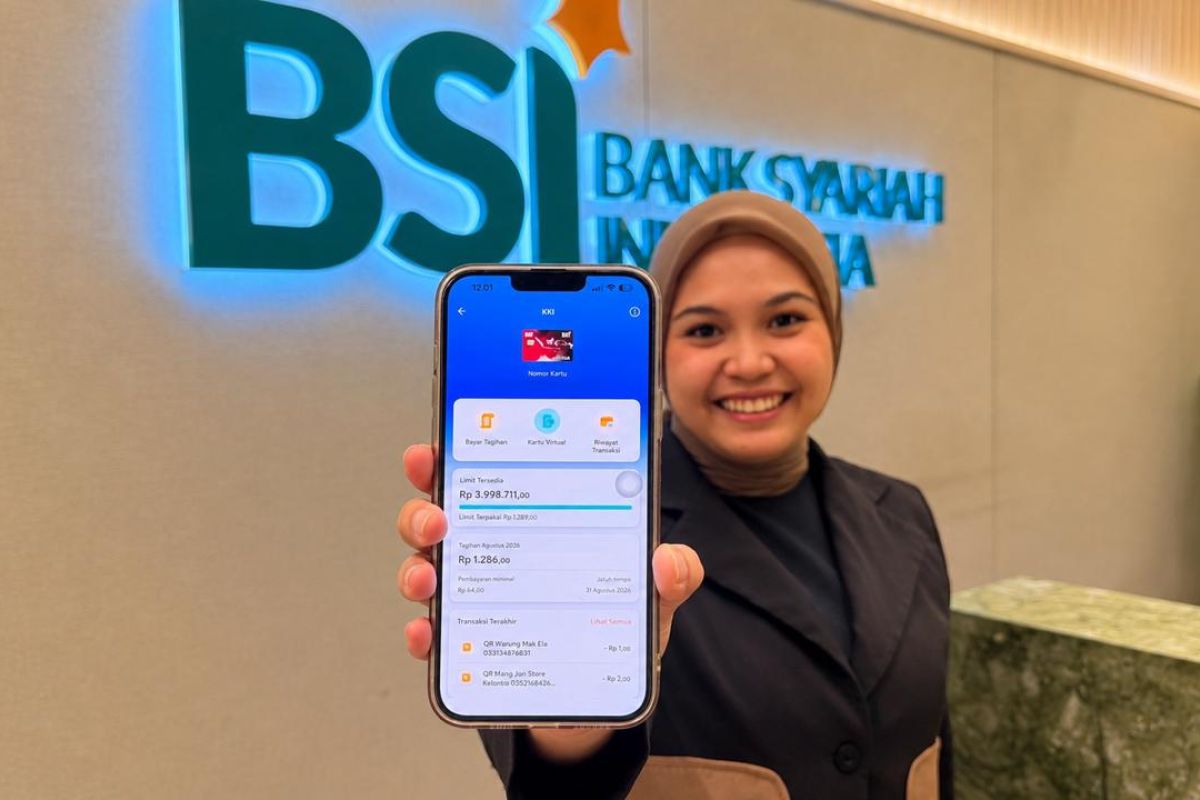
PT Bank Syariah Indonesia (Persero) Tbk (BSI) has introduced a sharia financing card called the BSI Hasanah KKI Card, which utilises the National Payment Gateway (GPN) network and is integrated with BYOND by BSI as a source of funds for QRIS transactions.
“Through the Hasanah KKI Card, we aim to deliver a financing and transaction solution that is safe, convenient and sharia-compliant. This sharia financing card is one of BSI’s unique selling points, as it can only be used at halal merchants,” said BSI Director of Retail Banking Kemas Erwan Husainy in a statement in Jakarta on Tuesday.
Erwan added that the Hasanah KKI Card is part of BSI’s commitment to providing ease of transactions and access to sharia financing for the public.
“We hope this product can help customers manage their financial needs wisely, maintain cash flow, and at the same time support national economic growth,” said Erwan.
In the initial phase, the Hasanah KKI Card is available as a virtual card without a physical card and is positioned as a second card for customers who already hold a BSI Hasanah Card Reguler.
For this initial phase, customers can apply for a limit starting from Rp4 million up to Rp100 million.
The card offers various attractive features, including 0 per cent instalments that customers can use to maintain cash flow in a more planned manner while meeting various consumption, business or other urgent needs.
In addition, the BSI Hasanah KKI Card can serve as a source of funds for QRIS payments.
Through BYOND by BSI, customers can also access the virtual card, which displays the card number and expiry date, monitor limits and bills, access transaction history, and receive real-time transaction notifications.
For context, penetration of the BSI Hasanah Card financing card has continued to increase. As of July 2026, transaction volume reached more than Rp1 trillion, growing positively by 5 per cent year on year (yoy).
According to the company, this innovation represents a tangible commitment to improving purchasing power and economic activity in the community.
The use of the card as a source of funds for QRIS transactions also opens opportunities for merchants and business players to gain broader transactions, thereby creating a multiplier effect for economic growth and national digital payments.
The company emphasised that service digitalisation is one of the focuses of BSI’s transformation to increase retail customer penetration.
This innovation provides convenience for customers in conducting digital transactions practically, safely and in accordance with sharia principles.
Furthermore, this innovation simultaneously supports the independence of the national payment system and expands the choice of sharia financing access that is safe, convenient, sharia-compliant and connected to an integrated digital ecosystem.
Previously, on Monday (17/8), Bank Indonesia (BI) together with the Indonesian Payment System Association (ASPI) launched the Kartu Kredit Indonesia (KKI) for the retail segment or the general public as an alternative domestic deferred payment method.
For information, KKI was previously only issued for the government segment, intended for central and regional government work units to support government spending transactions.
Now, KKI can be used by individuals and corporations, both for conventional and sharia services, in accordance with the products provided by the issuing payment service provider (PJP).
KKI differs from international principal credit cards. KKI is processed domestically through the National Payment System Infrastructure, whereas international principal credit cards use processing schemes from international principals.