
BSI (BRIS) Completes IT Transformation, Poised to Become Indonesia's New Big Bank
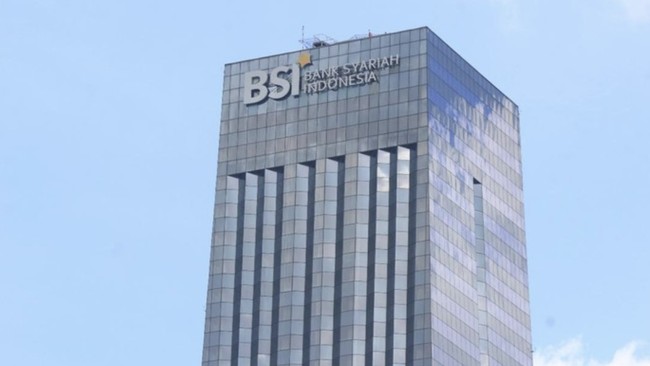
PT Bank Syariah Indonesia (Persero) Tbk. (BRIS) has completed its Information Technology (IT) system transformation as a foundation for accelerating business and strengthening digital services. This transformation is part of BSI’s strategic agenda over the past year, carried out with the support and supervision of Danantara, positioning the company to enter its next growth phase.
BSI President Director Anggoro Eko Cahyo stated that technological transformation has become a strategic necessity amid the rapid digitalisation of the financial industry and BSI’s business growth. He noted that BSI has enormous growth potential.
"BSI now stands alongside major banks as it has entered the top five banks in Indonesia. Customer expectations are that services and systems must be on par with large banks. For that reason, we strive to provide equivalent services in line with customer expectations," he said at the ‘Ngopi Bareng Media Akselerasi Transformasi Digital BSI’ event on Wednesday (1/7/2026).
This transformation will also be a step for BSI to achieve its vision of becoming a Top 5 Global Islamic bank and its aspiration of having 40 million customers by 2030.
During the transformation process, Danantara played an active role in providing strategic direction, supervision, and ensuring the transformation implementation adhered to governance and risk management principles.
Anggoro further revealed that over the past year, BSI recorded significant growth from its dual licences, namely as an Islamic bank and a gold bank.
"The gold bank has become our new engine to reach segments that we have not been able to access so far," he said.
The number of customers increased to more than 24 million as of April 2026, following the Gold Bank licence in February 2025 and the elevation of BSI’s status to a state-owned enterprise (Persero) in early 2026. This status strengthens BSI’s position as part of the strategic state-owned enterprise ecosystem.
The core banking migration from R10 to R24, completed in mid-May 2026, was one of BSI’s largest technology projects, involving around 1,500 cross-functional personnel. The entire process was carried out in stages through various rehearsals, with oversight from the Financial Services Authority (OJK) and Danantara to ensure implementation was safe, controlled, and transparent.
The transformation has increased operational efficiency by up to approximately 80 per cent, accelerated the Close of Business (COB) process, and expanded system capacity to support digital business expansion and product innovation. Currently, BSI’s all-channel availability stands at 99.99 per cent, ensuring smooth transactions through digital channels and branches.
"The room to grow customers and innovate new features in BYOND is very wide because the utilised capacity is still below 10 per cent. Customers will feel the benefits of BSI’s new IT strength and speed," said Anggoro.
To support this growth, BSI continues to strengthen digital services through BYOND by BSI for the retail segment and BEWIZE by BSI for institutional and wholesale customers. As of May 2026, BSI’s mobile banking service has been used by more than 10 million users with a transaction value exceeding Rp450 trillion, while BEWIZE continues to record growth in users and transactions as a driver of wholesale business.
"With an increasingly strong ecosystem together with Danantara, the completed technology transformation, and a continuously evolving business model, BSI is optimistic it can become a driving force for the national Islamic economy while delivering increasingly modern, inclusive, and competitive financial services," Anggoro said.
The technology transformation and business expansion are reflected in BSI’s solid financial performance. As of May 2026, BSI posted an unaudited net profit of Rp3.39 trillion, growing 16.73 per cent year-on-year. Total assets reached Rp444 trillion, Third-Party Funds (DPK) stood at Rp372 trillion, and financing amounted to Rp335 trillion with maintained quality.