
Brumbung Cargo Train Launched as a More Efficient National Logistics Alternative
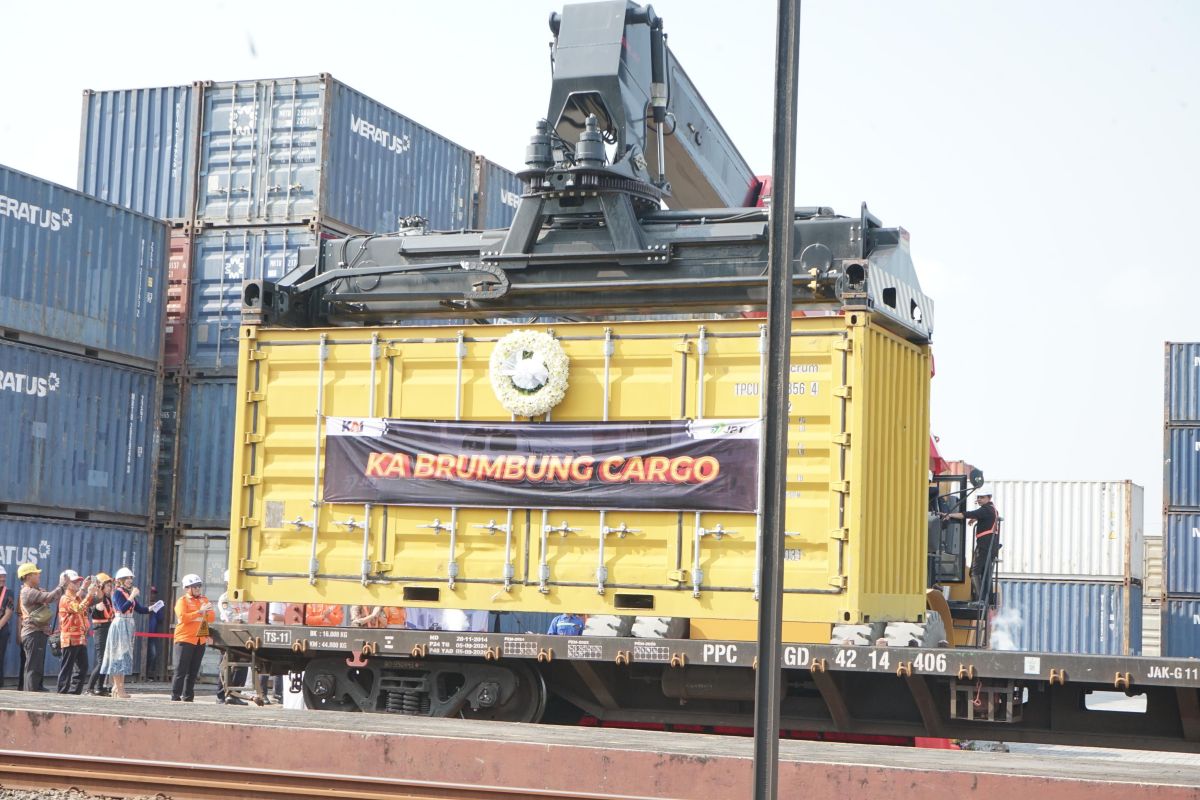
Jakarta (ANTARA) - Logistics movement continues to play a vital role in sustaining economic activities. In the first quarter of 2026, PT Kereta Api Indonesia (Persero) recorded container transport reaching 1,371,036 tonnes, an increase from the same period in 2025, which stood at 1,196,600 tonnes. This rise indicates a shift in goods distribution increasingly relying on rail-based transport modes.
This growth aligns with KAI’s efforts to expand logistics services. One key initiative is the introduction of KA Brumbung Cargo, which serves goods transport from Brumbung Station in Demak Regency to Pasoso Station in Jakarta. This service is designed to provide a more efficient and scheduled distribution option for businesses.
KAI’s Vice President of Corporate Communication, Anne Purba, stated that the increase in container transport volume is a positive signal of customer confidence in rail-based logistics services.
“This growth shows that railways are increasingly chosen as part of the distribution chain. Goods journeys can be planned with greater certainty, with consistent travel times,” said Anne.
In line with this, the KA Brumbung Cargo service strengthens the logistics network on Java Island. With a consist of 20 flat wagons equivalent to 40 TEUs, this train has a carrying capacity of up to around 800 tonnes per trip and serves multi-commodity shipments with a frequency of once every two days. This operational scheme allows businesses to adjust their distribution needs more measurably.
The selection of Brumbung Station as the departure point was based on studies considering its strategic position and potential demand in Central Java. This route also connects production areas with distribution centres in Jakarta, thereby enhancing inter-regional logistics connectivity.
The role of the operational region is also evident in the performance of goods transport in the Semarang Division (Daop 4). During the first quarter of 2026, container transport was recorded at 58,770 tonnes, a 16% increase from 50,459 tonnes in 2025. Transport of BHP reached 693 tonnes, up 31%, while other transport totalled 11,020 tonnes, growing 122%. Meanwhile, parcel transport was recorded at 1,137 tonnes, adapting to distribution needs dynamics.
Operational performance in this region is also well-maintained. On-time departure for goods transport in Daop 4 Semarang reached 99.26%, while arrivals were 97.85%, supporting planned distribution.
Nationally, KAI’s goods transport operational performance continues to show improvement. In the first quarter of 2026, on-time departure was recorded at 95.97% and arrivals at 91.77%, an increase from the previous year’s same period with departures at 95.89% and arrivals at 87.04%. This achievement ensures consistent goods distribution.
Anne added that the development of rail-based goods transport also impacts overall transportation system efficiency. The shift in distribution to railways helps reduce road congestion and maintains optimal infrastructure conditions.
“Logistics journeys shifting to railways provide broader benefits, from cost efficiency to smoother distribution across regions,” she continued.
Through strengthening services like KA Brumbung Cargo and improving operational performance in various regions, KAI continues to adapt its services to current distribution needs.
“We continuously evaluate by listening to customer needs and following logistics distribution developments. The hope is that railways can become an increasingly relevant choice in supporting goods movement in Indonesia,” Anne concluded.