
Brown Planthopper Infestation Spreads in Pidie, Farmers Grow Anxious
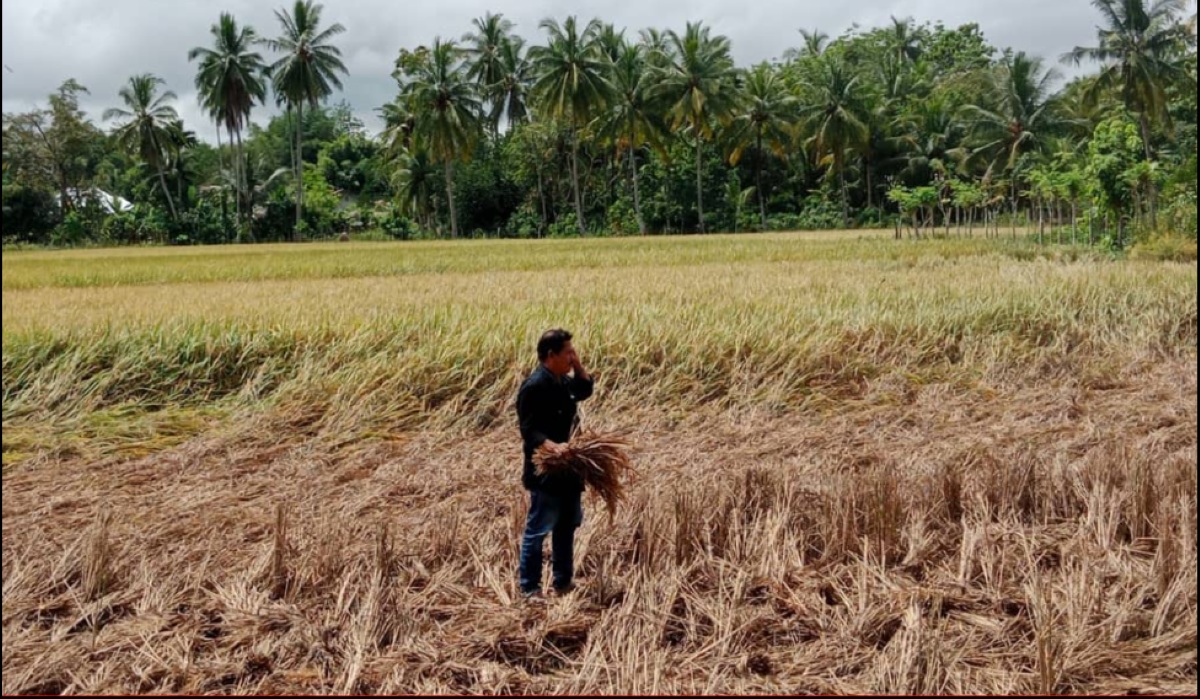
A number of farmers growing paddy in the gadu season (the second planting season) in Pidie Regency, Aceh Province, are increasingly gripped by anxiety. Brown planthopper infestations are reported to be spreading and appearing at several strategic agricultural locations across the region.
Based on observations in Peukan Baro District, these sap-sucking pests, which attack the leaf sheaths of rice plants, were initially detected in the Mesjid Baro customary area. However, over the past three days, the infestation has spread as far as the Pineung customary area.
“Last week it attacked the rice fields of Dayah Bubue village, and over roughly the last three days it has worsened and spread to Sumboe Buga village. A severe attack has also occurred in the Pineung customary area,” said Muhammad Nasir, a community figure from Peukan Baro District, on Monday (3/8).
Nasir explained that the most devastating attack occurred in the Pineung customary area. The small pest, distinguished by its sideways gait, is capable of wiping out a quarter-hectare (ha) plot of paddy in just about seven days.
“Initially the brown planthoppers attacked the middle of the field, far from the bunds. Three days later they spread to several points, destroying an entire plot of land,” he added.
The pest is known to prefer rice plants aged around 40 days up to near harvest. Its population also spreads very quickly across fields planted with the same seed variety.
Abdullah, a local farmer, noted that varietal uniformity accelerates transmission. “If the seed is still a single variety, the spread is very fast and more severe. Even if the plots are in different locations, it still spreads quickly. Different varieties may be slightly more resistant, but even that is no guarantee,” he explained.
There is speculation that the spread of the infestation has been triggered by the use of unregistered seed lines or seeds without official certification. Seeds marketed without laboratory testing offer no guarantee of resistance to pest and disease attacks.
The production of untested, unregulated seeds is reportedly practised by irresponsible parties pursuing personal profit, to the detriment of farmers in the middle of the planting season.