
BRMP promotes mechanisation to transform agricultural residue into new economic resource
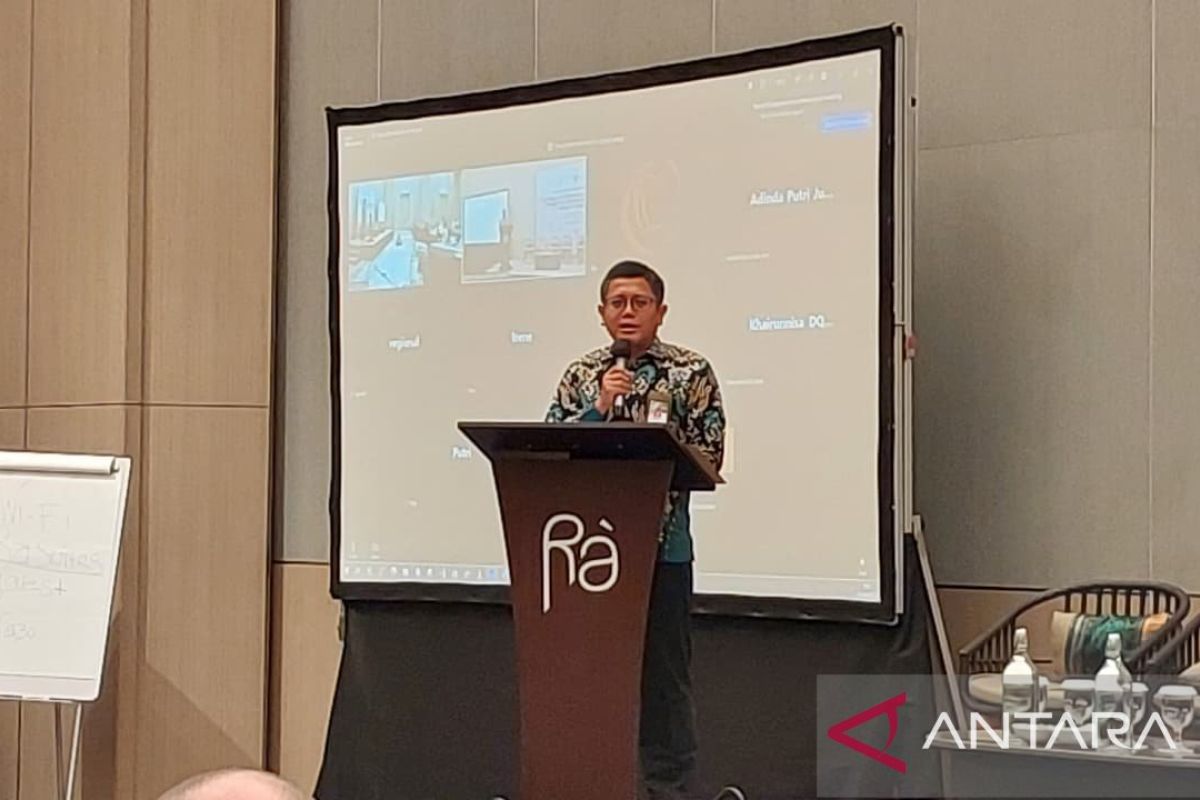
Jakarta (ANTARA) - The Agricultural Assembly and Modernisation Agency (BRMP) is pushing for the strengthening of agricultural crop residue management in Indonesia through the use of mechanisation as a resource to create new economic added value for farmers.
Head of BRMP Agricultural Mechanisation, Arief Rachman, stated that plant remains or agricultural residues, such as rice straw, corn stalks, and sugarcane leaves, represent a significant opportunity for the development of Indonesian agriculture, possessing high economic and ecological value after the harvest season.
“We need to encourage a paradigm shift, where plant remains are not merely waste, but a resource. If we treat them as a resource, we will strive to manage and utilise them,” said Arief during the National Multistakeholder Dialogue titled “Scaling Up Crop Residue Management through Mechanisation and Custom Hiring in Indonesia” in Jakarta on Tuesday.
He noted that unmanaged agricultural residues can actually cause problems, such as the practice of burning crop remains, which not only causes air pollution but also eliminates the potential biomass that could be repurposed to support productivity.
Plant residues also have the potential to be reused as animal feed, organic matter, compost, cultivation media, or other value-added and sustainable products.
Arief stated that the utilisation of such residues requires mechanisation support. Technologies such as shredders, balers, transport equipment, compost processors, and biomass utilisation machines are considered capable of making crop residue management faster, more efficient, and more economical.
However, Arief emphasised that the challenge of mechanisation is not merely providing machines. Technology must be available, affordable, suited to farmers’ needs, and usable sustainably.
One solution being promoted is the custom hiring model, or the rental of agricultural tools and machinery (alsintan), through agricultural machinery service implementation units (UPJA) or agricultural machinery service providers. Through this model, farmers do not need to purchase machines individually but can use mechanisation services according to their needs and pay based on usage.
“This model has the potential to increase access to technology, particularly for smallholder farmers, while simultaneously increasing the utilisation of available agricultural machinery,” he said.
Arief added that the development of residue management mechanisation needs to be built from upstream to downstream, encompassing not only the provision of machinery but also business models, farmer institutions, machinery service providers, biomass supply chains, and market certainty for the resulting products.
This is because, according as him, the success of crop residue management is measured not by how many machines are distributed, but by how much that technology provides real benefits to farmers.
He hopes that mechanisation-based residue utilisation can increase farming efficiency, create economic added value, and encourage more environmentally friendly agricultural practices.
He also stated that BRMP Agricultural Mechanisation (Mektan) is ready to support through technology development and testing, providing technology recommendations according to field needs, and strengthening collaboration with the government, universities, research institutions, the business world, and agricultural machinery service providers.
BRMP Mektan is also working regionally with UN ESCAP-CSAM to develop mechanisation-based solutions for more sustainable crop residue management. This initiative involves Indonesia alongside Cambodia and Nepal as a space for the exchange of experience and learning between countries.
UN ESCAP-CSAM representative Marco Silvestri stated that this regional cooperation is not merely about transferring technology from one country to another, but also about mutually understanding agricultural needs that are more appropriate to each region and its specific challenges.
“The goal of this cooperation is not just to transfer technology from one country to another. We want to learn from Indonesia, share experiences from the region, and identify solutions relevant to the Indonesian context,” he said.
According to Marco, this presents an opportunity for the government, farmers, researchers, and the private sector to exchange experiences and identify practical solutions together.
With the support of appropriate technology, easily accessible agricultural machinery services, and sustainable institutions and business models, plant residues are expected to become a resource that provides added value for farmers while supporting more sustainable agriculture.
Source: jawawa.id (https://jawawa.id/newsitem/brmp-promotes-mechanisation-to-transform-agricultural-residue-into-new-economic-resource-1788250134)
Originally published by Antara (Indonesian) (https://www.antaranews.com/berita/5720299/brmp-dorong-mekanisasi-ubah-residu-pertanian-jadi-sumber-ekonomi-baru), translated from Indonesian