
British Treasure Hunter Discovers 100 Gold Bars in Indonesian Waters After Archival Research
JAKARTA, CNBC INDONESIA – Sunken treasures scattered across Indonesia have always piqued public curiosity, with many successfully amassing great wealth through treasure hunting. Among the most notable treasure hunters is British national Michael Hatcher.
Born in 1940, Hatcher pursued a profession often viewed as outdated: underwater exploration. Despite being dismissed by some, this career propelled his fame and significantly boosted his fortune.
Hatcher’s treasure hunting began in 1975 when he stumbled upon Dutch archival records at the National Archives of the Netherlands concerning VOC and Dutch East Indies shipwrecks. He realised that sunken vessels left behind not just wreckage but valuable cargo at the seabed – including gold bars, precious ceramics, and silver – which, if recovered and sold, would fetch high prices. From then on, he mapped Indonesian waters likely to hold shipwrecks.
Retrieving such treasures was no easy feat. Hatcher had to dive over 50 metres deep, where visibility was poor and currents strong, making the task perilous.
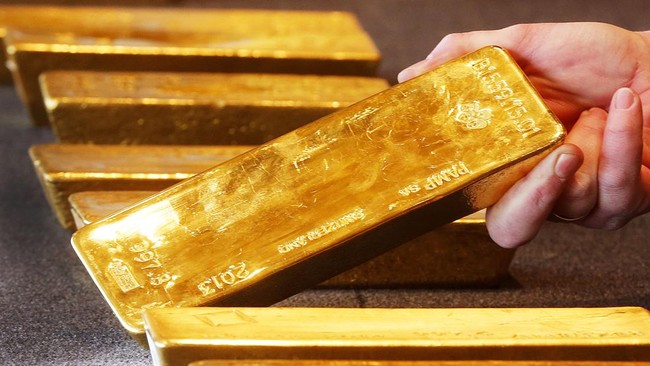
However, in 1986, Hatcher succeeded in locating the VOC ship Geldermalsen, which sank in Riau’s Karang Heliputan waters. He recovered 100 gold bars and 20,000 Chinese porcelain pieces (other sources cite 225 gold bars and 160,000 ceramics) from the Ming and Qing dynasties.
The operation was conducted illegally and secretly to avoid government detection.
“As all items were auctioned at Christie’s in Amsterdam for $15 million [equivalent to Rp 210 billion],” wrote Widiati in “Ancient Ceramics from Indonesia’s Seabed”. He argued the venture should have been uncontroversial, claiming he had permission from the Dutch government, which reportedly took a 10% cut of the sales.
“The Dutch told the Indonesian government that the treasure was in international waters, hence no objection from Holland […] In fact, the Dutch government requested we search for the treasure,” he told Tempo on 18 October 1986.
Hatcher’s success and $15 million profit spurred Indonesians to pursue similar ventures, both individually and in groups. However, the government was furious. President Soeharto, unaware of the significant treasure potential beneath the sea, felt blindsided. In the 1980s, Rp 210 billion was a substantial sum; with the TMII construction costing Rp 10 billion, the New Order regime could have built 20 TMII sites nationwide.
Consequently, Soeharto issued Presidential Decree No. 43 of 1989 establishing a National Committee for Recovering and Utilising Valuable Items from Sunken Ships. This committee, chaired by the Coordinating Minister for Political, Legal, and Security Affairs, was tasked with treasure hunting and remains operational today.
Hatcher’s exploits didn’t end there. In 1999, he explored the Chinese ship Tek Sing in Bangka waters. The intact vessel measured 42x10 metres and weighed 900 tonnes.
“Before sinking in February 1822, the ship was recorded carrying 350,000 Chinese ceramics, thousands of iron, brass, and bronze cannons, among other items, all from 19th-century Fujian production,” wrote Trigangga in “Exploration of Shipwrecks in Indonesia”.
Hatcher salvaged these items for auction in Stuttgart, Germany, in November 2000. The treasure was valued at Rp 500 billion, making it the largest shipwreck discovery in history.
According to Detik.com archives (30 April 2010), the self-proclaimed “Wreck Salvage King” attempted another treasure hunt in Subang waters for Ming Dynasty artefacts worth $200 million, but this time the government successfully prevented him.