
BRI's Mantri Brings Banking Access to the Mountains of North Toraja
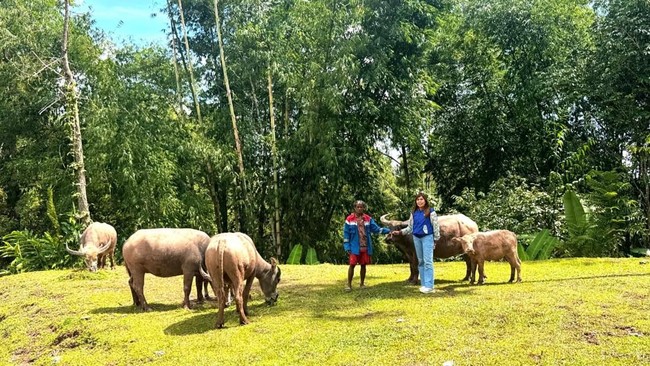
The spirit of modern women demonstrating their resilience in remote and challenging areas is embodied by Elce Putri Bontong, a micro-marketing officer for BRI, known as a Mantri BRI. She serves at the Bolu Unit in Rantepao, North Toraja, South Sulawesi, a designated 3T (Disadvantaged, Frontier, and Outermost) region. The difficult travel conditions have not dampened her enthusiasm for providing financial services to the community. Every journey she makes to isolated villages is not just a work task, but a tangible contribution to driving the local economy. Elce’s career at BRI began in 2013 as a teller before she became a customer service officer. Her experience serving customers inside the branch inspired her to seek a broader role. This opportunity came in 2020 when she joined the Mantri BRI recruitment and was placed in the Toraja region. “I was interested in becoming a Mantri because I thought the service reach would be wider. Previously, as a teller and CS, I was limited to the building, waiting for customers to come. I wanted to proactively go into the field, which is why I was interested in becoming a Mantri. Outside, the customers’ needs are more diverse,” Elce explained. BRI Unit Bolu is the second unit Elce has managed. From this unit, she handles customers in Karre Pananian Village, Nanggala District, North Toraja Regency. The area is about 35 kilometres from the unit office. Although the distance does not seem too far, the journey to the village requires navigating mountain roads with challenging terrain. As a woman, the journey is not without risk. The quiet roads, passing through forests and hills, are a challenge she faces almost daily. However, Elce has her own way of ensuring her safety while on duty. “Most of the customers in the village are farmers and livestock breeders, such as pig and buffalo breeders. The financial services I provide are usually loans and savings. Loans are typically used to increase capital, for example, buying breeding stock or for fattening, essentially to develop their businesses,” Elce clarified. In addition to providing financing access, she actively educates the community on the importance of saving money in a bank. This is a particular challenge, as some residents are still accustomed to keeping cash at home. To address this need, Elce also established a BRILink Agent in the village so that people can conduct financial transactions more easily. “I also slowly educate them on the importance of saving at a bank. I set up a BRILink Agent in the village to make it easier for people to save or withdraw money. The Torajan people are migrants; many of their children work in other cities or on other islands. So, they no longer need to entrust money to others when they want to send funds to their families,” Elce explained. For Elce, the greatest happiness comes from seeing her customers’ businesses grow. “Of course, I feel proud. When I first see a customer who might only have one or two head of livestock, and then a year later I meet them again and their herd has grown to 100 after receiving a capital loan from BRI, I feel happy because I could help them. Even though it is not my money, there is a special joy in helping to drive the community’s economy. That is what makes me proud,” she concluded. On a separate occasion, BRI Corporate Secretary Dhanny added that with a strong understanding of business character, regional potential, and customer financial needs, Mantri BRI officers do not just channel financing. They also act as financial advisors who oversee business growth through comprehensive assistance from the initial stage to expansion. “BRI always instils positive work culture values in all employees, creating the commitment and dedication shown by the Mantri in the field. This is clear evidence of women’s contribution to driving the people’s economy. Elce’s story also confirms that women are not only capable of adapting but are also a driving force for the community’s economy,” Dhanny stated.