
BRIN's Nuclear Irradiation-Mutated Rice Seeds Ready for Industrial Production
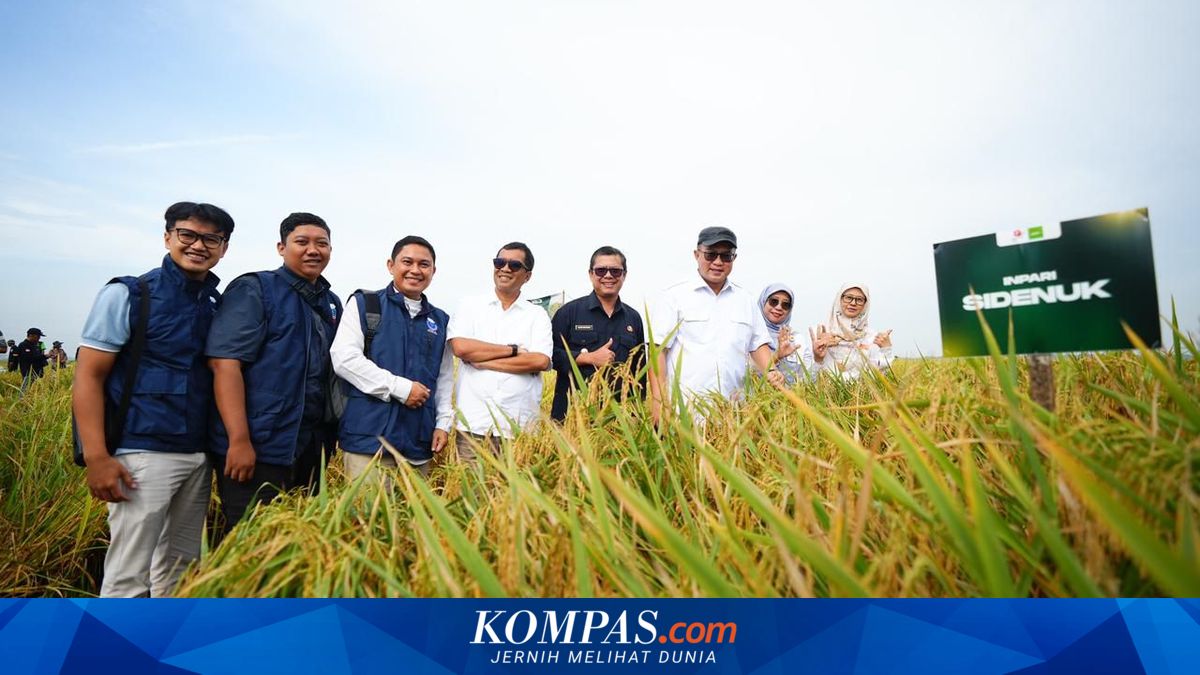
The National Research and Innovation Agency (BRIN) is beginning to promote the downstreaming of superior rice seeds resulting from nuclear irradiation mutation technology to the national industry. This step is believed to increase rice productivity and strengthen national rice production amid continuously rising food needs. The commercialisation of the seeds is being carried out through the first harvest of breeder seeds of superior rice varieties from irradiation mutation breeding in Subang, West Java, on Thursday (30/4/2026). BRIN Head Arif Satria stated that the utilisation of nuclear technology through gamma ray radiation is no longer limited to paper-based research but has made real contributions in addressing the global food crisis. The varieties harvested include Sidenuk or Sintanur Dedikasi Nuklir. This variety has a very short harvest age of around 103 days, a sturdy stem structure resistant to lodging, and a yield potential of up to 9.1 tonnes per hectare. Then there is the Tropiko variety, which is a New Type Rice (PTB). This variety has a higher yield potential of up to 10.53 tonnes per hectare, pulen rice quality, and resistance to brown planthopper pest attacks. Furthermore, the Bestari variety excels due to its high number of productive tillers and tolerance to Bacterial Leaf Blight (HDB) disease. According to Arif, nuclear technology enables researchers to broadly and safely increase plant genetic diversity to improve plant traits that have weaknesses, such as stems that are too tall or long harvest ages. The mutation breeding technique using gamma ray irradiation (Co-60) works by administering a certain dose of radiation energy to rice seeds to trigger changes in DNA structure, which is then rigorously selected by breeders. Unlike genetic engineering (GMO), irradiation mutation results do not introduce foreign genes, making them completely safe for consumption and environmentally friendly. Director of Research and Innovation Utilisation in Industry at BRIN, Mulyadi Sinung Harjono, added that the activity in Subang is focused on multiplying breeder seeds with a genetic purity level approaching 100 percent. “Breeder seeds are pure seeds under the direct supervision of breeders. From the core seeds we plant here, seeds will be produced in stages that can meet the needs of thousands of hectares of farmers’ paddy fields in the future,” he explained. This multiplication process involves a team of researchers from the Food Crop Research Centre who intensively monitor growth.